The 60-Second Version
Forget venture capital, forget crypto, forget the latest tech unicorn. The most boring, and arguably one of the most profitable, asset classes of the last quarter-century has been self-storage. This $50 billion U.S. market has quietly outperformed every other major real estate sector, delivering consistent, high-margin returns with a fraction of the drama. The business model is brutally simple: buy or build a box, divide it into smaller boxes, and rent them out to people with too much stuff. With operating margins that can soar past 90%, minimal ongoing capital expenditures, and a sticky customer base locked into month-to-month leases, self-storage facilities are veritable cash-printing machines. The industry is dominated by a handful of publicly traded REITs—Public Storage (PSA), Extra Space Storage (EXR), and CubeSmart (CUBE)—but a wave of consolidation and the emergence of new investment platforms are creating compelling opportunities for savvy investors to get in on the action. As our lives become increasingly cluttered and our living spaces shrink, the demand for a place to put it all is only set to grow. Add to that the tailwinds of smart lock technology, dynamic pricing algorithms, and the rise of new sub-niches like industrial outdoor storage, and you have an asset class that is not just defensive and inflation-hedged, but also brimming with untapped potential. For investors who can look past the unglamorous facade, self-storage represents a rare and compelling opportunity to generate outsized returns from one of the most fundamental needs of modern life: the need for space.
I. What Self-Storage Investing Actually Is
At its most fundamental level, self-storage investing is the business of renting space. But it’s a very specific kind of space, and a very specific kind of renting. Unlike traditional real estate assets like office buildings or apartment complexes, which involve long-term leases, complex tenant relationships, and significant ongoing maintenance, self-storage is a model of beautiful simplicity. You are, in essence, a landlord of empty boxes.
When you invest in self-storage, you are acquiring a property that has been specifically designed and built to be subdivided into a large number of individual, secured units. These units come in a variety of sizes, from small 5×5 lockers that can hold a few boxes of personal belongings, to large 10×30 units that can accommodate the contents of an entire house or the inventory of a small business. The customers who rent these units are a diverse bunch, ranging from individuals and families in the midst of a life transition, to small business owners in need of a flexible and affordable place to store their inventory or equipment.
The revenue model is as straightforward as it gets: you charge a monthly rent for the use of each unit. But the real magic of the self-storage business model lies in the details. The leases are typically month-to-month, which gives the operator a tremendous amount of flexibility. If a tenant stops paying rent, the process of eviction is relatively quick and painless. And if market demand increases, the operator can raise rents with just 30 days’ notice. This is a level of pricing power that is simply unheard of in most other real estate sectors.
Furthermore, the operating costs are remarkably low. The units themselves are little more than concrete floors and metal walls, so there is very little to break or maintain. The biggest operating expenses are typically property taxes, insurance, and the salary of an on-site manager. This low-cost structure, combined with the high and consistent demand for storage space, results in exceptionally high operating margins, often exceeding 90%. This means that for every dollar of revenue that a self-storage facility generates, a very large portion of it flows directly to the bottom line.
For investors, there are several ways to get a piece of the action. The most common are:
- •Publicly Traded REITs: This is the easiest and most liquid way to invest in self-storage. You can buy shares in a publicly traded real estate investment trust (REIT) that owns and operates a large portfolio of self-storage facilities. The big three in the U.S. are Public Storage (PSA), Extra Space Storage (EXR), and CubeSmart (CUBE).
- •Private Real Estate Funds: A growing number of private equity firms and real estate investment companies offer private funds that specialize in the acquisition and development of self-storage facilities. These funds are typically open to accredited investors and offer the potential for higher returns than the publicly traded REITs, but with lower liquidity.
- •Direct Ownership: For those with a significant amount of capital and a high tolerance for risk, direct ownership of a self-storage facility can be a very lucrative investment. This gives you complete control over the property and the potential for the highest returns, but it also requires the most hands-on management.
- •Syndication and Crowdfunding: A growing number of online platforms allow smaller investors to pool their capital and invest in a specific self-storage project alongside a professional operator. This can be a good way to get started in the business with a relatively small amount of capital.
No matter which path you choose, the fundamental appeal of the asset class remains the same: a simple, predictable, and highly profitable business model that is built on one of the most basic needs of modern life.
II. The Market
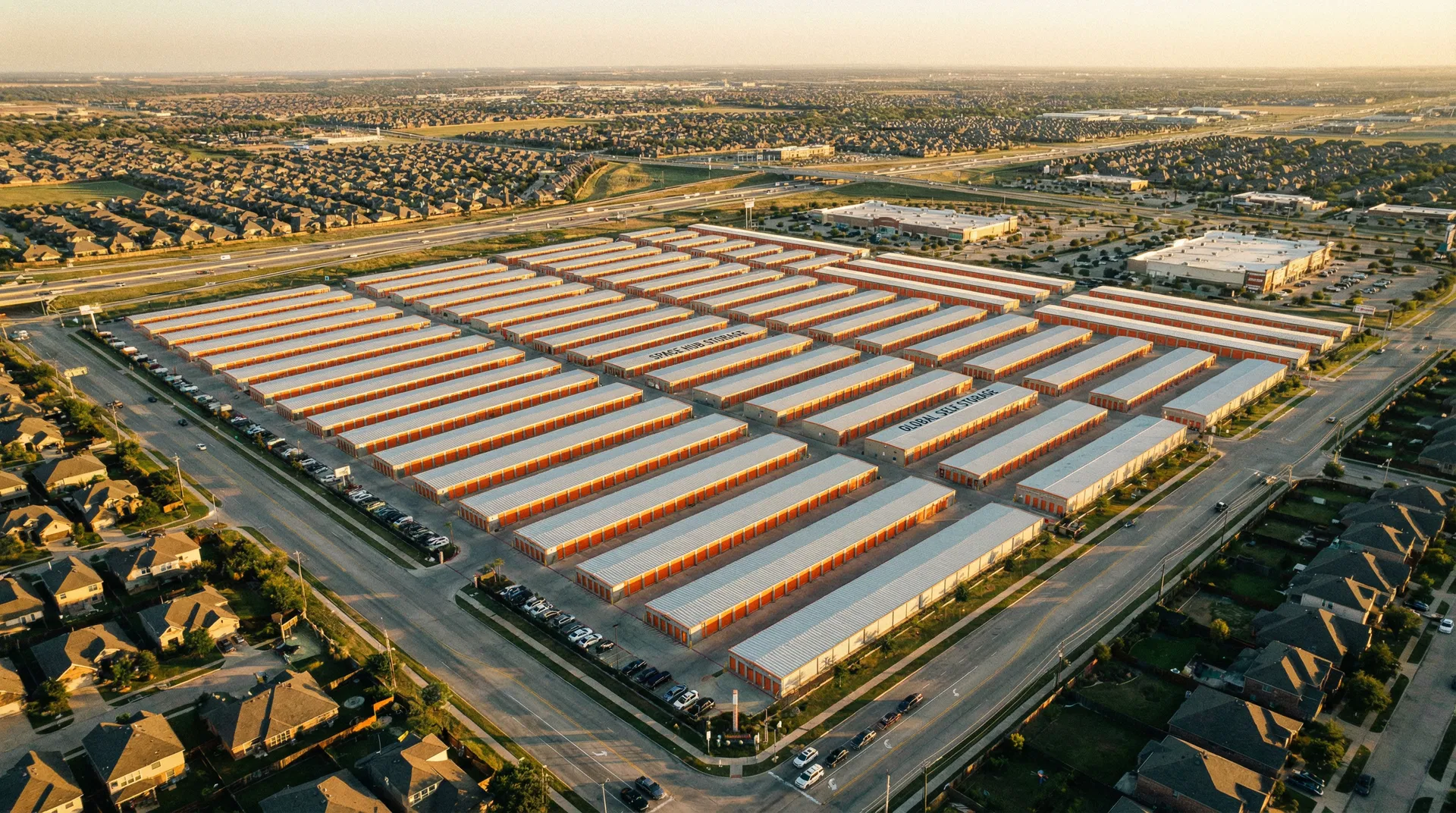
The U.S. self-storage market is a textbook example of a niche industry that has quietly grown into a dominant force in the commercial real estate landscape. From its humble origins in the dusty plains of Texas in the 1960s, the industry has exploded into a $50 billion behemoth, with a growth trajectory that has consistently left other, more glamorous real estate sectors in the dust. The market is projected to swell to $57.79 billion by 2031, marching forward at a steady and predictable CAGR of 4.10%. This is not a flash-in-the-pan growth story; it is the result of decades of consistent, demand-driven expansion. For a quarter of a century, self-storage has reigned as the top-performing REIT sector, a remarkable achievement for an asset class that many investors still struggle to understand.
The history of the self-storage industry is a fascinating story of innovation, entrepreneurship, and the relentless growth of consumer culture. It is a story that begins not in a corporate boardroom, but in the oil fields of West Texas.
| Year | Milestone | Significance |
|---|---|---|
| 1964 | The first modern self-storage facility, "A-1 U-Store-It," is opened in Odessa, Texas, by Russ Williams and his stepson, Bob Munn. | The birth of the self-storage concept as we know it today. The facility, with its simple, garage-style units, was an instant success, tapping into the unmet demand for storage space from oil field workers and other transient residents of the booming West Texas economy. |
| 1972 | Public Storage is founded by B. Wayne Hughes and Kenneth Volk Jr. in Southern California. | The entry of a major, professionally managed player that would come to define the industry. Hughes and Volk recognized the potential to create a national brand in a fragmented and unprofessional market. They focused on building high-quality facilities in prime locations and on developing a sophisticated marketing and operating platform. |
| 1980s | The industry expands rapidly across the U.S., with thousands of new facilities being built in suburban and exurban areas. | Self-storage becomes a ubiquitous feature of the American landscape. The industry was fueled by the growth of the suburbs, the rise of the two-income household, and the increasing accumulation of personal possessions. |
| 1994 | The first self-storage REIT, Storage USA, goes public. | The industry gains access to the public capital markets, which provides a new source of capital for growth and consolidation. The entry of institutional investors brings a new level of professionalism and sophistication to the industry. |
| 2000s | The industry demonstrates its remarkable resilience during the dot-com bust and the 2008 financial crisis. | While other real estate sectors were collapsing, the self-storage industry remained relatively stable. This is because the demand for storage is driven by life events, such as death, divorce, and downsizing, which are not closely correlated with the business cycle. |
| 2010s | Technology begins to transform the industry, with the adoption of online rentals, smart locks, and dynamic pricing models. | The industry sheds its image as a low-tech, mom-and-pop business and embraces the digital age. These new technologies not only improve the customer experience but also increase operational efficiency and profitability. |
| 2020s | The COVID-19 pandemic creates a surge in demand for self-storage, as people adapt to the new realities of remote work, online learning, and a renewed focus on the home. | The pandemic accelerates many of the existing trends in the self-storage industry and solidifies its position as an essential service in the modern economy. |
III. The Demand Drivers
The relentless growth of the self-storage industry is not a random phenomenon. It is a direct consequence of a powerful confluence of demographic, economic, and social trends that have been reshaping American society for the past half-century. These are not fleeting fads, but deep, structural shifts that are likely to continue fueling the demand for storage space for the foreseeable future.
1. The Four D’s of Life: Death, Divorce, Downsizing, and Dislocation
This has long been the bedrock of the self-storage industry. Life is messy and unpredictable, and the “Four D’s” are a constant source of demand for storage space. When a loved one passes away, the family is often left with a house full of belongings that need to be sorted through and stored. When a couple divorces, they need a place to store their possessions while they divide their assets and establish separate households. When a retiree downsizes to a smaller home or an empty-nester moves to a condo, they need a place to store the accumulated possessions of a lifetime. And when a family relocates for a new job or a recent graduate moves to a new city, they often need a temporary place to store their belongings while they get settled.
These life events are not cyclical; they are a constant and predictable feature of modern life. And as the baby boomer generation continues to age and downsize, the demand for storage from this demographic is only set to grow. According to a recent survey by the Self Storage Association, 32% of customers are storing items from a home that they are in the process of selling or moving out of.
2. The Great Accumulation: Shrinking Living Spaces and the Relentless Growth of Consumerism
We are a society of consumers. We buy more stuff than any previous generation in history. And yet, at the same time, our living spaces are shrinking. The average size of a new single-family home has been declining in recent years, and the trend towards smaller, more efficient apartments and condos is even more pronounced in urban areas. This creates a fundamental and growing disconnect between the amount of stuff we own and the space we have to store it.
This is not just a problem for the wealthy. The rise of fast fashion, cheap electronics, and online shopping has made it easier and more affordable than ever for people of all income levels to accumulate a vast array of personal possessions. And as our homes become more cluttered, the need for a clean, secure, and affordable place to store our excess belongings becomes more acute. Self-storage provides a simple and elegant solution to this very modern problem. It allows us to have our cake and eat it too: we can continue to buy and own all the stuff we want, without having to live in a constant state of clutter.
3. The New Economy: The Rise of E-commerce and the Gig Economy
The explosive growth of e-commerce has been a major boon for the self-storage industry. A growing number of small online businesses, often run from a spare bedroom or a garage, are turning to self-storage as a flexible and cost-effective way to store their inventory. For a small e-commerce entrepreneur, a self-storage unit can serve as a mini-warehouse, providing a secure and accessible place to store products, pack orders, and manage returns. The month-to-month leases and the wide range of unit sizes make it an ideal solution for a business that is just starting out and needs the flexibility to scale up or down as needed.
Similarly, the rise of the “gig economy” has created a new and growing class of self-employed professionals who need a place to store their tools and equipment. This includes everyone from contractors and tradespeople to photographers and event planners. For these micro-entrepreneurs, a self-storage unit can serve as a professional home base, providing a secure and convenient place to store their equipment and manage their business operations.
4. A Nation on the Move: Increased Mobility and a Transient Population
Americans have always been a mobile people, but the pace of change has accelerated in recent years. The rise of remote work has decoupled employment from geography, giving people more freedom to live where they want. This has led to a surge in migration from high-cost coastal cities to more affordable Sun Belt states. And with every move comes the need for storage.
Whether it’s a short-term need for storage during the transition between homes, or a longer-term need for a place to store belongings while exploring a new city, the increasing mobility of the American population is a powerful and enduring demand driver for the self-storage industry. And as the millennial and Gen Z generations, who are more likely to rent and to move frequently than previous generations, make up a larger share of the population, this trend is only set to continue.
IV. The Players
The U.S. self-storage market, while still more fragmented than many other real estate sectors, is increasingly dominated by a handful of large, publicly traded real estate investment trusts (REITs). These behemoths of the industry have been on a multi-decade acquisition spree, snapping up smaller, independent operators and consolidating their control over the most attractive markets. However, the industry is still a fascinating mix of public and private players, each with their own unique strategies and advantages.
| Name | Type | AUM/Scale | Notable |
|---|---|---|---|
| Public Storage (PSA) | Public REIT | Over 3,300 facilities in the U.S. | The undisputed king of the self-storage industry. Founded in 1972, Public Storage has grown into a global behemoth with a market capitalization of over $50 billion. The company's iconic orange and white branding is a familiar sight across the American landscape. Public Storage is known for its conservative balance sheet, its focus on high-quality assets in prime locations, and its relentless drive for operational efficiency. |
| Extra Space Storage (EXR) | Public REIT | Over 4,000 properties in 42 states | The largest operator of self-storage facilities in the U.S. and a close competitor to Public Storage. Extra Space has been one of the most aggressive acquirers in the industry, and it has also been a pioneer in the use of technology and data analytics to drive revenue growth. The company's Management Plus platform, which provides third-party management services to smaller operators, has been a major driver of its growth in recent years. |
| CubeSmart (CUBE) | Public REIT | Over 1,500 properties across the U.S. | The third-largest owner and operator of self-storage properties in the U.S. CubeSmart has a reputation for being a savvy operator with a focus on customer service and a strong track record of delivering consistent returns to its shareholders. The company has been particularly successful in targeting urban and infill locations, where the barriers to entry are high and the demand for storage is strong. |
| National Storage Affiliates Trust (NSA) | Public REIT | Over 1,100 properties in 42 states | A unique player in the public REIT space. NSA's business model is based on a partnership with a group of experienced, private self-storage operators. This allows the company to tap into the local market knowledge and entrepreneurial spirit of its partners, while still providing the benefits of a large, publicly traded platform. |
| Life Storage (LSI) | Public REIT | Over 1,200 properties in 37 states | A fast-growing REIT that has been expanding its footprint through a combination of acquisitions and new development. Life Storage has been a leader in the adoption of new technologies, such as its "Rent Now" platform, which allows customers to rent a unit entirely online. |
| Private Equity Funds | Private Equity | Varies | The attractive returns and recession-resistant characteristics of the self-storage industry have not gone unnoticed by the world's largest private equity firms. Blackstone, KKR, and other private equity giants have been pouring billions of dollars into the sector, acquiring large portfolios of self-storage assets and, in some cases, entire companies. These firms are drawn to the industry's stable cash flows, its potential for consolidation, and the opportunity to create value through operational improvements and financial engineering. |
| Independent Operators | Private | Varies | Despite the growing dominance of the large REITs and private equity firms, the majority of self-storage facilities in the U.S. are still owned and operated by smaller, independent players. These "mom-and-pop" operators are the backbone of the industry, and they often have a deep understanding of their local markets. However, they are facing increasing pressure from the larger players, who have a significant advantage when it comes to economies of scale, access to capital, and marketing muscle. As a result, many independent operators are choosing to sell their facilities to the larger players, which is fueling the ongoing consolidation of the industry. |
V. Geography
The demand for self-storage, while a national phenomenon, is far from uniform. It is a deeply local business, and the performance of a self-storage facility is heavily influenced by the specific demographic and economic characteristics of its surrounding neighborhood. However, at a macro level, there are clear regional trends that have shaped the geography of the self-storage industry. The Sun Belt, in particular, has emerged as the epicenter of the industry, a magnet for both new development and institutional investment.
| Region | Key States | Characteristics |
|---|---|---|
| The Sun Belt | Texas, Florida, Arizona, North Carolina, Georgia | This is the undisputed heartland of the self-storage industry. The combination of strong population growth, a high rate of in-migration from other parts of the country, and a large and growing number of retirees has created a seemingly insatiable demand for storage space. The business-friendly climate and the availability of land have also made the Sun Belt a hotbed of new development. The major markets in this region, such as Dallas, Houston, Atlanta, and Phoenix, are some of the most competitive in the country, but they also offer the greatest potential for growth. |
| The West Coast | California, Washington, Oregon | The West Coast is a mature and highly attractive market for self-storage. The high cost of housing and the small size of homes and apartments in major metropolitan areas like Los Angeles, San Francisco, and Seattle create a strong and consistent demand for storage. The tech-driven economy of the region also contributes to a highly mobile workforce, which further fuels the demand for storage. The biggest challenge in this market is the high barriers to entry. The restrictive zoning regulations and the high cost of land make it very difficult to build new facilities, which has resulted in a tight supply and some of the highest rental rates in the country. |
| The Northeast | New York, New Jersey, Massachusetts, Pennsylvania | The Northeast is another mature and densely populated market with a strong demand for self-storage. The high concentration of renters, the large number of colleges and universities, and the transient nature of the population in major cities like New York and Boston all contribute to a steady demand for storage. However, like the West Coast, the Northeast is a very difficult market to build in. The lack of available land and the NIMBY ("Not In My Back Yard") opposition to new development have created a significant supply-demand imbalance, which has driven rental rates to record highs. |
| The Midwest | Illinois, Ohio, Michigan, Indiana | The Midwest is a more stable and less dynamic market than the coastal regions. The population growth is slower, and the demand for storage is not as intense. However, the lower cost of land and the less competitive environment can create attractive opportunities for savvy investors. The key to success in the Midwest is to focus on well-located facilities in stable, middle-income neighborhoods. |
Beyond these broad regional trends, the most successful self-storage investors are those who can identify and dominate a specific local market. This requires a deep understanding of the local demographics, the competitive landscape, and the specific demand drivers in that market. It is a business where local knowledge and a focus on the details can make all the difference.
VI. How to Actually Invest
For investors drawn to the compelling economics of self-storage, the good news is that there are more ways to get into the game than ever before. The path you choose will depend on your risk tolerance, your capital commitment, and your desired level of involvement. From the armchair investor to the hands-on operator, there is a self-storage investment strategy to suit almost every taste.
| Vehicle | Min Investment | Liquidity | Expected Return | Risk Level |
|---|---|---|---|---|
| Publicly Traded REITs | Low (cost of one share) | High | Moderate (8-12% total return) | Low |
| Private Real Estate Funds | High ($50,000+) | Low | High (15-20%+ IRR) | Moderate |
| Direct Ownership | Very High ($1M+) | Very Low | Very High (20%+ cash-on-cash) | High |
| Syndication | Moderate ($25,000+) | Low | High (15-20%+ IRR) | Moderate to High |
| Crowdfunding Platforms | Low ($5,000+) | Low | Moderate to High (12-18%+ IRR) | Moderate |
Publicly Traded REITs: The Liquid and Easy Option
For the vast majority of investors, the simplest and most efficient way to gain exposure to the self-storage sector is through the public markets. By purchasing shares in a publicly traded self-storage REIT, you can instantly become a fractional owner of a large and diversified portfolio of high-quality storage facilities. The Big Four in the U.S. – Public Storage (PSA), Extra Space Storage (EXR), CubeSmart (CUBE), and National Storage Affiliates Trust (NSA) – are all highly liquid, professionally managed companies with long track records of delivering attractive returns to their shareholders.
The advantages of investing in a public REIT are numerous. The liquidity is high, meaning you can buy and sell your shares as easily as any other stock. The diversification is built-in, as these companies own hundreds or even thousands of properties across a wide range of geographic markets. And the management is professional, with experienced teams of real estate experts who handle all of the day-to-day responsibilities of acquiring, developing, and operating the properties.
The downside is that the returns are generally lower than what you could achieve through a more direct form of investment. The public markets are efficient, and the prices of these REITs generally reflect the underlying value of their assets. However, for a passive investor who is looking for a steady and reliable stream of dividend income and the potential for long-term capital appreciation, the public REITs are an excellent choice.
Private Real Estate Funds: The Institutional Approach
For accredited investors who are willing to sacrifice some liquidity in exchange for the potential for higher returns, private real estate funds can be a very attractive option. A growing number of private equity firms and real estate investment companies offer funds that specialize in the acquisition and development of self-storage facilities. These funds pool capital from a group of investors and then use that capital to acquire a portfolio of properties.
The advantages of a private fund are that you get access to the expertise of a professional investment manager and the potential for higher returns than the public REITs. The fund manager handles all of the heavy lifting, from sourcing deals and conducting due diligence to managing the properties and executing the business plan. The returns can be significantly higher than the public REITs, with target internal rates of return (IRRs) often in the mid-to-high teens.
The downside is that your capital is typically locked up for a period of five to ten years, and there is no public market for your shares. You are also paying a fee to the fund manager, which will reduce your overall returns.
Direct Ownership: The Ultimate Hands-On Approach
For the true entrepreneur who is not afraid to get their hands dirty, direct ownership of a self-storage facility can be the most rewarding path of all. This is the classic “buy a business, not a stock” approach, and it offers the potential for the highest returns. When you own the property directly, you have complete control over the operations, and you get to keep all of the profits.
The challenge is that direct ownership requires a significant amount of capital, a deep understanding of the self-storage business, and a willingness to be actively involved in the day-to-day management of the property. You are responsible for everything, from hiring and training the on-site manager to setting rental rates and marketing the property. It is a true small business, and it requires a significant commitment of time and energy.
Syndication and Crowdfunding: The Best of Both Worlds?
For investors who are looking for a middle ground between the passive approach of a public REIT and the hands-on approach of direct ownership, syndications and crowdfunding platforms can be an excellent option. These platforms allow you to invest in a specific self-storage project alongside a professional operator. You get the benefit of the operator’s expertise and the potential for high returns, but with a much smaller capital commitment than what would be required to buy a property on your own.
A syndication is essentially a partnership between a sponsor (the operator) and a group of investors. The sponsor finds the deal, puts together the business plan, and manages the property, while the investors provide the majority of the capital. The profits are then split between the sponsor and the investors according to a pre-determined structure.
Crowdfunding platforms are a newer and more accessible version of the same model. These online platforms allow you to browse a variety of self-storage deals and invest in them with a relatively small amount of capital. The platforms handle all of the legal and administrative work, making it easy for you to build a diversified portfolio of self-storage assets.
The downside of syndications and crowdfunding is that you are still investing in an illiquid asset, and you are relying on the expertise and integrity of the sponsor. It is crucial to do your due diligence on both the deal and the sponsor before you invest.
VII. Unit Economics
To truly grasp the financial power of the self-storage business model, we need to move beyond the high-level market trends and get our hands dirty with the nitty-gritty of a single deal. The unit economics of a self-storage facility are a thing of beauty, a masterclass in high-margin, low-maintenance cash flow. Let’s walk through a hypothetical, but realistic, example of a modern, climate-controlled self-storage facility in a growing suburban market.
The Property:
- •Size: 50,000 net rentable square feet
- •Number of Units: 500
- •Unit Mix: A mix of 5×5, 10×10, 10×15, and 10×20 units, with 50% of the units being climate-controlled.
- •Purchase Price: $5,000,000
- •Financing: 70% loan-to-value, with a 5% interest rate on a $3,500,000 loan.
The Revenue:
The revenue side of the equation is driven by two key factors: occupancy and rental rates. In a stable, well-located facility, it is not uncommon to see occupancy rates in the low-to-mid 90s. For our example, we will assume a stabilized occupancy of 92%.
Rental rates can vary significantly depending on the market, the quality of the facility, and the unit mix. For our example, we will assume an average rental rate of $1.50 per square foot per month.
| Revenue Item | Calculation | Annual Amount |
|---|---|---|
| Gross Potential Rent | 50,000 sq ft x $1.50/sq ft x 12 months | $900,000 |
| Vacancy Loss | $900,000 x 8% | ($72,000) |
| Effective Gross Income | $828,000 |
The Operating Expenses:
This is where the magic of the self-storage business model really shines. The operating expenses for a self-storage facility are remarkably low, especially when compared to other real estate asset classes. There are no tenants to deal with, no common areas to clean, and no expensive building systems to maintain.
| Expense Item | Annual Amount | % of EGI |
|---|---|---|
| Property Taxes | $100,000 | 12.1% |
| Insurance | $20,000 | 2.4% |
| Utilities | $30,000 | 3.6% |
| On-site Manager Salary & Benefits | $60,000 | 7.2% |
| Marketing & Advertising | $25,000 | 3.0% |
| Repairs & Maintenance | $15,000 | 1.8% |
| Credit Card Fees | $10,000 | 1.2% |
| Property Management Fee (3% of EGI) | $24,840 | 3.0% |
| Total Operating Expenses | $284,840 | 34.4% |
The Net Operating Income (NOI):
The Net Operating Income, or NOI, is the amount of income that is left over after all of the operating expenses have been paid. It is the single most important metric for evaluating the profitability of a real estate investment.
| Item | Amount |
|---|---|
| Effective Gross Income | $828,000 |
| Total Operating Expenses | $284,840 |
| Net Operating Income (NOI) | $543,160 |
In this example, the operating expense ratio is a lean 34.4%, and the NOI margin is a whopping 65.6%. This is a level of profitability that is simply unheard of in most other businesses.
The Cash Flow:
But the story doesn’t end with the NOI. To get to the cash flow that is actually distributed to the investors, we need to subtract the debt service.
| Item | Amount |
|---|---|
| Net Operating Income (NOI) | $543,160 |
| Annual Debt Service ($3.5M loan at 5%) | ($228,468) |
| Cash Flow Before Taxes | $314,692 |
The Returns:
Now for the moment of truth. Let’s look at the key return metrics for this hypothetical investment.
- •Capitalization Rate (Cap Rate): This is the NOI divided by the purchase price. It is a measure of the unlevered return on the investment.
- •Cap Rate = $543,160 / $5,000,000 = 10.9%
- •Cash-on-Cash Return: This is the annual cash flow before taxes divided by the initial equity investment. It is a measure of the levered return on the investment.
- •Equity Investment = $5,000,000 (Purchase Price) – $3,500,000 (Loan) = $1,500,000
- •Cash-on-Cash Return = $314,692 / $1,500,000 = 21.0%
- •Cap Rate = $543,160 / $5,000,000 = 10.9%
- •Equity Investment = $5,000,000 (Purchase Price) – $3,500,000 (Loan) = $1,500,000
- •Cash-on-Cash Return = $314,692 / $1,500,000 = 21.0%
A 10.9% cap rate and a 21.0% cash-on-cash return are exceptional returns in any market. And this is not an unrealistic example. It is a testament to the power of the self-storage business model and the reason why so many savvy investors have been quietly getting rich from this boring, but beautiful, asset class.
VIII. Macroeconomic Sensitivity
In the turbulent world of real estate investing, where fortunes can be made and lost on the whims of the business cycle, self-storage stands out as a beacon of stability. It is an asset class that has proven its mettle in good times and in bad, a port in the storm for investors seeking a defensive and reliable stream of income. This remarkable resilience is not an accident; it is a direct result of the unique and counter-cyclical nature of the demand for storage.
| Regime | Impact | Historical Example |
|---|---|---|
| High Growth, Low Inflation (The "Goldilocks" Economy) | Positive | The long economic expansion of the 2010s was a golden age for the self-storage industry. A healthy housing market, low unemployment, and rising consumer confidence all contributed to a strong and steady demand for storage. As people bought bigger houses, started new businesses, and accumulated more possessions, the need for a place to put it all grew in lockstep. In this environment, self-storage operators were able to push rents and occupancy, and the sector delivered some of its best returns in history. |
| High Growth, High Inflation (The "Reflation" Economy) | Strongly Positive | The inflationary environment that followed the COVID-19 pandemic was a powerful tailwind for the self-storage industry. The short-term nature of the leases allowed operators to raise rents in line with, or even ahead of, inflation, providing a powerful hedge against rising prices. At the same time, the strong economic growth and the continued demand for housing and consumer goods kept occupancy rates high. This combination of rising rents and high occupancy made self-storage one of the best-performing asset classes during this period. |
| Low Growth, Low Inflation (The "Stagnation" Economy) | Neutral to Positive | During periods of economic stagnation, the demand for self-storage often remains surprisingly robust. While the demand from a strong economy may wane, it is often replaced by a new source of demand from a weaker economy. As people lose their jobs, downsize their homes, or are forced to move in with family, they often need a place to store their belongings. This "bad news is good news" dynamic is one of the most unique and attractive features of the self-storage industry. |
| Low Growth, High Inflation (The "Stagflation" Economy) | Neutral to Positive | This is the nightmare scenario for most investors, a toxic cocktail of a stagnant economy and high inflation. But even in this challenging environment, self-storage has historically held up remarkably well. The ability to adjust rents quickly helps to offset the corrosive effects of inflation, while the non-discretionary nature of the demand provides a floor for occupancy rates. While the returns may not be as spectacular as in a high-growth environment, the ability to preserve capital and generate a positive real return is a very attractive attribute in a stagflationary world. |
The all-weather nature of the self-storage industry is a key reason why it has become such a darling of institutional investors. In a world of increasing uncertainty and volatility, the predictability and resilience of the self-storage business model are a rare and valuable commodity.
IX. Tax Considerations: A Global Overview
For the intelligent investor, the analysis of an investment opportunity does not end with the pre-tax returns. The tax implications of an investment can have a profound impact on the after-tax returns, and it is a critical component of any thorough due diligence process. The tax treatment of self-storage investments varies significantly from one jurisdiction to another, and it is essential to have a basic understanding of the rules of the road before you invest.
Disclaimer: The following is a general overview and should not be considered tax advice. Investors should always consult with a qualified tax professional in their jurisdiction to understand the specific tax implications of their investment.
| Jurisdiction | Tax Treatment |
|---|---|
| United States | The U.S. tax code is a complex beast, but it offers some significant advantages to real estate investors. For direct investors in self-storage, the rental income is taxed as ordinary income, but this is offset by a generous depreciation allowance. Depreciation is a non-cash expense that allows you to deduct a portion of the value of the property each year, which can significantly reduce your taxable income. When you sell the property, the accumulated depreciation is "recaptured" and taxed at a higher rate, but the time value of money makes this a very attractive trade-off. For investors in a publicly traded REIT, the dividends are generally taxed as ordinary income, although a portion of the dividend may be classified as a return of capital, which is not taxed until you sell your shares. |
| United Kingdom | In the U.K., the tax treatment of real estate investments is a bit more straightforward. The rental income from a self-storage facility is subject to income tax at the investor's marginal rate. When the property is sold, any capital gain is subject to capital gains tax. The U.K. government has been cracking down on some of the tax advantages that were previously available to real estate investors, so it is more important than ever to get professional advice. |
| European Union | The tax treatment of real estate investments in the European Union is a patchwork of different rules and regulations. Each country has its own tax system, and there is very little harmonization across the bloc. In general, rental income is subject to income tax, and capital gains are subject to capital gains tax. However, the rates and the specific rules can vary significantly from one country to another. For investors who are considering an investment in the European self-storage market, it is essential to get local tax advice. |
| Singapore | Singapore is one of the most tax-friendly jurisdictions in the world for real estate investors. The rental income from a self-storage facility is subject to income tax, but the rates are relatively low. And, most importantly, there is no capital gains tax in Singapore. This means that you can sell your property for a profit and keep 100% of the gain. This has made Singapore a very attractive market for real estate investors from all over the world. |
| UAE | The United Arab Emirates is another tax haven for real estate investors. There is no personal income tax, no corporate income tax, and no capital gains tax in the UAE. This means that you can earn rental income and sell your property for a profit without having to pay any tax to the government. This has made the UAE a very popular destination for international real estate investors, and it is one of the reasons why the Dubai real estate market has been so hot in recent years. |
| Australia | Australia has a relatively complex tax system for real estate investors. The rental income from a self-storage facility is subject to income tax at the investor's marginal rate. When the property is sold, any capital gain is subject to capital gains tax. However, if you have held the property for more than 12 months, you are entitled to a 50% discount on the capital gain. This is a significant tax advantage, and it is one of the reasons why real estate is such a popular investment in Australia. |
X. Case Studies
Theory is one thing, but the real world is where the rubber meets the road. To truly understand the wealth-creating potential of self-storage, let’s move beyond the abstract and examine a couple of real-world case studies. These are stories of vision, execution, and the transformative power of a well-run self-storage facility.
Case Study 1: The Value-Add Play in a Secondary Market
The Opportunity:
An investment group, let’s call them “Acme Partners,” identifies a tired and underperforming self-storage facility in a growing secondary market in the Southeast. The property is a 40,000-square-foot, first-generation facility that was built in the 1980s. It is owned by a mom-and-pop operator who is ready to retire. The facility is in a great location, with good visibility from a major thoroughfare, but it is suffering from years of neglect. The occupancy rate is a dismal 75%, and the rental rates are 20% below the market average. The property is a classic “diamond in the rough.”
The Deal:
Acme Partners acquires the property for $2 million, which represents a cap rate of 7.5% on the in-place income. They secure a loan for 70% of the purchase price and invest $600,000 of their own equity.
The Business Plan:
Acme Partners immediately implements a comprehensive value-add business plan:
- •Capital Improvements: They invest $200,000 in a major facelift for the property. This includes new paint, new signage, new landscaping, and a state-of-the-art security system with video surveillance and electronic gate access.
- •Operational Improvements: They bring in a professional, third-party management company to run the day-to-day operations. The new manager is trained in modern sales and marketing techniques, and they are incentivized to increase occupancy and revenue.
- •Marketing and Branding: They launch a new website with an online rental platform, and they begin a targeted digital marketing campaign to attract new customers. They also rebrand the facility with a fresh, modern name and logo.
- •Revenue Management: They implement a dynamic pricing strategy, which allows them to adjust rental rates in real-time based on demand. They also begin to bill back tenants for utilities and other services, which was not being done by the previous owner.
The Result:
Within two years, the transformation is complete. The occupancy rate has increased from 75% to 95%, and the average rental rate has increased by 25%. The net operating income (NOI) has more than doubled, from $150,000 to $350,000. Acme Partners then sells the property to a publicly traded REIT for $5 million, which represents a cap rate of 7% on the new, higher NOI. The sale generates a profit of $2.8 million and an internal rate of return (IRR) of over 40% for their investors.
Case Study 2: The Ground-Up Development in a High-Growth Suburb
The Opportunity:
A seasoned self-storage developer, let’s call her “Jane,” identifies a vacant, three-acre parcel of land in a high-growth suburb of a major Sun Belt city. The area is experiencing a boom in new single-family and multi-family construction, but there is a severe shortage of modern, climate-controlled self-storage facilities. Jane knows that the demographics are perfect for a new, high-end self-storage development.
The Deal:
Jane acquires the land for $1 million and secures a construction loan for $4 million to build a new, 60,000-square-foot, state-of-the-art facility. The total project cost is $5 million.
The Business Plan:
Jane’s business plan is focused on building the best facility in the market and then using a sophisticated marketing and lease-up strategy to fill it up as quickly as possible.
- •Design and Construction: She works with a top architect to design a beautiful, modern facility with all of the latest amenities, including a large and inviting office, a conference room for business tenants, and a state-of-the-art security system. The facility is 100% climate-controlled, which is a major competitive advantage in the hot and humid climate of the Sun Belt.
- •Marketing and Lease-Up: Six months before the facility is scheduled to open, Jane launches an aggressive pre-leasing campaign. She builds a website, puts up a large “Coming Soon” sign on the property, and begins a targeted digital marketing campaign to the surrounding neighborhoods. She also offers a grand opening special to the first 100 customers who sign a lease.
The Result:
The strategy is a huge success. By the time the facility opens, it is already 30% pre-leased. And within 18 months, the facility reaches a stabilized occupancy of 90%. The stabilized NOI is $500,000. Jane then sells the facility to a large private equity fund for $8 million, which represents a cap rate of 6.25%. The sale generates a profit of $3 million and a return on investment of 60%. Jane has created a tremendous amount of value in a very short period of time, and she has also provided a much-needed service to the community.
XI. The Core Constraint
For all of its attractive qualities, the self-storage industry is not without its challenges. And the single biggest structural constraint facing the industry today can be summed up in one word: oversupply. The siren song of high margins and recession-resistant cash flows has lured a flood of new capital into the sector, and the result has been a boom in new construction that, in some markets, is threatening to overwhelm demand.
The barriers to entry in the self-storage business are relatively low. It does not require a specialized degree or a secret formula to build and operate a self-storage facility. And with so much capital chasing a limited number of deals, it is no surprise that the development pipeline has swelled in recent years. According to a recent report from Yardi Matrix, there are currently over 900 new self-storage projects under construction or in the planning stages in the U.S., which will add over 50 million square feet of new supply to the market.
When a market becomes oversupplied, the consequences can be brutal. A glut of new, empty facilities creates a desperate scramble for tenants, and the result is often a value-destroying price war. Operators begin to offer deep discounts and free rent to lure customers away from their competitors, and the once-fat margins of the business can quickly evaporate. The pain is felt most acutely by the older, less-attractive facilities, which are often unable to compete with the new, state-of-the-art properties that are being built today.
The key to navigating this challenge is to be a disciplined and data-driven investor. It is no longer enough to just build a facility and wait for the customers to show up. You need to be a student of the market, with a deep understanding of the local supply and demand dynamics. Before you invest in a new development or acquisition, you need to be able to answer a few key questions:
- •What is the current supply of self-storage in the market, and how does it compare to the national average?
- •What is the development pipeline? How many new projects are under construction or in the planning stages?
- •What is the population growth and the demographic profile of the market?
- •What are the barriers to entry? Is it difficult to get new projects approved and built?
By focusing on markets with strong population growth, high barriers to entry, and a limited supply of new facilities in the development pipeline, you can significantly reduce your risk of being caught in the crossfire of a price war. In the world of self-storage, the old real estate adage has never been more true: “You make your money when you buy.” And in an increasingly competitive market, buying right is more important than ever.
XII. Inside the Asset
To the uninitiated, a self-storage facility can seem like a rather soulless and utilitarian place. A collection of concrete and steel boxes, hidden away on the industrial outskirts of town. But to a savvy investor, a well-run self-storage facility is a thing of beauty, a finely tuned machine that is designed to do one thing and do it exceptionally well: generate cash flow.
Let’s take a walk through a modern, third-generation self-storage facility. The first thing you notice is the location. It is not tucked away in some forgotten industrial park; it is located on a major commercial thoroughfare, with high visibility and easy access. The branding is clean and professional, with a large, eye-catching sign that is visible from a distance. The landscaping is immaculate, and the property is clean and well-maintained.
As you pull into the driveway, you are greeted by a wide, open entrance with a secure, electronic gate. You enter your personal access code, and the gate slides open, revealing long rows of brightly colored, roll-up doors. The driveways are wide enough to accommodate a large moving truck, and the entire facility is well-lit and has a feeling of safety and security.
You make your way to the office, which is located at the front of the property. The office is not some dark and dingy back room; it is a bright and modern retail space. The on-site manager, who is dressed in a professional uniform, greets you with a warm smile. The office is equipped with a state-of-the-art management software system, which allows the manager to track inventory, process payments, and communicate with tenants. There is also a small retail area where you can buy boxes, tape, and other moving supplies.
The facility is equipped with a comprehensive security system, including 24-hour video surveillance, individual door alarms, and a sophisticated access control system. The climate-controlled units are located in a separate, interior building, and they are heated and cooled to a consistent temperature and humidity level. This is a critical feature for customers who are storing sensitive items, such as furniture, electronics, or important documents.
The overall impression is one of professionalism, security, and convenience. This is not just a place to store your stuff; it is a modern, customer-focused retail business. And it is this focus on the customer experience that separates the successful operators from the rest of the pack.
XIII. The Central Dilemma
The self-storage industry is at a crossroads. The days of the sleepy, mom-and-pop operator are numbered, and the industry is rapidly consolidating into the hands of a few large, sophisticated players. This has created a central dilemma for investors: Do you try to compete with the big boys, or do you look for a niche where you can fly under the radar?
The large, publicly traded REITs have a number of significant advantages. They have a lower cost of capital, which allows them to pay more for assets and still generate an attractive return. They have a national brand, which gives them a significant marketing advantage. And they have the economies of scale to invest in the latest technology and to operate their facilities with a high degree of efficiency. It is a formidable combination, and it is very difficult for a smaller operator to compete with the REITs on price.
But the REITs also have their weaknesses. They are large, bureaucratic organizations, and they can be slow to adapt to changing market conditions. They are focused on acquiring large, stabilized assets in major metropolitan areas, and they often overlook the smaller, value-add opportunities in secondary and tertiary markets. And their focus on standardization and efficiency can sometimes come at the expense of customer service.
This is where the opportunity lies for the smaller, more nimble investor. By focusing on a specific niche or a specific geographic market, a smaller operator can create a competitive advantage that is difficult for the REITs to replicate. This could be a focus on a specific type of storage, such as boat and RV storage or wine storage. It could be a focus on a specific customer segment, such as students or military personnel. Or it could be a focus on a specific geographic market that is too small or too quirky for the REITs to bother with.
The key to success for the smaller investor is to be a specialist, not a generalist. You need to find a corner of the market where you can be the best, and then you need to dominate that corner. You may not have the scale or the brand recognition of the REITs, but you can have a deeper understanding of your customers, a more personal touch, and a greater willingness to go the extra mile. In the world of self-storage, David can still beat Goliath, but he needs to be very smart about how he picks his battles.
XIV. The Next Frontier
The self-storage industry has come a long way from its humble beginnings in the 1960s. But the pace of change is only accelerating, and the next decade promises to be a period of even more dramatic transformation. The next frontier of self-storage will be defined by a continued focus on technology, convenience, and the blurring of the lines between storage and logistics.
- •The Rise of the Smart Facility: The self-storage facility of the future will be a fully automated, technology-driven machine. Smart locks, which can be opened with a smartphone, will become the industry standard. This will not only improve the customer experience, but it will also allow for a fully contactless rental process. The entire facility will be monitored by a network of sensors and cameras, which will provide real-time data on everything from temperature and humidity to occupancy and tenant behavior. This data will be fed into a sophisticated AI platform, which will be used to optimize pricing, marketing, and operations.
- •The Unbundling of the Box: For most of its history, the self-storage industry has been in the business of renting boxes. But in the future, the box will be just the beginning. The self-storage facility of the future will be a full-service logistics hub, offering a wide range of services that are designed to make our lives easier and more convenient. This could include package acceptance and delivery, on-demand pickup and delivery of stored items, and even a fleet of shared vehicles that can be rented by the hour. The goal is to become an indispensable part of the customer’s life, a trusted partner in the management of their physical possessions.
- •The Industrial Outdoor Storage (IOS) Gold Rush: One of the hottest and fastest-growing sub-niches of the self-storage industry is Industrial Outdoor Storage (IOS). This is the business of acquiring large parcels of land and leasing them to businesses for the storage of vehicles, equipment, and materials. The demand for IOS is being driven by the explosive growth of e-commerce, the on-shoring of manufacturing, and the increasing need for last-mile logistics hubs. The returns on IOS can be even more attractive than traditional self-storage, as the operating costs are even lower. This is a sector that is still in its infancy, and it offers a tremendous opportunity for savvy investors to get in on the ground floor.
- •The Blurring of the Lines Between Storage and Co-working: As the nature of work continues to evolve, the self-storage facility of the future may also become a place to work. A growing number of facilities are beginning to offer small, flexible office spaces and co-working areas for their business tenants. This creates a powerful synergy, as it allows a small business owner to have their office and their warehouse all in one convenient location. It is another example of how the self-storage industry is evolving from a simple real estate asset into a full-service platform for modern life.
XV. Lessons from History
The self-storage industry may seem like a thoroughly modern invention, a product of our consumer-driven, space-constrained society. But the basic human need to store and protect our possessions is as old as civilization itself. By examining some historical parallels, we can gain a deeper appreciation for the enduring appeal of this asset class and the timeless nature of the problem that it solves.
- •
The Granaries of Ancient Rome: The Roman Empire was a marvel of engineering and logistics, and one of its most important, but least celebrated, innovations was the construction of large public granaries, known as horrea. These massive warehouses were used to store grain and other essential commodities, ensuring a stable food supply for the teeming population of Rome. The horrea were not just functional buildings; they were a symbol of the empire’s power and its ability to provide for its citizens. They were a physical manifestation of the Roman state’s commitment to the long-term well-being of its people. In a similar way, the modern self-storage facility is a symbol of our affluent, consumer-driven society, a testament to our collective desire to accumulate and protect our material possessions.
- •
The Rise of the Department Store and the Birth of Consumer Culture: In the late 19th century, the department store emerged as a new and revolutionary retail concept. For the first time, a wide variety of goods were available under one roof, and shopping was transformed from a mundane chore into a form of entertainment. The department store, with its lavish displays and its endless variety of products, helped to create a new culture of consumerism, a culture in which the acquisition of material goods was seen as a path to happiness and fulfillment. But the department store also created a new problem: where to store all of the stuff that people were buying. The self-storage industry can be seen as a direct descendant of the department store, a solution to the problem of over-consumption that the department store helped to create. It is the other side of the consumer coin, the hidden infrastructure that makes our modern, material-intensive lifestyles possible.
- •
The Post-War Boom and the Great American Migration to the Suburbs: The economic boom that followed World War II was a period of unprecedented prosperity and social change in the United States. A new and confident middle class emerged, and millions of families left the crowded cities for the wide-open spaces of the suburbs. As families moved into larger homes, they began to accumulate more and more possessions: a second car, a boat, a lawnmower, a set of golf clubs. This created a new and growing demand for storage space, and the self-storage industry was born. The history of the self-storage industry is inextricably linked to the history of the American suburb and the rise of the consumer society. It is a story of a nation on the move, a nation in search of more space, both inside and outside the home.
XVI. The Risks
No investment is a sure thing, and self-storage is no exception. While the industry has a long and impressive track record of stability and outperformance, there are a number of risks that investors should be aware of before they commit their capital to the sector. The intelligent investor is not one who avoids risk, but one who understands it, manages it, and gets paid to take it.
- •The Specter of Oversupply: As we have already discussed, the single biggest risk facing the self-storage industry today is the threat of oversupply. The low barriers to entry and the attractive returns have created a powerful incentive for new development, and in some markets, the supply of new facilities is beginning to outpace demand. This is a classic boom-and-bust cycle, and it is a risk that investors need to take very seriously. The best way to mitigate this risk is to be a disciplined and data-driven investor, with a focus on markets that have strong population growth and high barriers to entry.
- •The Relentless March of Competition: The self-storage industry is a highly competitive business. In addition to the large, publicly traded REITs, there are thousands of smaller, independent operators, all vying for the same customers. This competition can make it difficult to raise rents and can put pressure on margins. The key to success in a competitive market is to have a clear and defensible competitive advantage. This could be a better location, a better product, a better brand, or a better customer experience. But you need to have something that sets you apart from the competition.
- •The Inevitability of the Economic Cycle: While the self-storage industry is more resilient than most other real estate sectors, it is not immune to a severe economic downturn. A prolonged recession could lead to a decline in demand for storage space, as people cut back on discretionary spending and consolidate their households. The good news is that the industry has a proven ability to weather these storms. The month-to-month leases provide a high degree of flexibility, and the low operating costs provide a cushion against declining revenue. But investors should not be complacent. It is important to have a conservative amount of debt and a strong balance sheet to be able to withstand a prolonged period of economic weakness.
- •The Disruptive Force of Technology: The self-storage industry is being transformed by technology, and this creates both opportunities and risks. The operators who are able to embrace new technologies, such as online rentals, smart locks, and data analytics, will have a significant competitive advantage. But the operators who are slow to adapt may find themselves left behind. The pace of technological change is only accelerating, and it is a force that investors need to be constantly monitoring.
- •The Shadow of Reputational Risk: The self-storage industry has a somewhat seedy reputation in popular culture. It is often associated with crime, illicit activities, and the storage of illegal goods. This is a reputational risk that the industry has been working hard to overcome. A major security breach or a high-profile crime at a self-storage facility could do significant damage to the reputation of the entire industry and could lead to increased regulation. This is a risk that operators need to be constantly vigilant about, with a focus on providing a safe and secure environment for their customers.
XVII. The Alternative Fortune Verdict
Self-storage is the quintessential “get rich slow” scheme. It is a business model of beautiful, boring simplicity, built on the enduring and predictable needs of a society that has more stuff than it knows what to do with. The industry’s long and consistent track record of outperformance, its remarkable resilience in the face of economic downturns, and its ability to generate a steady and reliable stream of high-margin cash flow make it one of the most compelling and underappreciated asset classes in the alternative investment universe.
The central question for the intelligent investor is not if they should invest in self-storage, but how. The publicly traded REITs offer a simple, liquid, and diversified way to gain exposure to the sector, and for the passive investor, they are an excellent choice. But for those who are willing to roll up their sleeves and get their hands dirty, the returns on direct ownership, syndications, and private equity funds can be significantly higher. This is a business where local knowledge, operational expertise, and a focus on the details can create a tremendous amount of value.
As with any investment, the key to success is to do your homework and to be a disciplined and data-driven investor. Before you commit your capital to a self-storage deal, you need to be able to answer a few key questions:
- •Is this a market I want to be in? Look for markets with strong population growth, a diverse and stable economy, and high barriers to entry.
- •Is this the right location? Visibility, accessibility, and proximity to a large and affluent population are the key ingredients of a successful self-storage location.
- •Is there a clear and defensible competitive advantage? This could be a better product, a better brand, a better customer experience, or a lower cost structure. But you need to have something that sets you apart from the competition.
- •Is this the right operator? The success of a self-storage investment is highly dependent on the quality of the operator. Look for a team with a proven track record of success, a deep understanding of the local market, and a commitment to operational excellence.
For investors who can answer these questions with confidence, self-storage offers a rare and compelling opportunity to generate outsized returns from one of the most fundamental and enduring needs of modern life. It may not be the sexiest asset class in the world, but as the legendary investor Charlie Munger once said, “It is remarkable how much long-term advantage people like us have gotten by trying to be consistently not stupid, instead of trying to be very intelligent.” Self-storage is a shining example of the power of “not stupid” investing. It is a business that is built to last, and it is a business that has made a lot of smart, patient investors very, very rich.