The 60-Second Version
Water, the lifeblood of our planet, is rapidly becoming one of the most critical and debated asset classes of the 21st century. As population growth, agricultural demand, and climate change converge to strain this finite resource, the concept of “water rights” as a tradable commodity is moving from the fringes to the forefront of institutional investment. This isn’t about bottling spring water; it’s about owning the legal right to use large volumes of water, a right that can be leased or sold to thirsty cities, farms, and industries. The investment thesis is starkly simple: as water becomes scarcer, its value will inevitably rise. Investors can gain exposure to this burgeoning market in several ways. The most direct is by purchasing water rights in established markets like the Western United States or Australia’s Murray-Darling Basin. For those seeking more liquid options, there are publicly traded water utility stocks, infrastructure companies, and a growing number of specialized water-focused Exchange-Traded Funds (ETFs). In December 2020, the CME Group even launched water futures based on the Nasdaq Veles California Water Index (NQH2O), allowing for direct hedging and speculation on California water prices. However, this is far from a simple commodity play. The commoditization of water is fraught with ethical dilemmas, regulatory hurdles, and the ever-present threat of political intervention. It raises a fundamental question: is water a basic human right, or is it the ultimate alternative investment? The answer will shape not only portfolios but also the future of our most essential resource.
I. What Water Rights Investing Actually Is
To the uninitiated, “investing in water” might conjure images of stockpiling Fiji bottles in a doomsday bunker or buying shares in a beverage company. The reality is far more abstract and, frankly, more powerful. At its core, investing in water as an asset class is not about owning the physical water molecules themselves, but rather owning the legal right to use a certain amount of water from a specific source for a defined purpose. This is the concept of a water right, a form of property that is as real and often as valuable as the land it flows through.
A water right is a legal instrument that grants its holder the permission to divert, extract, and use water. These rights are governed by a complex web of local, state, and federal laws that vary dramatically from one jurisdiction to another. Understanding the two primary legal doctrines that govern water rights in the United States is crucial to grasping the investment landscape:
- •
Riparian Rights: Prevalent in the wetter eastern states, this doctrine grants the owner of land that adjoins a body of water the right to make reasonable use of that water. The right is tied to the land and cannot be sold or transferred separately from it. This system is less conducive to an open water market.
- •
Prior Appropriation: Dominant in the arid western states, this doctrine is summed up by the phrase “first in time, first in right.” The first person to divert water from a source and put it to beneficial use acquires a senior right to that water. These rights are not tied to the land and can be sold, leased, or moved, creating the foundation for a tradable market. It is this system that underpins the most active water markets in the world.
Investing in water rights, therefore, is a specialized form of real asset investing. It’s about acquiring these legal entitlements, which can then generate returns in several ways. An investor might lease their water rights to a farmer for a growing season, sell them to a rapidly expanding city in need of a new municipal supply, or hold them as a long-term store of value, anticipating that scarcity will drive up their price. It is a market driven by hydrology, law, and economics, where a piece of paper can be worth more than a gold mine, because, as the saying goes, you can’t drink gold. “”
II. The Market
The global water market is a sprawling and fragmented landscape, encompassing everything from multi-billion dollar infrastructure projects to the informal trading of water rights between neighboring farmers. While a precise, all-encompassing market size is notoriously difficult to calculate, most estimates place the annual value of the global water and wastewater treatment market at over $300 billion, with some projections reaching as high as $430 billion by 2030 . However, this figure primarily captures the industrial and municipal side of the water business—the pipes, pumps, and treatment plants. The market for the water rights themselves, while smaller, is where the most direct and potentially lucrative investments lie.
Historically, water was not considered a tradable commodity. Its allocation was dictated by geography, tradition, and government decree. The shift towards market-based systems has been a gradual and often controversial process, driven by increasing scarcity and the recognition that administrative systems were failing to allocate water efficiently. This evolution has been marked by several key milestones that have paved the way for the modern water market.
| Year | Milestone | Significance |
|---|---|---|
| 1981 | Chile's Water Code | The first country to establish a national water code that treated water rights as private, tradable property, creating a laboratory for market-based water allocation. |
| 1994 | Murray-Darling Basin Cap | Australia introduced a cap on water diversions in its agricultural heartland, the Murray-Darling Basin, which spurred the development of one of the world's most sophisticated water trading systems. |
| 2004 | T. Boone Pickens' Water Bet | The legendary oilman began buying up vast tracts of land in the Texas panhandle, not for the oil, but for the water rights to the Ogallala Aquifer, signaling a new level of interest from high-profile investors. |
| 2020 | CME Water Futures (NQH2O) | The launch of the first-ever water futures contract on the Chicago Mercantile Exchange, based on the Nasdaq Veles California Water Index, allowed for direct financial trading and hedging of water prices. |
| 2023 | Colorado River Agreement | Facing a historic crisis, three key states (Arizona, California, and Nevada) agreed to voluntary cuts in their water use, highlighting the intense pressure on water resources and the growing need for market-based solutions. |
These milestones illustrate a clear trend: the increasing formalization and financialization of water. What was once a purely physical resource is now being transformed into a tradable asset, complete with its own derivatives market. This evolution is far from complete, but it has created a new frontier for investors who are willing to navigate the complexities of this unique and essential market.
III. The Demand Drivers
The investment thesis for water rights is underpinned by a powerful and unrelenting set of global demand drivers. Unlike manufactured goods or technological fads, the need for fresh water is non-negotiable. As the global population swells and economies develop, the pressure on this finite resource is intensifying. Several key factors are converging to create a long-term, structural increase in the demand for water, making the rights to use it an increasingly valuable asset.
1. Population Growth and Urbanization: The most fundamental driver is the sheer growth of the human population. The world’s population, currently at 8 billion, is projected to reach 9.7 billion by 2050 . Each new person requires water for drinking, sanitation, and food production. Compounding this is the trend of urbanization. As people move to cities, the demand for centralized water and sanitation systems grows, putting immense strain on existing water sources. Many of the world’s fastest-growing cities are in water-stressed regions, creating a critical need for new and reliable water supplies.
2. Agricultural Demand: Agriculture is by far the largest consumer of fresh water globally, accounting for approximately 70% of all freshwater withdrawals . As the global population grows, so does the demand for food. To meet this demand, agricultural production will need to increase by an estimated 50% by 2050. This will require a massive increase in irrigation, putting further pressure on already over-allocated river systems and aquifers. The production of meat and other resource-intensive foods is particularly water-intensive, and as diets change in developing countries, this will further exacerbate agricultural water demand.
3. Industrial and Energy Production: Water is a critical input for a wide range of industrial processes, from manufacturing and mining to the production of electricity. Industrial use accounts for nearly 20% of global freshwater withdrawals . As economies industrialize and energy demand grows, so will the need for water. The energy sector is particularly thirsty, with water required for cooling thermal power plants (both fossil fuel and nuclear) and for hydropower. The transition to some forms of renewable energy, such as biofuels, can also be highly water-intensive.
4. Climate Change and Environmental Needs: Climate change is a threat multiplier for water scarcity. Rising temperatures lead to increased evaporation from reservoirs and soils. Changing precipitation patterns are making dry areas drier and wet areas wetter, leading to more frequent and severe droughts and floods. The decline in snowpack in mountain regions, which act as natural reservoirs, is reducing the amount of water available during the dry season. At the same time, there is a growing recognition of the need to allocate water for environmental purposes, such as maintaining river flows to support ecosystems and wildlife. This creates another competing demand for a limited resource.
These drivers are not cyclical; they are long-term, structural trends that are unlikely to reverse. The collision of rising demand and a fixed (or in some cases, shrinking) supply is the fundamental equation that makes water rights such a compelling, if complex, asset class for the 21st century.
IV. The Players
The water market is no longer the exclusive domain of farmers and municipalities. As the investment case for water has become more compelling, a diverse and sophisticated set of players has entered the arena, each with their own strategies and objectives. These players range from long-term institutional investors to aggressive private equity funds, all seeking to capitalize on the growing value of this essential resource.
| Player Type | Key Examples | Strategy & Motivation |
|---|---|---|
| Institutional Investors | TIAA (through its subsidiary, Westchester), PSP Investments | Acquire large portfolios of water rights, often attached to farmland, as a long-term, inflation-hedging asset. Their long time horizon allows them to weather short-term regulatory and climate risks. |
| Private Equity & Hedge Funds | Water Asset Management, XPV Water Partners, Apsara Capital | Seek higher returns through more active strategies, including buying and leasing water rights, investing in water technology companies, and developing new water supply projects. They are often more tolerant of risk and complexity. |
| Agricultural Giants | The Wonderful Company (Stewart and Lynda Resnick), J.G. Boswell Company | Vertically integrated agricultural producers who acquire water rights to secure their own supply for high-value crops like almonds and pistachios. Their water strategy is a core part of their business model. |
| Municipalities & Public Agencies | Metropolitan Water District of Southern California, Vidler Water Resources (now part of D.R. Horton) | Acquire water rights to ensure a reliable and growing supply for the public. They are often the largest buyers in the market, driven by population growth and the need to replace dwindling traditional sources. |
| Industrial Users | Intel, Freeport-McMoRan | Large industrial and mining companies that need significant amounts of water for their operations. They may acquire water rights to ensure operational continuity and hedge against rising water costs. |
One of the most prominent examples of an institutional investor in the water space is TIAA, the giant retirement fund for academic and research professionals. Through its agricultural investment arm, Westchester, TIAA has become one of the largest owners of farmland—and by extension, water rights—in the world. Their strategy is not one of short-term speculation, but of long-term value creation. They see water as an essential component of agricultural productivity and a key hedge against inflation and climate change.
On the other end of the spectrum are specialized private equity firms like Water Asset Management (WAM). WAM actively manages a portfolio of water-related investments, including water rights, water and wastewater utilities, and water treatment technologies. Their approach is more opportunistic, seeking to identify undervalued assets and capitalize on market inefficiencies.
The entry of these powerful and well-capitalized players has transformed the water market. It has brought a new level of sophistication and liquidity to what was once a sleepy, localized market. However, it has also raised concerns about the potential for market manipulation and the impact on smaller water users, such as family farms. The presence of these players is a clear sign that water is no longer just a resource; it is a full-fledged financial asset.
V. Geography
Water markets are not a global monolith. They are highly localized, shaped by the unique hydrology, legal frameworks, and economic pressures of each region. While the concept of water trading is gaining traction worldwide, a few key geographies have emerged as the most developed and active markets for water rights. Understanding these regional nuances is critical for any serious investor.
| Region | Regulatory Framework | Key Characteristics |
|---|---|---|
| Western United States | Prior Appropriation Doctrine | Highly developed but fragmented markets in states like Colorado, Arizona, and California. Dominated by agricultural and municipal demand, with increasing pressure from environmental needs. The Colorado River is the epicenter of conflict and opportunity. |
| Australia | National Water Initiative & Murray-Darling Basin Plan | Considered the most advanced water market in the world. A cap-and-trade system allows for the open trading of water entitlements and allocations. High degree of transparency and a sophisticated ecosystem of brokers and data providers. |
| Chile | 1981 Water Code | The first country to fully privatize water rights, treating them as separate from land. A very liberal market framework, but one that has faced significant social and political backlash due to concerns about equity and access. |
| Spain | Water banks and localized trading | A hybrid system with a mix of administrative controls and market mechanisms. Water trading is most common in the agricultural sector, particularly in the water-scarce southern regions. |
The Western United States: The American West is a patchwork of water markets, each with its own rules and regulations. The underlying principle is the doctrine of prior appropriation, which allows for the buying and selling of water rights. The Colorado River Basin is the most critical and contested watershed in the country, supplying water to 40 million people across seven states. The ongoing crisis on the Colorado has created a fertile ground for water trading, as cities and farms scramble to secure their supplies. California, with its massive agricultural industry and thirsty cities, has the largest and most complex water market in the US.
Australia: Down Under, the Murray-Darling Basin is the poster child for a successful water market. In response to a series of devastating droughts, Australia implemented a national water reform program that culminated in the Basin Plan. This plan established a cap on water diversions and created a robust system for trading water rights. The Australian market is characterized by its transparency, with real-time data on water prices and availability. This has allowed for the efficient allocation of water to its highest-value uses, and has created a vibrant market for investors.
Chile: In 1981, under the Pinochet regime, Chile embarked on a radical experiment: the complete privatization of its water resources. The country’s water code established a system of tradable water rights that are separate from land ownership. This has created one of the most free-market water allocation systems in the world. However, the Chilean model has been heavily criticized for its social and environmental consequences, with accusations that it has led to the hoarding of water by large agricultural and mining companies, at the expense of small farmers and local communities. The ongoing debate in Chile over a new constitution has put the future of its water model in question, highlighting the political risks inherent in water investing.
VI. How to Actually Invest
For investors convinced by the water thesis, the next question is practical: how do you actually get exposure to this asset class? The water market offers a surprisingly diverse range of investment vehicles, each with its own risk-return profile, liquidity, and level of complexity. The right approach depends on the investor’s capital, time horizon, and tolerance for the unique challenges of this market.
Direct Ownership of Water Rights: This is the purest and most direct way to invest in water. It involves purchasing water rights—either with or without the accompanying land—in an active water market. This approach offers the highest potential returns and the most direct exposure to the underlying asset. However, it is also the most complex and illiquid. It requires significant capital, deep local market knowledge, and the ability to navigate a labyrinth of legal and regulatory issues. This is the domain of specialized funds, large agricultural players, and high-net-worth individuals with a long-term perspective.
Publicly Traded Water Companies: For most investors, the most accessible way to invest in water is through the stock market. There are dozens of publicly traded companies that operate in the water sector. These can be broadly categorized into:
- •Water Utilities: Companies that provide drinking water and wastewater services to a regulated customer base (e.g., American Water Works, Severn Trent).
- •Water Infrastructure: Companies that manufacture the pipes, pumps, valves, and other equipment used in water systems (e.g., Xylem, Mueller Water Products).
- •Water Technology: Companies that develop and sell advanced water treatment and testing technologies (e.g., Evoqua Water Technologies, Danaher).
Water ETFs: For those seeking diversified exposure to the water sector without having to pick individual stocks, Exchange-Traded Funds (ETFs) are an excellent option. There are several water-focused ETFs that hold a basket of global water companies. These funds offer instant diversification, high liquidity, and low transaction costs. Some of the largest and most popular water ETFs include the Invesco Water Resources ETF (PHO), the Invesco S&P Global Water Index ETF (CGW), and the First Trust Water ETF (FIW).
Water Futures: The newest and most financially sophisticated way to invest in water is through the futures market. In December 2020, the CME Group launched a futures contract based on the Nasdaq Veles California Water Index (NQH2O). This allows for direct speculation on the price of water in California’s spot market. While this offers a pure-play on water prices, the futures market is still in its infancy, with relatively low liquidity. It is best suited for sophisticated traders and institutional investors who can manage the complexities of derivatives trading.
| Investment Vehicle | Liquidity | Risk/Return Profile | Typical Investor |
|---|---|---|---|
| Direct Water Rights | Very Low | High potential return, high risk (regulatory, climate) | Specialized funds, UHNWIs, agricultural corporations |
| Public Water Stocks | High | Moderate return, moderate risk (market, operational) | Retail and institutional investors |
| Water ETFs | High | Moderate return, lower risk (diversified) | Retail and institutional investors seeking broad exposure |
| Water Futures (NQH2O) | Low to Moderate | High potential return, high risk (volatility, low liquidity) | Sophisticated traders, hedge funds, institutional hedgers |
VII. Unit Economics
Understanding the unit economics of water rights is crucial for any investor looking to enter this market. Unlike stocks or bonds, which have standardized valuation metrics, the value of a water right is highly localized and driven by a unique set of factors. The primary unit of measurement for water in the United States is the acre-foot, which is the amount of water required to cover one acre of land with one foot of water, equivalent to approximately 325,851 gallons. The price of an acre-foot can vary dramatically, from a few hundred dollars in a wet year to several thousand dollars during a severe drought.
The cost of acquiring water rights is the primary capital expenditure for a water investor. This cost is influenced by a number of factors, including the seniority of the right (older, more senior rights are more reliable and therefore more valuable), the location of the water source, and the prevailing supply and demand dynamics in the local market.
| Region | Average Cost per Acre-Foot (Purchase) | Key Drivers |
|---|---|---|
| California (Central Valley) | $500 - $2,000+ | High agricultural demand, increasing municipal demand, and regulatory restrictions on groundwater pumping. Prices can spike dramatically during droughts. |
| Colorado (Front Range) | $20,000 - $70,000+ | Rapid urban growth along the Front Range is driving up demand for water rights, which are being permanently acquired from agricultural users. |
| Australia (Murray-Darling Basin) | AUD $1,000 - $10,000+ | A mature and highly traded market where prices are driven by agricultural demand (especially for high-value crops like almonds) and environmental water buybacks by the government. |
Once a water right is acquired, it can generate returns through leasing. A water lease is a temporary transfer of the right to use water, typically for a single growing season. Lease rates are a function of the spot price of water, which is determined by the current year’s water availability and demand. In a wet year, lease rates may be low, while in a dry year, they can be extremely high.
| Region | Average Annual Lease Rate per Acre-Foot | Return on Investment (ROI) Profile |
|---|---|---|
| California (Central Valley) | $100 - $1,000+ | Highly volatile returns that are closely correlated with drought cycles. Can be very lucrative in dry years, but may be close to zero in wet years. |
| Colorado (Front Range) | $25 - $100+ | More stable returns, as leases are often to municipal or industrial users with consistent demand. Lower volatility than in California. |
| Australia (Murray-Darling Basin) | AUD $50 - $500+ | A highly transparent and liquid leasing market allows for more predictable returns. However, returns are still subject to the variability of rainfall and government policy. |
The unit economics of water rights are a complex interplay of long-term capital appreciation and short-term lease income. The most successful investors are those who can acquire water rights at a reasonable price and then manage their portfolio to capitalize on the volatility of the leasing market. It is a market that rewards patience, deep local knowledge, and a keen understanding of the relationship between water, weather, and economics.
VIII. Macroeconomic Sensitivity
Water rights occupy a distinctive position in the macroeconomic landscape. Unlike most financial assets, their value is driven primarily by physical scarcity and demographic growth rather than by interest rate cycles or corporate earnings. This makes them one of the most genuinely uncorrelated alternative assets available, though they are not immune to broader economic forces.
Inflation. Water rights have historically served as a strong inflation hedge. As the cost of agricultural inputs, construction materials, and municipal services rises, the price that users are willing to pay for water tends to rise in tandem. In Australia’s Murray-Darling Basin, permanent water entitlement prices rose by over 300% between 2012 and 2022, significantly outpacing inflation. The mechanism is straightforward: water is an essential input with no substitute, so its price tracks the nominal economy upward.
Interest rates. Rising interest rates create a mixed picture. On one hand, higher discount rates can reduce the present value of future water lease income, putting downward pressure on entitlement prices. On the other hand, higher rates often coincide with inflationary periods that drive water prices up. The net effect has historically been mildly positive, as the scarcity premium tends to dominate the discount rate effect. In the 2022-2024 rate hiking cycle, water right values in the western United States continued to appreciate, albeit at a slower pace than during the preceding low-rate environment.
Recession. Economic downturns can temporarily reduce industrial and some agricultural water demand, softening lease prices. During the 2008-2009 financial crisis, water lease prices in California’s Central Valley fell by approximately 15-20% as fallowed acreage increased. However, permanent entitlement values proved far more resilient, declining only 5-8% before recovering within 18 months. Municipal water demand, which accounts for a growing share of total consumption, is largely recession-proof since households continue to need water regardless of economic conditions.
Climate change. This is the dominant macro factor for water rights. As global temperatures rise, snowpack declines, and weather patterns become more volatile, the structural supply-demand imbalance for water intensifies. The Intergovernmental Panel on Climate Change projects that by 2050, roughly half the world’s population will live in water-stressed regions. For water rights holders, this secular trend provides a powerful long-term tailwind that overwhelms shorter-term cyclical fluctuations.
Population growth and urbanisation. The relentless growth of cities in arid regions, from Phoenix and Las Vegas to Dubai and Chennai, creates permanent upward pressure on water demand. Every new housing development, data centre, or manufacturing facility requires water allocation. This demographic tailwind is particularly powerful in the American Southwest, where population growth continues to outstrip available water supply.
The key insight for investors is that water rights behave less like a financial asset and more like a physical commodity with a secular scarcity premium. Short-term macro cycles create buying opportunities, but the long-term trajectory is driven by the fundamental mismatch between growing demand and finite, climate-constrained supply.
IX. Tax Considerations: A Global Overview
The tax treatment of water rights is a critical and often overlooked aspect of investing in this asset class. As with any investment, the after-tax return is what ultimately matters. The taxation of water rights varies significantly from one country to another, reflecting the different legal and regulatory frameworks that govern water. For international investors, understanding these cross-border tax implications is essential.
In general, the income generated from leasing water rights is treated as ordinary income, while the profit from selling a water right is treated as a capital gain. However, the specific rules and rates can differ substantially. Here is a high-level overview of the tax considerations in six key countries.
| Country | Capital Gains on Sale of Water Rights | Income from Leasing Water Rights | Key Nuances & Specific Taxes |
|---|---|---|---|
| United States | Taxed as a long-term capital gain if held for more than one year. Water rights may qualify for tax-deferred 1031 "like-kind" exchanges. | Taxed as ordinary income at the investor's marginal tax rate. | State and local property taxes may apply. Charitable contributions of water rights can be tax-deductible. |
| Australia | Subject to Capital Gains Tax (CGT). Various concessions and exemptions may apply, particularly for primary producers. | Treated as assessable income and taxed at the investor's marginal tax rate. | The Goods and Services Tax (GST) may apply to the sale or lease of water rights. Foreign investors face specific registration requirements with the Australian Taxation Office (ATO). |
| Chile | Taxed as a capital gain. | Taxed as ordinary income. | A specific annual tax is levied on unused water rights to discourage speculation and hoarding. This is a significant holding cost for passive investors. |
| United Kingdom | Subject to Capital Gains Tax. The legal status of water rights as a distinct asset is less defined than in the US or Australia. | Taxed as rental income under the property income rules. | The UK's water market is primarily based on abstraction licenses, which are not as freely tradable as water rights in other jurisdictions. |
| Singapore | No capital gains tax. | Taxed as ordinary income. | Singapore has a highly centralized and government-controlled water system (NEWater). Private ownership and trading of raw water rights is not a feature of its market. A water conservation tax is levied on water use. |
| Canada | 50% of the capital gain is included in income and taxed at the investor's marginal rate. | Taxed as ordinary income. | Water rights are governed by provincial law and vary across the country. The tax treatment generally follows the principles for other types of real property. |
Disclaimer: The information provided in this table is for general informational purposes only and does not constitute tax advice. Investors should consult with a qualified tax professional in the relevant jurisdictions to understand the specific tax implications of their investments.
The key takeaway for investors is that the tax landscape for water rights is complex and jurisdiction-specific. In countries with well-developed water markets like the United States and Australia, the tax rules are relatively clear. In other countries, the rules may be less defined or subject to change. As always, professional tax advice is not just recommended; it is essential.
X. Case Studies
To bring the abstract concepts of water investing to life, it is instructive to examine a few real-world case studies. These examples showcase the different strategies that players in the water market are employing, from pure-play water resource development to vertically integrated agricultural empires and ambitious public-private partnerships.
Case Study 1: Vidler Water Resources - The Pure-Play Water Developer
Vidler Water Resources, now a subsidiary of the homebuilder D.R. Horton, represents one of the purest expressions of the water investment thesis. For decades, Vidler’s business model was simple and audacious: acquire undervalued and underutilized water rights in the arid American West, and then develop and market that water to fast-growing urban areas. Vidler was not a farmer or a utility; it was a water developer, a middleman that arbitraged the price difference between rural and urban water.
One of Vidler’s most notable projects was in the Fish Springs Ranch in Northern Nevada. The company acquired a large portfolio of groundwater rights with the intention of building a pipeline to supply water to the booming city of Reno. This was a long-term, capital-intensive play that required navigating a complex web of legal, political, and environmental challenges. While the project faced numerous setbacks and delays, it ultimately proved to be a valuable asset. The acquisition of Vidler by D.R. Horton in 2022 for approximately $291 million underscores the growing recognition among real estate developers that a secure water supply is a critical prerequisite for growth.
Case Study 2: The Wonderful Company - The Vertically Integrated Water Empire
Stewart and Lynda Resnick, the billionaire owners of The Wonderful Company, are perhaps the most powerful and controversial players in California’s water market. Their agricultural empire includes household brands like Wonderful Pistachios, POM Wonderful, and Fiji Water. The Resnicks’ success is built on a foundation of water, and they have gone to extraordinary lengths to secure their supply.
Their strategy is one of vertical integration. They own vast tracts of farmland in California’s Central Valley, and they have aggressively acquired the water rights to go with it. They have invested heavily in water infrastructure, including building their own water storage facilities and participating in the Kern Water Bank, one of California’s largest underground water storage projects. This has given them a level of water security that is the envy of their competitors. However, their outsized influence on California’s water policy and their role in the overdrafting of groundwater basins have made them a lightning rod for criticism. The Resnicks’ story is a powerful illustration of how water can be used to build a multi-billion dollar agricultural dynasty, but also of the social and environmental tensions that can arise from the private control of a public resource.
Case Study 3: Singapore's NEWater - The Public-Private Partnership Model
Singapore, a small island nation with no significant natural water resources, has long been obsessed with water security. This has driven the country to become a global leader in water technology and management. The centerpiece of Singapore’s water strategy is NEWater, a high-grade reclaimed water produced from treated wastewater.
The NEWater program is a remarkable example of a successful public-private partnership. The Public Utilities Board (PUB), Singapore’s national water agency, has worked closely with private sector companies like Sembcorp and Keppel to build and operate a network of advanced water recycling plants. The NEWater process involves multiple stages of treatment, including microfiltration, reverse osmosis, and ultraviolet disinfection. The resulting water is so pure that it is used for industrial and cooling purposes, and a small portion is blended with reservoir water before being treated and supplied to the public as drinking water.
Today, NEWater can meet up to 40% of Singapore’s total water demand, and the goal is to increase this to 55% by 2060. The program has not only enhanced Singapore’s water security but has also created a thriving export industry for its water technology companies. The NEWater story demonstrates that with long-term vision, political will, and a collaborative approach between the public and private sectors, it is possible to create a sustainable and resilient water future, even in the most water-scarce environments.
XI. The Core Constraint
For all the financial engineering, legal maneuvering, and market-making that surrounds water as an asset, one unassailable fact remains: you can’t make more of it. This is the core constraint that underpins the entire investment thesis. Unlike other commodities, where high prices can incentivize new production—drilling more oil wells, opening new mines—the Earth’s supply of fresh water is, for all practical purposes, fixed. The water we have is the water we’ve always had, endlessly cycling through evaporation, precipitation, and runoff. The challenge is that it is often not in the right place, at the right time, or of the right quality.
This physical limitation is the ultimate source of water’s value. The scarcity is not artificial; it is a fundamental reality of our planet’s hydrology. The total volume of water on Earth is vast, but less than 3% of it is fresh water, and of that, two-thirds is locked up in glaciers and ice caps. The tiny fraction that is accessible in rivers, lakes, and aquifers is the resource upon which all human life and economic activity depends.
The role of infrastructure is to bridge the gap between where water is and where it is needed. The canals, pipelines, dams, and reservoirs that crisscross the landscape are the arteries of the water economy. They are what allow water from the Colorado River to flow to the taps of Los Angeles, and what enables the Murray-Darling Basin to support a thriving agricultural industry. This infrastructure is immensely expensive to build and maintain, creating a high barrier to entry and a natural monopoly for those who control it.
However, even the most sophisticated infrastructure cannot overcome a fundamental lack of supply. The core constraint means that in a world of growing demand, the only solutions are to use water more efficiently, to reallocate it from lower-value to higher-value uses, and to develop new, albeit expensive, sources like desalination and water recycling. This is where the market comes in. By putting a price on water, the market provides a powerful incentive for conservation and a mechanism for reallocating the resource to where it is most needed. But it can never escape the central truth that the supply is finite. This is what makes water the ultimate hard asset, and what makes investing in it a bet on the enduring power of scarcity.
XII. Inside the Asset
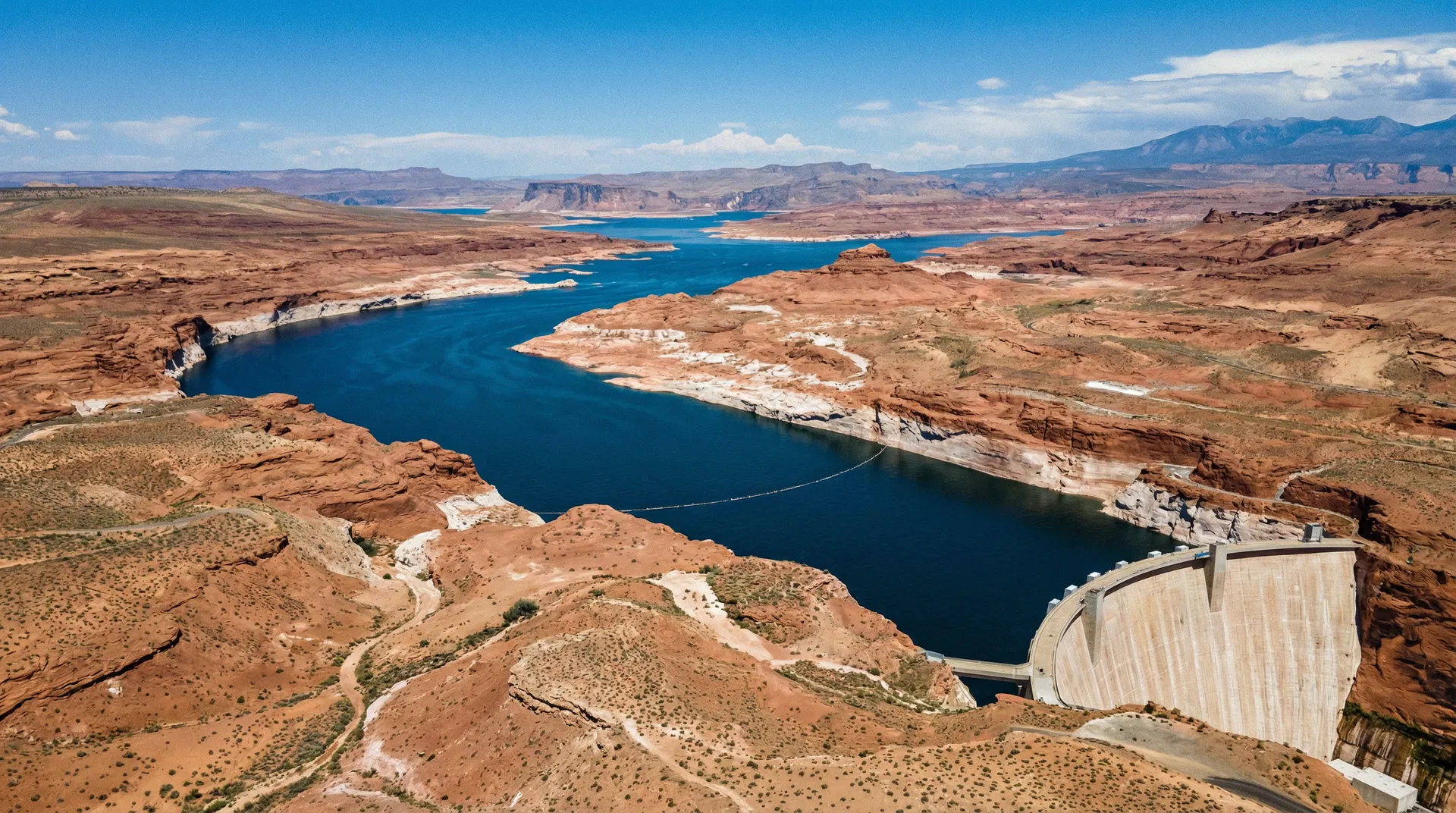
Imagine standing on a dusty overlook in the high desert of the American West. Below you, a river, the lifeblood of this arid landscape, snakes its way through a canyon. To the untrained eye, it is simply a body of water. But to a water investor, it is a portfolio of assets, a flowing ledger of debits and credits. Owning a water right is not about possessing a physical object; it is about holding a legal claim to a portion of that flow, a claim that is as real as the deed to a house.
The journey of a water right begins not on the river, but in a county courthouse or a state engineer’s office. It is here that the right is recorded, a legal document that specifies the owner, the source of the water, the point of diversion, the amount of water that can be taken, and the beneficial use to which it can be put. This piece of paper, often yellowed with age, is the tangible representation of an intangible asset. It is the key that unlocks the value of the water.
Let’s follow the journey of one such right, a senior right on a tributary to the Colorado River. This right, established in the late 19th century by a rancher who dug a diversion ditch to irrigate his hay meadows, is a prime asset. Its seniority means that in a dry year, when the river is low, its owner gets their full allocation of water before any junior right holders get a single drop. This reliability is what makes it so valuable.
For decades, this right was used to grow alfalfa, a thirsty but relatively low-value crop. But as the cities on the plains below have grown, the value of that water has changed. A water investor, recognizing this, acquires the right from the rancher’s descendants. The investor now has a choice. They can continue to lease the water to a local farmer, generating a steady but modest income. Or, they can pursue a more lucrative, but also more complex, strategy: moving the water to the city.
This is where the real work begins. The investor must file an application with the state water court to change the use of the water from agricultural to municipal. This is a long and arduous process, fraught with legal challenges from other water users and environmental groups. The investor must hire a team of lawyers, engineers, and hydrologists to prove that the change in use will not harm other water right holders or the environment. It is a high-stakes game of legal and scientific chess.
If the change is approved, the investor can then lease or sell the water to the city. The water that once grew hay will now flow through a pipeline to a new suburban development, supplying the homes, schools, and businesses that are the engine of the region’s growth. The investor has transformed a sleepy agricultural asset into a critical piece of urban infrastructure, and in the process, has realized a significant return on their investment.
This is the life of a water asset. It is a journey from a dusty riverbank to a bustling city, from a 19th-century legal document to a 21st-century financial instrument. It is a world where hydrology meets law, and where the future of our most essential resource is being decided, one transaction at a time.
XIII. The Central Dilemma
No discussion of water as an asset class is complete without confronting the profound ethical dilemma at its heart: is water a fundamental human right, or is it a tradable commodity? This is not a question with an easy answer, and it is the central tension that will shape the future of water markets. The debate pits the cold logic of economics against the deeply held moral conviction that the essentials of life should not be subject to the whims of the market.
The argument for water as a human right is simple and powerful. Water is essential for life, health, and dignity. Without it, people cannot survive. The United Nations, in 2010, formally recognized the human right to water and sanitation, declaring that everyone has the right to sufficient, safe, acceptable, physically accessible, and affordable water for personal and domestic uses. From this perspective, treating water as a commodity to be bought and sold is morally repugnant. It raises the specter of a future where the rich can afford to water their lawns while the poor go thirsty, and where life-sustaining water is diverted from communities to the highest bidder.
“Water is a public trust and a human right. It should not be treated as a commodity to be bought and sold on the open market.” – Maude Barlow, author and water activist
“Water is a public trust and a human right. It should not be treated as a commodity to be bought and sold on the open market.” – Maude Barlow, author and water activist
The counterargument, favored by economists and market proponents, is that treating water as a free or subsidized resource is precisely what has led to its mismanagement and waste. When water is underpriced, there is no incentive to conserve it. Farmers flood their fields with it, cities build fountains in the desert, and leaky infrastructure is left to crumble. By putting a price on water, the market sends a powerful signal about its true value. This encourages efficiency, innovation, and conservation. It provides a mechanism for reallocating water from low-value uses, such as growing alfalfa in the desert, to high-value uses, such as supplying a city or a high-tech factory.
Proponents of water markets argue that they are not about denying people water, but about ensuring that the resource is used as efficiently as possible. They contend that a well-regulated market can protect the basic human right to water while still allowing for the trading of surplus water. This can be done through mechanisms such as setting aside a certain amount of water for essential human and environmental needs, and then allowing the market to allocate the rest.
This central dilemma is not just a philosophical debate; it has real-world consequences. In countries like Chile, the privatization of water has been blamed for social and environmental problems. In the American West, the transfer of water from rural agricultural communities to thirsty cities has led to the decline of local economies and a sense of grievance. The rise of water futures on the CME has been met with alarm by those who fear that it will lead to a new era of speculation and volatility in the price of this essential resource.
Ultimately, the future of water investing will depend on our ability to reconcile these two competing perspectives. Can we design water markets that are both efficient and equitable? Can we harness the power of the market to promote conservation and innovation, while still ensuring that the basic human right to water is protected? The answers to these questions will determine whether water becomes a source of conflict or a model for the sustainable management of our most precious resource.
XIV. The Next Frontier
The water market of today is just a prologue. As the pressures of climate change and population growth intensify, the world of water investing is poised for a period of rapid and transformative change. The next frontier will be defined by technological innovation, the expansion of market-based mechanisms, and a growing recognition of water as a critical element of global economic and environmental security.
Technological Innovation: The most significant changes will likely come from technology. For decades, the holy grail of water technology has been cheaper and more efficient desalination. While still energy-intensive, the cost of desalination has fallen dramatically in recent years, thanks to advances in membrane technology and energy recovery systems. As the cost continues to decline, desalination will become an increasingly viable option for coastal cities around the world, creating a new source of supply and a new asset class for investors.
Another area of rapid innovation is smart irrigation. The vast majority of the world’s fresh water is used for agriculture, and much of it is wasted through inefficient irrigation practices. Smart irrigation systems, which use a combination of sensors, weather data, and artificial intelligence to deliver the precise amount of water that crops need, have the potential to revolutionize agricultural water use. This will not only save vast amounts of water but also create new investment opportunities in the ag-tech sector.
The Expansion of Water Markets: The success of water markets in Australia and the American West has not gone unnoticed. Other water-scarce regions are beginning to explore the potential of market-based mechanisms to solve their own water challenges. In the coming years, we are likely to see the emergence of new water markets in places like India, China, and South Africa. These markets will be shaped by their own unique legal and cultural contexts, but they will all be driven by the same fundamental logic: the need to allocate a scarce resource as efficiently as possible.
**Water Quality and
XV. Lessons from History
The modern-day battles over water rights may seem like a recent phenomenon, but the struggle to control this essential resource is as old as civilization itself. History is littered with cautionary tales and instructive parallels that can help us understand the stakes of the current water crisis. These stories remind us that when the thirst for water collides with the thirst for wealth and power, the consequences can be dramatic and long-lasting.
The California Gold Rush: The Original Water Wars
The California Gold Rush of 1849 was not just a scramble for precious metal; it was also a scramble for the water needed to extract it. The early gold miners quickly realized that the most efficient way to separate gold from gravel was through hydraulic mining, a process that required vast amounts of water to be diverted from rivers and streams and blasted at high pressure against hillsides. This led to the first large-scale conflicts over water in the American West.
The miners, in their quest for gold, developed their own system of water law, based on the principle of “first in time, first in right.” This was the origin of the prior appropriation doctrine that still governs water in the western states. The miners’ system was ruthlessly efficient at allocating water for mining, but it had devastating environmental consequences. Entire hillsides were washed away, rivers were choked with sediment, and downstream farms were buried in mud. The conflicts between miners, farmers, and downstream communities were a preview of the water wars that would come to define the West. The Gold Rush taught a crucial lesson: in the absence of a strong regulatory framework, the pursuit of short-term economic gain can lead to the long-term destruction of a shared resource.
The Owens Valley Aqueduct: A City’s Thirst, a Valley’s Tears
The story of the Owens Valley is the quintessential tale of a powerful city’s thirst for water and the rural community that was sacrificed to quench it. In the early 20th century, the city of Los Angeles was growing at a phenomenal rate, and it quickly outstripped its local water supply. William Mulholland, the head of the city’s water department, set his sights on the Owens Valley, a remote agricultural community on the eastern side of the Sierra Nevada mountains.
Through a combination of deception, political maneuvering, and outright intimidation, Los Angeles acquired the water rights to the Owens River and built a 233-mile aqueduct to carry the water to the city. The aqueduct, completed in 1913, was an engineering marvel, but it was a death sentence for the Owens Valley. As the river was diverted, the valley’s farms withered, its lake dried up, and its economy collapsed. The residents of the valley fought back, dynamiting the aqueduct in a series of desperate protests, but they were no match for the political and economic power of Los Angeles. The Owens Valley controversy is a stark reminder of the potential for conflict when urban and rural interests collide over water, and of the social and economic consequences that can result from the large-scale transfer of water from one region to another.
The Aral Sea Disaster: A Man-Made Catastrophe
The shrinking of the Aral Sea is one of the most catastrophic environmental disasters of the 20th century, a cautionary tale of what can happen when water is diverted on a massive scale without regard for the consequences. Once the fourth-largest lake in the world, the Aral Sea has now shrunk to a fraction of its former size, leaving behind a toxic desert.
The disaster was the result of a massive Soviet-era project to divert the two rivers that fed the Aral Sea, the Amu Darya and the Syr Darya, to irrigate vast cotton and wheat fields in the deserts of Central Asia. The project was a short-term economic success, but it was an ecological and human disaster. As the sea receded, the local fishing industry collapsed, the climate became more extreme, and the exposed seabed, laden with salt and pesticides, became a source of toxic dust storms. The Aral Sea disaster is a powerful and tragic illustration of the law of unintended consequences, and a warning of the dangers of large-scale water diversions that ignore the delicate balance of natural ecosystems.
XVI. The Risks
While the investment case for water is compelling, it is far from a risk-free proposition. The water market is fraught with a unique set of challenges that can trip up even the most sophisticated investors. Understanding and mitigating these risks is the key to successfully navigating this complex and often treacherous landscape.
Regulatory Risk: This is perhaps the most significant risk facing water investors. Water is a highly regulated resource, and the laws that govern it are subject to change. A new piece of legislation, a court ruling, or a change in government policy can dramatically alter the value of a water right overnight. In the American West, for example, the federal government has the power to impose cuts on the use of Colorado River water, which could render some junior water rights worthless. In Chile, the ongoing debate over a new constitution could lead to a fundamental reshaping of the country’s water laws. Investors must constantly monitor the regulatory environment and be prepared for the possibility of adverse changes.
Climate Risk: The very scarcity that makes water valuable is also a source of risk. Climate change is making weather patterns more extreme and less predictable. A prolonged drought can reduce the amount of water available, even for senior right holders. A major flood can damage water infrastructure and disrupt supply. These physical risks are becoming more frequent and more severe, and they must be factored into any water investment analysis. Investors can mitigate this risk by diversifying their portfolios across different watersheds and by investing in climate-resilient infrastructure.
Political and Social Risk: The commodification of water is a politically and socially sensitive issue. There is a growing public backlash against the idea of water as a private asset, and this can create a hostile environment for investors. Protests, lawsuits, and negative media attention can all create headwinds for water projects. In some cases, this can lead to the expropriation of water rights or the imposition of punitive taxes. Investors must be mindful of the social and political context in which they are operating, and they must be prepared to engage with local communities and stakeholders to build trust and a social license to operate.
Reputational Risk: In an age of increasing environmental and social awareness, being seen as a “water baron” can be a significant reputational liability. Companies that are perceived to be profiting from the scarcity of a life-sustaining resource can face boycotts, divestment campaigns, and public shaming. This can damage their brand, alienate their customers, and make it difficult to attract and retain talent. Investors must be careful to ensure that their water investments are not only profitable but also socially and environmentally responsible. This means investing in projects that promote conservation, improve water quality, and ensure equitable access to water.
XVII. The Alternative Fortune Verdict
Water is, without question, one of the most compelling alternative asset classes of the 21st century. The investment thesis is simple and undeniable: a growing global population and a changing climate are putting unprecedented stress on a finite and essential resource. This fundamental supply-demand imbalance creates a powerful, long-term tailwind for the value of water rights and related assets. For investors with a long time horizon and a tolerance for complexity, water offers the potential for significant, non-correlated returns and a genuine hedge against inflation and climate risk.
However, this is not a market for the faint of heart. The risks—regulatory, climatic, political, and reputational—are substantial. The central dilemma of water as a human right versus a commodity will continue to shape the political and social landscape, creating a level of headline risk that is not present in other asset classes. Success in this market requires deep domain expertise, a granular understanding of local hydrology and law, and a level of patience that is often in short supply in the world of finance.
For most investors, the most prudent approach is to gain exposure through a diversified portfolio of publicly traded water companies and ETFs. This offers a liquid and lower-risk way to play the water theme. For those with the capital and expertise to venture into the private markets, direct ownership of water rights can offer superior returns, but only if the risks are managed with extreme care.
Ultimately, we believe that water is an asset class that cannot be ignored. The challenges of water scarcity are not going away; they are only going to become more acute. The investors who can navigate this complex and controversial market will not only be well-positioned to generate significant returns, but they will also be playing a crucial role in driving the innovation and efficiency that will be required to solve one of the greatest challenges of our time.
Due Diligence Questions for the Aspiring Water Investor:
- •
For Direct Water Rights:
- •How senior is the water right? What is its priority date?
- •What are the historical flow rates of the source? How reliable is it in a drought?
- •What are the legal and regulatory hurdles to changing the use or location of the water right?
- •Who are the other major water users in the basin? What is the political and social climate?
- •
For Water Stocks and ETFs:
- •What is the company’s primary business? Is it a utility, an infrastructure provider, or a technology company?
- •What is the company’s exposure to regulatory risk? Is it operating in a stable and predictable environment?
- •How is the company positioned to benefit from the long-term trends of water scarcity and climate change?
- •For ETFs, what is the underlying index? What is the fund’s geographic and sub-sector diversification?