The 60-Second Version
Cell towers are the invisible backbone of our hyper-connected world. They are the physical infrastructure that enables our smartphones, streaming services, and the ever-expanding Internet of Things. For investors, they represent a unique and compelling asset class: a form of real estate with incredibly stable, long-term tenants and near-monopolistic characteristics. The business model is simple and powerful: build or acquire a tower, lease space to wireless carriers like AT&T, Verizon, and T-Mobile on long-term contracts (typically 10-15 years), and enjoy recurring revenue with built-in annual rent escalators of around 3%. The real magic happens when a second or third tenant is added to a tower; the incremental cost is almost zero, making the margins on co-location close to 100%. This creates a powerful, cash-generating machine with predictable, growing returns.
The industry is dominated by three publicly traded giants—American Tower (AMT), Crown Castle (CCI), and SBA Communications (SBAC)—with a combined market capitalization exceeding $200 billion. These companies own and operate the majority of towers in the United States and have significant international portfolios. The primary demand driver is the insatiable global appetite for mobile data, which is growing at a staggering rate. The rollout of 5G technology is a massive catalyst, requiring carriers to densify their networks with more equipment on existing towers and deploy new “small cells” in urban areas to handle the increased data load. This creates a multi-decade tailwind for the tower industry. With its combination of high barriers to entry, predictable cash flows, and strong secular growth drivers, cell tower infrastructure offers a compelling, inflation-protected investment opportunity that looks more like a utility than traditional real estate.
I. What Cell Tower Investing Actually Is
At its core, investing in cell towers is a specialized form of real estate investment. However, instead of buying an apartment building and leasing it to tenants who live there, you are acquiring a vertical steel structure and leasing space on it to tenants who need to broadcast wireless signals. The “tenants” are major telecommunications companies, and the “rent” is the fee they pay to place their antennas and equipment on the tower. You are, in essence, a landlord for the digital age.
When you invest in a cell tower, you are buying a portfolio of long-term, contractually guaranteed cash flows. The core asset is the physical tower, which can range from a simple monopole to a massive, 2,000-foot guyed tower. But the real value lies in the leases attached to that tower. These are not your typical one-year residential leases. Cell tower leases are typically 10-15 years in length and feature annual rent escalators, providing a predictable and growing stream of income. The high cost and logistical complexity for a carrier to move its equipment to another tower create very sticky tenant relationships, resulting in renewal rates of over 98%.
Returns are generated primarily through these lease payments. The economics are highly attractive. A single-tenant tower can generate a solid return, but the model becomes truly powerful with the addition of more tenants. The cost of adding a second or third tenant (a practice known as co-location) is minimal, meaning that the revenue from these additional leases flows almost directly to the bottom line. This inherent operating leverage is a key reason why cell tower companies have historically generated such strong returns and high margins. Investors can gain exposure to this asset class through several avenues, including purchasing shares in publicly traded Real Estate Investment Trusts (REITs) like American Tower, Crown Castle, and SBA Communications, investing in private equity funds focused on digital infrastructure, or, for the very wealthy, direct ownership of towers.
II. The Market
The market for cell tower infrastructure is both vast and steadily growing, driven by the relentless global demand for mobile data. While estimates vary, the scale is undeniably massive. In the United States alone, the telecom tower market was valued at approximately $50 billion in 2024 and is projected to grow at a compound annual growth rate (CAGR) of around 3-5% over the next decade. Globally, the market is even larger, with some estimates placing it at over $60 billion in 2024 and forecasting it to surpass $165 billion by 2034. This growth is not a recent phenomenon but rather the continuation of a long-term trend rooted in the evolution of wireless technology.
The history of the cell tower industry is a story of technological innovation and strategic business model evolution. What began as a fragmented collection of towers owned by individual wireless carriers has consolidated into a highly efficient, shared infrastructure model dominated by a few specialized players. This timeline highlights the key milestones that have shaped the industry:
| Year | Milestone | Significance |
|---|---|---|
| 1983 | The first commercial cellular phone call is made in the United States. | Marks the birth of the mobile era, creating the initial demand for a network of towers to provide coverage. |
| 1990s | The Telecommunications Act of 1996 is passed in the U.S. | Deregulation encourages competition and accelerates the build-out of wireless networks, leading to a boom in tower construction. Carriers begin to realize the economic benefits of outsourcing tower ownership. |
| 1995 | American Tower is founded as a subsidiary of American Radio Systems. | One of the first independent tower companies is established, pioneering the tower leasing model. |
| 1998 | Crown Castle International is founded. | Another major player enters the market, further validating the independent tower ownership model. |
| 2001 | 3G technology is commercially launched. | The shift to mobile data begins, increasing the demand for tower space and power to support new data-hungry applications. |
| 2012 | Major carriers like AT&T and T-Mobile sell large portfolios of their towers to REITs. | This marks a significant strategic shift, as carriers move to an asset-light model and tower companies gain scale and market power. |
| 2020 | The global rollout of 5G begins. | The latest generation of wireless technology requires significant network densification, driving a new wave of investment in both macro towers and small cells. |
| 2024 | The U.S. wireless infrastructure sector invests over $63 billion. | Demonstrates the massive and ongoing capital investment required to maintain and upgrade wireless networks, a direct benefit to tower owners. |
III. The Demand Drivers
The investment case for cell towers is underpinned by a set of powerful and enduring demand drivers. These are not cyclical trends but long-term secular shifts in how we live and work. The need for ubiquitous, high-speed wireless connectivity is now as fundamental as the need for electricity or water, and this insatiable demand is what fuels the growth of the tower industry.
1. Exponential Growth in Mobile Data Consumption: The primary driver is the staggering growth in mobile data traffic. Globally, mobile data traffic is expected to increase nearly fourfold between 2022 and 2028. This explosion is driven by the increasing use of video streaming, social media, cloud gaming, and a growing number of connected devices per person. Each of these activities consumes significant bandwidth, and wireless carriers must continuously invest in their networks to keep pace. This investment translates directly into more equipment being placed on towers, which in turn means more rent for tower owners.
2. The 5G Revolution and Network Densification: The ongoing transition to 5G is a once-in-a-decade technology cycle that is providing a massive tailwind for the tower industry. 5G offers significantly faster speeds and lower latency than previous generations, but it also requires a denser network of antennas to achieve its full potential. This means that carriers need to add new 5G equipment to their existing macro tower sites, a process that generates amendment revenue for tower owners. Furthermore, the higher frequencies used by 5G have a shorter range, necessitating the deployment of thousands of “small cells” in urban and suburban areas to fill in coverage gaps. This creates a new and rapidly growing revenue stream for tower companies, particularly those with significant fiber assets like Crown Castle.
3. The Internet of Things (IoT): The proliferation of connected devices, from smart home appliances and wearable technology to industrial sensors and autonomous vehicles, is another key demand driver. Each of these devices requires a wireless connection to function, adding to the overall data load on the network. While many IoT devices consume relatively small amounts of data individually, their sheer volume creates a significant and growing source of demand for network capacity. As the IoT ecosystem continues to expand, so too will the need for the underlying infrastructure that supports it.
4. Emerging Markets Growth: While the U.S. is a mature market, there are significant growth opportunities in emerging markets across Latin America, Africa, and Asia. In many of these regions, mobile penetration is still relatively low, and the transition to 4G and 5G is in its early stages. As these economies develop and more people come online, the demand for wireless infrastructure will accelerate. Tower companies with a strong international presence, such as American Tower, are well-positioned to capitalize on this long-term growth trend.
IV. The Players
The cell tower industry is highly concentrated, with a few major players dominating the landscape. These companies, structured as Real Estate Investment Trusts (REITs), own and operate the vast majority of towers in the United States and have extensive international portfolios. Their scale and market power create significant barriers to entry for new competitors.
| Name | Type | AUM/Scale | Notable |
|---|---|---|---|
| American Tower (AMT) | Public REIT | ~226,000 communications sites | The largest tower company in the world, with a significant and growing international presence, particularly in India, Latin America, and Africa. |
| Crown Castle (CCI) | Public REIT | >40,000 towers, ~115,000 small cell nodes on air or under contract, and ~85,000 route miles of fiber | Primarily focused on the U.S. market, with a unique strategy that combines towers with a large and growing portfolio of small cells and fiber assets. |
| SBA Communications (SBAC) | Public REIT | ~40,000 towers | The third-largest player in the U.S., with a strong focus on operational efficiency and a growing presence in Latin America and Africa. |
| DigitalBridge | Private Equity | Manages a large portfolio of digital infrastructure assets, including cell towers. | A leading private equity firm specializing in digital infrastructure, with a global portfolio of investments in towers, data centers, and fiber. |
| Vertical Bridge | Private Tower Company | Over 300,000 sites across the U.S. | The largest private tower company in the United States, with a diversified portfolio of towers, rooftops, and other wireless infrastructure assets. |
V. Geography
The cell tower market is a global industry, but its concentration varies significantly by region. The United States is the most mature and valuable market, but the highest growth potential is found in the vast, data-hungry populations of Asia and other emerging economies. Tower companies have strategically positioned themselves to capitalize on these different regional dynamics.
North America, and particularly the United States, represents the largest and most profitable market for tower operators. This is due to the high average revenue per user (ARPU), the advanced state of the 4G/5G network buildout, and a favorable regulatory environment that has encouraged the tower-sharing model. The U.S. market is dominated by the “Big Three” REITs, which control the majority of the country’s tower assets.
However, the most significant future growth is expected to come from the Asia-Pacific region. Countries like India, China, and Indonesia have massive populations, rapidly growing economies, and increasing smartphone penetration. This creates a fertile ground for explosive growth in mobile data consumption. Tower companies are aggressively expanding in these markets to meet the surging demand for new infrastructure.
| Region | Key Characteristics | Major Players |
|---|---|---|
| North America | Mature market, high ARPU, 5G densification, dominated by the “Big Three” REITs. | American Tower, Crown Castle, SBA Communications |
| Asia-Pacific | Highest growth potential, massive population, rising smartphone penetration, fragmented market with many local players. | American Tower, Indus Towers (India), China Tower |
| Latin America | Strong growth potential, increasing smartphone adoption, and a favorable environment for tower sharing. | American Tower, SBA Communications, Phoenix Tower International |
| Europe | Fragmented market with a mix of carrier-owned and independent tower companies. Consolidation is a key theme. | Cellnex Telecom (Spain), Vantage Towers (Vodafone), TOTEM (Orange) |
| Africa | High-growth market with a young population and increasing mobile adoption. Significant need for new tower construction. | American Tower, IHS Towers, Helios Towers |
VI. How to Actually Invest
For most investors, the most practical and efficient way to gain exposure to the cell tower asset class is through the public markets. However, several options exist, each with its own set of characteristics, risks, and potential returns. The right choice depends on an investor’s capital, risk tolerance, and desired level of involvement.
Publicly Traded REITs: This is the most common and accessible route. By purchasing shares of American Tower (AMT), Crown Castle (CCI), or SBA Communications (SBAC), you are buying a piece of a massive, diversified portfolio of cell towers and other digital infrastructure. These companies are structured as Real Estate Investment Trusts (REITs), which means they are required to pay out at least 90% of their taxable income to shareholders in the form of dividends. This provides a steady stream of income, while the stock price offers the potential for capital appreciation. Investing in these REITs is as simple as buying a stock through a brokerage account.
Private Equity Funds: For accredited investors with a higher risk tolerance, private equity funds specializing in digital infrastructure offer another avenue. Firms like DigitalBridge and Vertical Bridge pool capital from investors to acquire, develop, and operate portfolios of towers and other digital assets. These funds typically have higher minimum investments and longer lock-up periods than publicly traded REITs, but they can also offer the potential for higher returns. They provide a way to access a more concentrated and actively managed portfolio of assets.
Direct Ownership: The most direct way to invest is to own a tower yourself. This could involve having a tower built on your land or acquiring an existing tower from another owner. While this approach offers the highest potential for returns, it also comes with the most significant operational responsibilities. You would be responsible for negotiating leases with carriers, maintaining the tower, and ensuring regulatory compliance. This option is generally only suitable for sophisticated investors with deep industry knowledge and significant capital.
| Vehicle | Minimum Investment | Liquidity | Expected Return | Risk Level |
|---|---|---|---|---|
| Public REITs (e.g., AMT, CCI) | Price of one share | High (traded on stock exchanges) | Moderate (dividends + capital appreciation) | Low to Moderate |
| Private Equity Funds | High ($250k+) | Low (5-10 year lock-up) | High | Moderate to High |
| Direct Ownership | Very High ($500k - $2M+ per tower) | Very Low (illiquid asset) | Very High | High |
| Cell Tower Lease Buyouts | Varies (depends on lease value) | Low to Moderate | Moderate | Moderate |
VII. Unit Economics
The financial model of a cell tower is a case study in high upfront investment followed by years of low-cost, high-margin recurring revenue. Understanding the economics of a single tower reveals why this asset class is so attractive to infrastructure investors. The key is the combination of a long-lifespan asset with the ability to add multiple tenants at minimal incremental cost.
A typical new-build macro tower in the United States requires a significant initial capital expenditure. This includes the cost of the land (or, more commonly, a long-term ground lease), zoning and permitting, the steel structure itself, and the necessary power and backhaul connections.
| Cost Component | Estimated Cost (USD) |
|---|---|
| Tower Construction | $150,000 - $300,000+ |
| Land Acquisition/Lease | Varies significantly by location |
| Zoning & Permitting | $25,000 - $50,000 |
| Total Initial Investment | $250,000 - $500,000+ |
Once the tower is built, the revenue side of the equation comes into play. The tower owner’s primary goal is to secure an anchor tenant, typically a major wireless carrier like Verizon or AT&T. This first lease is what makes the tower economically viable.
| Revenue & Margin (Single Tenant) | Estimated Annual Value (USD) |
|---|---|
| Annual Lease Rate (Anchor Tenant) | $24,000 - $48,000 ($2,000 - $4,000/month) |
| Annual Operating Costs (ground lease, maintenance, taxes) | ~$10,000 - $15,000 |
| Net Operating Income (NOI) | ~$14,000 - $33,000 |
| NOI Margin | ~60-70% |
The real economic power of the tower model is unleashed with co-location—the addition of second, third, or even fourth tenants. The incremental cost to add another carrier’s antennas to an existing tower is minimal, often just some minor structural engineering and administrative work. However, the revenue from that new tenant is substantial, making the margins on these additional leases incredibly high.
| Revenue & Margin (Co-location) | Estimated Annual Value (USD) |
|---|---|
| Annual Lease Rate (Second Tenant) | $18,000 - $30,000 ($1,500 - $2,500/month) |
| Incremental Operating Costs | ~$1,000 - $2,000 |
| Incremental NOI | ~$17,000 - $28,000 |
| Incremental NOI Margin | ~90-95% |
This ability to stack high-margin leases on a single piece of infrastructure is what drives the exceptional profitability of the tower industry. A mature tower with three tenants can generate an NOI margin of 80% or higher, producing a very attractive return on the initial investment. With renewal rates for existing tenants exceeding 98% and annual lease escalators of ~3%, these assets become long-term, inflation-protected cash-flow machines.
VIII. Macroeconomic Sensitivity
One of the most compelling attributes of cell tower infrastructure is its resilience across various macroeconomic cycles. The non-discretionary nature of wireless services, combined with the long-term, contractual nature of tower leases, creates a business model that is less correlated with broader economic volatility than many other asset classes. However, no asset is completely immune to macro trends. Here’s how cell towers typically perform across four distinct economic regimes.
| Regime | Impact | Historical Example |
|---|---|---|
| High Growth, Low Inflation (Goldilocks) | In a healthy, growing economy, businesses and consumers increase their spending and data consumption. This environment encourages wireless carriers to invest more aggressively in network expansion and upgrades to capture market share, leading to increased leasing demand for tower companies. Asset values tend to appreciate in line with the broader market. | Mid-to-late 2010s: Following the recovery from the Global Financial Crisis, this period saw steady economic growth, low inflation, and the widespread adoption of 4G/LTE. This fueled a massive increase in mobile data consumption and strong, consistent growth for tower REITs. |
| High Growth, High Inflation (Overheating) | The primary defense against inflation is built directly into the business model: long-term leases with annual rent escalators, typically fixed at ~3% in the U.S. or tied to a local inflation index in international markets. While high inflation can increase operating costs (like steel for new builds or labor), the contractual revenue growth provides a powerful and predictable hedge, ensuring that cash flows keep pace with or exceed inflation. | 2021-2022: As the global economy rebounded from the pandemic, inflation surged. Tower companies, however, demonstrated their resilience as their contractual rent escalators kicked in, protecting their margins and proving the inflation-hedging quality of their assets. |
| Low Growth, Low Inflation (Recession) | During a recession, the defensive characteristics of cell towers shine. Wireless services are considered essential utilities by consumers and businesses, who will cut spending in many other areas before giving up their mobile phones. This results in very stable tenancy and revenue for tower owners, even as other sectors of the economy struggle. Tower REITs have historically outperformed the broader market during downturns due to their predictable cash flows. | 2008-2009 (Global Financial Crisis): While the broader real estate market and the S&P 500 experienced severe declines, the revenue and cash flow of major tower companies remained remarkably stable. The launch of the iPhone in 2007 had unleashed a new wave of data demand that continued unabated through the recession. |
| Low Growth, High Inflation (Stagflation) | This is arguably the most challenging environment for most asset classes. However, cell towers are uniquely well-positioned to weather it. The combination of non-discretionary demand (providing revenue stability in a low-growth environment) and contractual inflation protection (protecting margins in a high-inflation environment) makes them one of the most resilient infrastructure assets during periods of stagflation. | 1970s: While the modern tower industry did not exist in its current form, the period serves as a useful analogue. Assets with inflation-linked contracts and inelastic demand (like regulated utilities) performed relatively well compared to the broader market, which struggled with the dual pressures of a stagnant economy and rising prices. |
IX. Tax Considerations: A Global Overview
Tax treatment is a critical component of any investment decision, and for a global asset class like cell towers, the rules can vary significantly from one jurisdiction to another. For most investors, exposure will be through publicly traded REITs, and the tax implications are primarily driven by the treatment of dividends. However, the underlying tax environment for the infrastructure itself also plays a key role in the overall profitability of the industry. This table provides a high-level overview of the tax landscape in several key markets.
Disclaimer: This information is for educational purposes only and does not constitute tax advice. Investors should consult with a qualified tax professional in their jurisdiction.
| Jurisdiction | Tax Treatment of REIT/Infrastructure Investments |
|---|---|
| United States | REIT dividends are generally taxed as ordinary income for domestic investors. For foreign investors, there is typically a 30% withholding tax, which may be reduced by a tax treaty. The corporate structure of REITs allows them to avoid corporate income tax if they distribute at least 90% of their taxable income to shareholders. |
| United Kingdom | The UK has a REIT regime that exempts rental income and gains from corporate tax. Dividends are subject to income tax for UK investors. The UK also offers specific tax incentives for "qualifying infrastructure companies" to encourage investment in essential assets. |
| European Union | Tax policies vary by member state. There is no single EU-wide tax regime for infrastructure. However, many countries have favorable tax structures for real estate and infrastructure investments to attract capital. The EU has also been debating a "digital levy" which could impact the profitability of telecommunications companies. |
| Singapore | Singapore has a very favorable tax environment for investors. There is no capital gains tax, and the country has a territorial tax system, meaning that foreign-sourced income is generally not taxed. Singaporean REITs (S-REITs) are a popular investment vehicle and offer tax transparency. |
| United Arab Emirates | The UAE has a zero-tax regime for most forms of income, including dividends and capital gains. This makes it a highly attractive jurisdiction for international investors. There are no specific taxes on infrastructure investments. |
| Australia | Australia has a well-established REIT market (A-REITs). For investors, distributions are a mix of rental income and capital gains, each taxed at the investor's marginal rate. The tax treatment is designed to avoid double taxation. |
X. Case Studies
To truly understand the cell tower investment model, it’s helpful to look at real-world examples. These case studies illustrate the different strategies that tower companies employ to create value, from large-scale international acquisitions to the granular work of densifying urban networks.
Case Study 1: American Tower’s Landmark Acquisition of Telxius Towers
In a move that significantly expanded its European and Latin American footprint, American Tower (AMT) acquired the telecommunications tower division of Telxius, a subsidiary of Telefónica, in a transaction valued at approximately €7.7 billion (roughly $9.4 billion) in 2021. This was one of the largest digital infrastructure deals in history and a clear demonstration of AMT’s strategy to pursue large-scale, international growth.
- •The Assets: The deal included approximately 31,000 existing communications sites in Germany, Spain, Brazil, Chile, Peru, and Argentina. The portfolio was high-quality, with a strong tenant base and clear potential for future lease-up and co-location.
- •The Rationale: The acquisition gave AMT immediate and significant scale in key European markets, particularly Germany, where it had previously lacked a major presence. It also solidified its leading position in Latin America. The deal was structured to be immediately accretive to AMT’s Adjusted Funds From Operations (AFFO) per share, a key metric for REIT investors.
- •The Outcome: The integration of the Telxius portfolio has been a success for AMT. The company has been able to leverage its operational expertise to improve efficiency and drive new leasing activity across the acquired sites. The deal also included a commitment for the construction of approximately 3,300 new sites in Germany and Brazil, providing a built-in pipeline for future growth. This case study highlights the power of large-scale M&A in the tower industry to rapidly create value and consolidate market leadership.
Case Study 2: Crown Castle’s Small Cell Deployment in Los Angeles
While American Tower has focused on international expansion, Crown Castle (CCI) has pursued a unique strategy centered on the U.S. market, combining its traditional tower portfolio with a massive investment in small cells and fiber. Small cells are low-powered antennas, often attached to streetlights or utility poles, that are essential for densifying wireless networks in urban areas to support 5G.
- •The Challenge: Los Angeles, with its sprawling geography and high population density, presented a significant challenge for wireless carriers trying to provide consistent 5G coverage. Macro towers alone were not sufficient to meet the demand for data, particularly in dense urban corridors.
- •The Solution: Crown Castle leveraged its extensive fiber network in the L.A. basin to deploy a large-scale network of small cells. By using a technique called “microtrenching,” they were able to install the necessary fiber optic cables with minimal disruption to city streets. This fiber network then served as the backbone for thousands of small cell nodes, which were strategically placed to augment the coverage from the macro tower network.
- •The Outcome: The deployment of this dense small cell network has significantly improved wireless capacity and performance in Los Angeles, enabling carriers to deliver a true 5G experience to their customers. For Crown Castle, it has created a new, high-growth revenue stream that is complementary to its tower business. This case study demonstrates the importance of a
XI. The Core Constraint
Despite its many attractive qualities, the cell tower industry is not without its challenges. The single biggest structural constraint facing the asset class is the reliance on a small number of very powerful tenants. In the United States, the wireless market is dominated by just three major carriers: AT&T, Verizon, and T-Mobile. These three companies account for the vast majority of leasing revenue for the tower REITs. This high degree of tenant concentration creates a power imbalance that can impact lease negotiations, pricing power, and the long-term growth trajectory of the tower companies.
This constraint manifests in several ways. First, the consolidation of wireless carriers (such as the merger of T-Mobile and Sprint) can lead to the decommissioning of redundant cell sites, creating churn for the tower owners. While the impact of this has so far been manageable, the threat of future consolidation remains a significant risk. Second, the immense scale of the major carriers gives them significant leverage in lease negotiations. While the cost of moving equipment from one tower to another is high, carriers can still use the threat of non-renewal or the possibility of building their own towers to push for more favorable lease terms. This can limit the ability of tower companies to push through aggressive rent increases.
Finally, the growth of the tower industry is fundamentally tied to the capital expenditure cycles of the wireless carriers. If the carriers decide to slow down their network investment, either due to economic pressures or a shift in strategic priorities, the demand for new leases and amendments will decline. This makes the tower companies, to some extent, a leveraged play on the health and strategic decisions of their largest customers. While the long-term trend of data growth provides a strong secular tailwind, the path of that growth can be lumpy and unpredictable, dictated by the spending habits of a very small and powerful customer base.
XII. Inside the Asset
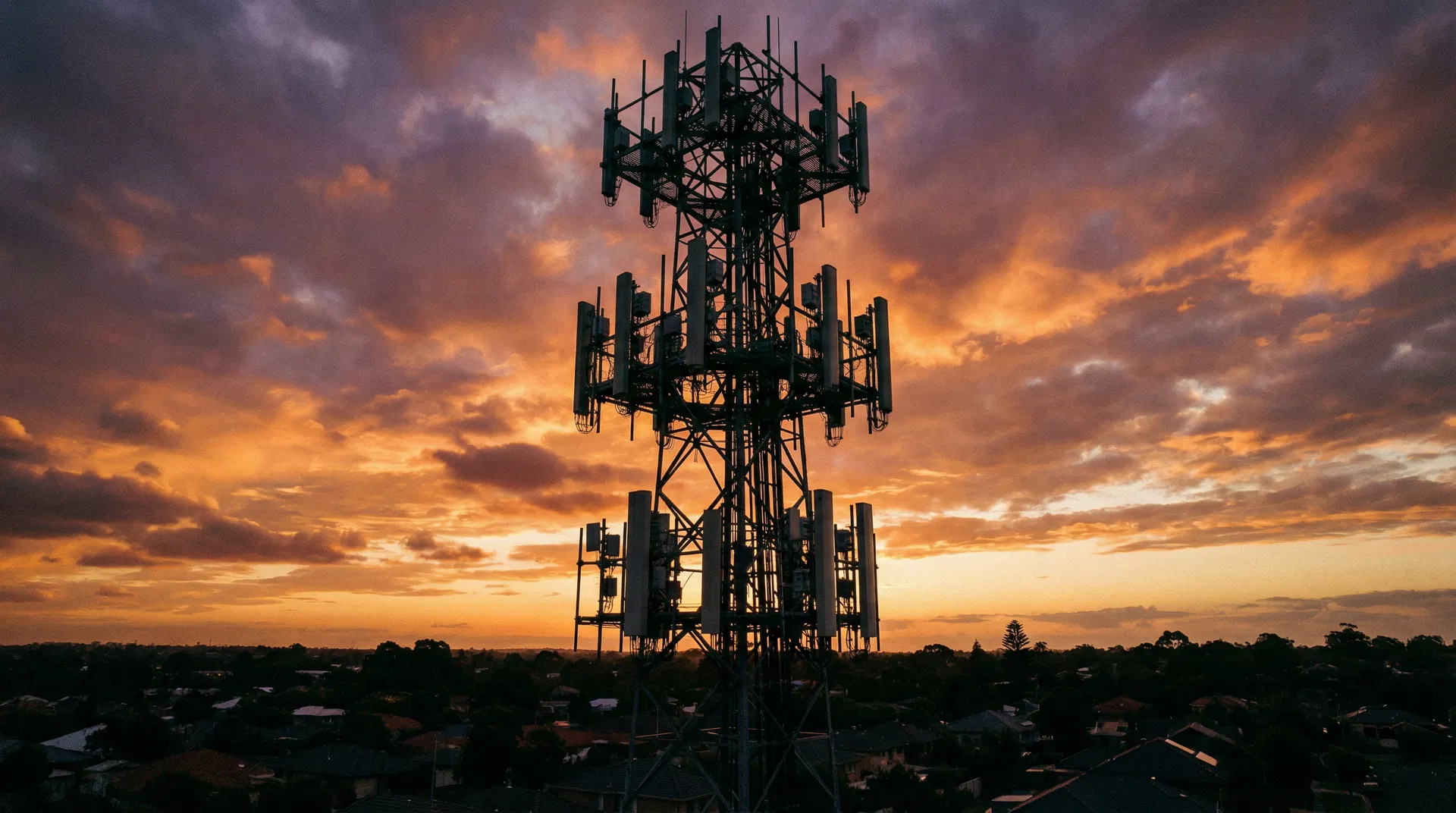
From a distance, a cell tower is a familiar, almost mundane part of the modern landscape—a slender steel lattice or monopole reaching for the sky. But up close, it reveals itself as a complex and vital piece of high-tech real estate. A visit to a typical macro site offers a ground-level view of this invisible infrastructure.
The first thing you notice is the security. The site is enclosed by a chain-link fence topped with barbed wire, with prominent signs warning of the dangers of radio frequency (RF) emissions. Access is tightly controlled, and only authorized personnel are allowed inside. The base of the tower is a concrete pad, upon which the massive steel structure is anchored. The tower itself can take several forms: a self-supporting lattice, a sleek monopole, or a guyed mast held in place by a web of steel cables. The choice of design depends on the required height, the wind load, and local zoning regulations.
At the base of the tower sits a small, windowless shelter or a series of equipment cabinets. This is the nerve center of the site. Inside, you’ll find racks of radio equipment, power supplies, and backup batteries. The air is filled with the hum of cooling fans, working to dissipate the heat generated by the powerful electronics. This is where the signals from the antennas are processed, amplified, and sent on their way. A fiber optic cable, the site’s connection to the broader internet, runs from the shelter out to a nearby utility pole or underground conduit.
Looking up, you see the revenue-generating part of the asset: the antennas. These are mounted on triangular platforms at various heights on the tower. Each carrier has its own set of antennas, typically arranged in a cluster of three to provide 360-degree coverage. You can often distinguish the different generations of technology by the size and shape of the antennas, from the long, thin panels of 4G to the more compact, square-shaped massive MIMO arrays of 5G. The coaxial cables that connect the antennas to the radio equipment in the shelter run down the length of the tower, a thick black artery of data.
What you don’t see is the constant stream of data flowing through the site—the millions of phone calls, text messages, and video streams that are being transmitted and received every second. A cell tower is not just a piece of steel; it is a dynamic, living node in a vast and complex network, a silent but essential enabler of our digital lives.
XIII. The Central Dilemma
The central dilemma for investors in the cell tower industry is the tension between its status as a high-growth technology play and its valuation as a stable, utility-like real estate asset. This paradox creates a fundamental challenge in how to value these companies and how to think about their future prospects. Are they fast-growing tech companies, deserving of a high-multiple, or are they slow-and-steady real estate companies, deserving of a more modest, yield-based valuation?
On one hand, the demand story is pure tech. The industry’s growth is driven by the same powerful secular trends that have propelled the likes of Google, Amazon, and Netflix: the exponential growth of data, the shift to mobile, and the rise of the digital economy. The rollout of 5G and the future development of 6G and beyond will require massive and sustained investment in network infrastructure, providing a long runway for growth. From this perspective, tower companies look like a picks-and-shovels play on the biggest technology trends of our time.
On the other hand, the business model is pure real estate. The companies own physical assets, lease them out on long-term contracts, and collect rent. Their revenues are predictable, their margins are stable, and their cash flows are bond-like in their consistency. They are structured as REITs, and their performance is often compared to that of other real estate sectors like industrial or residential. From this perspective, they should be valued based on their dividend yield and their net asset value, like any other real estate company.
This dual identity creates a challenge for investors. In a bull market, when investors are chasing growth, tower stocks can trade at high multiples, like tech stocks. But in a bear market, when investors are seeking safety, they can be punished for not being as defensive as traditional utilities. The market’s perception of these companies can shift rapidly, leading to periods of high volatility. The central dilemma, therefore, is to determine the right lens through which to view these assets. Are you investing in the future of technology or the stability of real estate? The answer, of course, is both. And the challenge is to find a valuation that properly reflects this unique and powerful combination.
XIV. The Next Frontier
The cell tower industry, while mature, is far from static. The next frontier of growth will be driven by a new set of technological and business model innovations that will reshape the digital infrastructure landscape. The tower of the future may look very different from the steel lattice structures of today, and the services offered by tower companies will likely expand far beyond simple co-location.
Edge Computing: One of the most significant emerging opportunities is the integration of data center capabilities at the base of the tower. The rise of applications that require ultra-low latency, such as autonomous vehicles, augmented reality, and real-time industrial automation, is creating a need for “edge computing”—the ability to process data closer to where it is generated, rather than sending it to a centralized cloud. Cell tower sites are the natural location for these edge data centers, and tower companies are uniquely positioned to provide the space, power, and connectivity to make this a reality. This could create a new and highly valuable revenue stream, transforming the tower from a simple antenna host into a distributed data processing hub.
Private Networks: Another key growth area is the development of private 4G and 5G networks for enterprise customers. Large industrial companies, logistics hubs, and university campuses are increasingly looking to build their own dedicated wireless networks to support their specific operational needs. Tower companies can play a key role in this market by providing the underlying infrastructure and managed services to enable these private networks. This represents a new customer segment for the tower industry, beyond its traditional reliance on the major wireless carriers.
New Technologies and Tower Designs: The physical form of the tower itself is also evolving. New materials and construction techniques are making it possible to build lighter, more aesthetically pleasing towers that can be deployed more quickly and with less environmental impact. We are also seeing the rise of “smart poles” and other multi-functional street furniture that can host small cells, IoT sensors, and other digital infrastructure in a more integrated and less obtrusive way. The tower of the future will be more than just a tower; it will be a multi-tenant, multi-service platform for the digital age.
XV. Lessons from History
To understand the future of cell towers, it is instructive to look at historical parallels from other infrastructure asset classes. The evolution of railroads, highways, and the internet itself offers valuable lessons about the power of network effects, the importance of shared infrastructure, and the long-term value of a well-positioned, mission-critical asset.
1. The Railroads and the Power of a Network: In the 19th century, the railroads were the high-tech infrastructure of their day. They connected a vast and growing country, enabled the growth of new industries, and created immense fortunes for their builders. The early days of the railroad industry were characterized by a chaotic and fragmented build-out, with multiple competing lines and a lack of standardized gauges. Over time, however, the industry consolidated, and a national network emerged. The most valuable railroad companies were not necessarily those that ran the most trains, but those that controlled the most strategic routes and bridges. This is analogous to the cell tower industry today. The value is not in the data that runs through the network, but in the ownership of the critical, hard-to-replicate infrastructure that the network relies on.
2. The Interstate Highway System and the Neutral Host Model: The construction of the U.S. Interstate Highway System in the mid-20th century was a transformative infrastructure project. It created a national transportation network that was open to all, a “neutral host” platform that could be used by any individual or company with a car or a truck. This is similar to the independent tower company model. By providing a shared, neutral platform that can be used by all wireless carriers, the tower companies create a more efficient and cost-effective system than if each carrier had to build and maintain its own duplicative network. The highway system also demonstrates the long-term, enduring value of a well-planned infrastructure asset. Decades after it was built, it remains the backbone of the American economy.
3. The Fiber Optic Boom and Bust: The dot-com bubble of the late 1990s was accompanied by a massive, speculative build-out of fiber optic networks. Companies like Global Crossing and WorldCom laid thousands of miles of fiber, believing that the demand for internet bandwidth would be infinite. When the bubble burst, many of these companies went bankrupt, and the value of their fiber assets plummeted. However, the fiber itself did not go away. It was eventually acquired by new owners at a fraction of its original cost, and it now forms the backbone of the modern internet. This offers a cautionary tale for the cell tower industry. While the long-term demand for data is not in doubt, the industry is not immune to speculative excess and the risk of overbuilding. The most successful companies will be those that maintain a disciplined approach to capital allocation and focus on creating long-term, sustainable value.
XVI. The Risks
While the investment case for cell towers is compelling, it is essential to have a clear-eyed view of the risks. No investment is without its potential downsides, and the tower industry is no exception. A thorough due diligence process must include a careful consideration of these challenges.
1. Tenant Concentration and Consolidation: As discussed in the “Core Constraint” section, the industry’s reliance on a small number of large tenants is a significant risk. Any future consolidation among wireless carriers could lead to network rationalization and the decommissioning of redundant tower sites, resulting in revenue churn for the tower companies. While the impact of the T-Mobile/Sprint merger has been less severe than some had feared, the risk of future M&A activity among the carriers remains.
2. Technological Disruption: The history of the telecommunications industry is a history of disruptive innovation. While the tower model has proven to be remarkably resilient, it is not immune to technological change. The rise of new technologies, such as low-earth orbit (LEO) satellite constellations (like SpaceX’s Starlink), could potentially reduce the need for terrestrial towers in some applications, particularly in rural and remote areas. While it is unlikely that satellites will replace the need for a dense terrestrial network in urban areas, it is a long-term risk that bears watching.
3. Regulatory and Political Risk: The tower industry is subject to a complex web of regulations at the federal, state, and local levels. Zoning and permitting for new tower construction can be a long and arduous process, and there is always the risk of adverse regulatory changes. This could include new rules regarding RF emissions, tower aesthetics, or the rates that tower companies can charge for co-location. In international markets, there is the additional risk of political instability, currency fluctuations, and expropriation.
4. Interest Rate Sensitivity: As real estate assets with long-duration cash flows, tower REITs are sensitive to changes in interest rates. A rising rate environment can increase the cost of capital for tower companies, making it more expensive to build or acquire new assets. It can also make the dividend yields on tower REITs less attractive relative to other income-producing investments, which can put downward pressure on their stock prices.
5. Competition and Pricing Pressure: While the tower industry is highly concentrated, it is not a true monopoly. There is still competition among the major players for new leasing business, and the carriers have some ability to pit one tower company against another to achieve more favorable lease terms. The rise of new, smaller tower developers and the possibility of carriers building their own towers in some situations can also create pricing pressure.
XVII. The Alternative Fortune Verdict
Cell tower infrastructure represents a unique and highly attractive asset class for long-term investors. It combines the stability and inflation-hedging characteristics of real estate with the powerful secular growth drivers of the technology sector. The business model is simple, elegant, and exceptionally profitable, driven by long-term, contractual revenues, high operating leverage, and the non-discretionary nature of wireless communication. The insatiable global demand for mobile data, supercharged by the rollout of 5G and the rise of the Internet of Things, provides a multi-decade tailwind that is unlikely to abate anytime soon.
The industry is dominated by a handful of well-managed, publicly traded REITs that have established a formidable competitive moat through their scale, operational expertise, and control of the most desirable tower locations. While risks such as tenant concentration, technological disruption, and regulatory uncertainty exist, they are, in our view, more than offset by the industry’s strong fundamentals and its proven resilience across various economic cycles.
For investors seeking a combination of steady income and long-term growth, cell tower REITs offer a compelling proposition. They are a picks-and-shovels play on the digital future, a way to invest in the backbone of the modern economy without having to bet on which individual technology or application will win. As long as the world wants to stay connected, the owners of the towers that make that connection possible will be in a very powerful position.
Due Diligence Questions for Investors:
- •Tenant Health and Strategy: How are the major wireless carriers performing financially? What are their stated plans for network investment and 5G deployment? Are they gaining or losing market share?
- •International Exposure: What is the geographic mix of the tower portfolio? What are the political and economic risks in the international markets where the company operates?
- •Small Cell Strategy: What is the company’s strategy for small cells and fiber? How much of its revenue is derived from these assets, and what is the growth potential?
- •Capital Allocation: How is the company allocating its capital between acquisitions, new builds, and returning cash to shareholders? Is it overpaying for assets? Is its dividend sustainable?
- •Valuation: How does the company’s current valuation (e.g., price to AFFO multiple, dividend yield) compare to its historical average and to its peers? Does the current price adequately reflect the company’s growth prospects and risk profile?