The 60-Second Version
In the world of alternative investments, where assets range from fine wine to classic cars, one of the most unlikely and yet most successful performers has been a handbag. The Hermès Birkin, born from a chance encounter on an airplane, has transcended its origins as a luxury accessory to become a bona fide asset class, outperforming traditional investments like stocks and gold over the long term. With a staggering average annual return of 14.2% between 1980 and 2015, the Birkin has demonstrated a remarkable resilience and a consistent ability to appreciate in value, making it a compelling case study in the economics of desire.
This is not a story about fashion trends, but about a meticulously crafted economic model built on the pillars of artificial scarcity, unparalleled craftsmanship, and a cult-like brand following. The infamous “Hermès Game,” a notoriously opaque and challenging process for acquiring a new Birkin, is the engine of this model, creating a perpetual state of demand that far outstrips supply. This imbalance has fueled a thriving secondary market where Birkins are traded like financial instruments, often at multiples of their original retail price.
The recent emergence of investment funds like Luxus, which are dedicated solely to acquiring and trading Hermès bags, is a clear signal that the financial world is taking notice. The Birkin is no longer just a status symbol for the ultra-wealthy; it is a tangible asset that can be securitized, fractionalized, and traded, opening up new avenues for investors to gain exposure to this unique market. As the boundaries between luxury, culture, and finance continue to dissolve, the Hermès Birkin stands as a powerful testament to the ability of a brand to create an asset class from the most unlikely of materials: leather, thread, and a carefully cultivated aura of exclusivity.
I. What Hermès Birkin Investing Actually Is
To the uninitiated, the idea of a handbag as an investment may seem frivolous, a symptom of a world awash in excess. But to those who understand the unique economic ecosystem of the Hermès Birkin, it is a serious and potentially lucrative endeavor. Investing in a Birkin is not about acquiring a mere accessory; it is about acquiring a stake in a carefully constructed market of manufactured scarcity, a tangible asset whose value is more closely tied to the principles of supply and demand than to the fleeting trends of the fashion world.
At its most fundamental level, investing in a Birkin is a bet on the continued mastery of the Hermès brand. You are not just buying a bag; you are buying a piece of a legacy, a symbol of a brand that has spent over a century cultivating an aura of exclusivity and unparalleled quality. The primary mechanism for generating returns is the significant and persistent arbitrage opportunity between the primary and secondary markets. Hermès, through its infamous “game,” ensures that the supply of new Birkins is always a fraction of the demand. This forces a large and eager pool of buyers to the secondary market, where prices for new or pristine pre-owned bags can be two to three times the original retail price.
The return on a Birkin investment is realized upon its sale. This can be a direct sale to another collector, a consignment with a luxury resale platform, or a high-profile auction at a house like Christie’s or Sotheby’s. Unlike traditional financial assets, a Birkin does not pay dividends or interest. It is a non-income-producing tangible asset, much like a work of art or a classic car. Its value is purely a function of what the next buyer is willing to pay, a price that is determined by a complex interplay of factors including the bag’s size, leather, color, hardware, condition, and, of course, the prevailing level of demand in the market.
II. The Market
The market for Hermès Birkin bags is a fascinating and complex ecosystem, a sub-segment of the broader luxury handbag market that operates with its own unique set of rules and dynamics. While Hermès does not release specific production numbers for the Birkin, the overall luxury handbag market provides a useful proxy for understanding the scale and growth of this asset class. The global luxury handbag market was valued at USD 24.34 billion in 2024 and is projected to reach USD 43.9 billion by 2033, growing at a CAGR of 5.5%. The Birkin, as one of the most iconic and sought-after products in this market, is a significant contributor to this value, particularly in the high-margin resale segment. The secondary market for luxury handbags is also a major force, with some reports indicating that it could be worth as much as $64 billion by 2026.
The growth of the Birkin market is not a recent phenomenon. It is the result of a long-term strategy of brand management and a series of key milestones that have transformed the bag from a luxury accessory into a global cultural icon. The timeline below highlights some of the key moments in the Birkin’s journey to investment-asset-class status.
| Year | Milestone | Significance |
|---|---|---|
| 1984 | The first Birkin bag is created for Jane Birkin. | The birth of an icon, designed out of a practical need for a stylish, large leather bag. |
| 1990s | The Birkin gains popularity among celebrities. | The bag begins its transformation from a luxury accessory to a status symbol. |
| 2001 | A Birkin is featured in an episode of Sex and the City. | The bag's desirability is cemented in popular culture, reaching a mainstream audience. |
| 2010s | The online resale market for luxury goods explodes. | The secondary market for Birkins becomes more accessible, transparent, and global. |
| 2015 | A study reveals the Birkin's 14.2% average annual return. | The Birkin is officially recognized as an investment asset that outperforms traditional markets. |
| 2025 | Luxus launches a hedge fund for Hermès bags. | The financialization of the Birkin reaches a new level, with investment vehicles dedicated to the asset. |
III. The Demand Drivers
The remarkable and sustained demand for Hermès Birkin bags is not a matter of chance, but the result of a carefully orchestrated set of drivers that combine economic principles with cultural phenomena. These drivers work in concert to create a feedback loop of desire, exclusivity, and ever-increasing value.
- •
Artificial Scarcity and the “Hermès Game”: The cornerstone of the Birkin’s investment value is a masterfully executed strategy of artificial scarcity. Hermès has transformed the simple economic principle of supply and demand into an art form. The company produces a limited, and undisclosed, number of Birkin bags each year, ensuring that the supply is always kept below the level of demand. This scarcity is not a result of production constraints, but a deliberate business decision. The process of acquiring a Birkin directly from Hermès, known colloquially as the “Hermès Game,” is a testament to this strategy. It is a notoriously opaque and often frustrating journey that requires a significant and consistent spending history on other Hermès products, from scarves and shoes to furniture and jewelry. This “pre-spend,” which can run into the tens of thousands of dollars, is a prerequisite to even being considered for a Birkin. This system not only generates significant revenue for the company but also creates a powerful sense of exclusivity and achievement for those who are finally offered a bag. The result is a perpetual state of excess demand that spills over into the secondary market, where the real investment action happens.
- •
Status Symbol and Cultural Relevance: The Birkin bag is a cultural phenomenon, a symbol that has transcended the world of fashion to become a globally recognized icon of wealth, status, and success. Its power as a status symbol is amplified by its constant presence in the hands of celebrities, influencers, and high-profile individuals. From Victoria Beckham’s reported collection of over 100 Birkins to the Kardashians’ and Jenners’ extensive and colorful assortments, the bag is a constant fixture in the media, reinforcing its association with a life of luxury and aspiration. The rise of social media has further democratized this form of aspirational consumption, with platforms like Instagram and TikTok serving as a constant stream of Birkin-related content. The “unboxing” videos, the “what’s in my bag” reveals, and the carefully curated outfit posts all contribute to the bag’s cultural relevance and desirability. This constant exposure creates a powerful feedback loop: the more the Birkin is seen in the hands of the rich and famous, the more it is desired by the masses, and the more its value as a status symbol increases.
- •
Investment-Grade Returns: The Birkin’s status as a legitimate investment asset is not just a matter of perception; it is backed by hard data. The oft-cited study that found an average annual return of 14.2% between 1980 and 2015 was a watershed moment for the Birkin, catapulting it from the pages of fashion magazines to the spreadsheets of financial analysts. This impressive track record, which has outperformed traditional asset classes like the S&P 500 and gold over the same period, has attracted a new and more financially-minded buyer to the market. These are not just collectors or fashion lovers; they are investors who are drawn to the Birkin’s potential for high returns and its low correlation to traditional financial markets. The emergence of specialized investment funds like Luxus, which treat Birkin bags as a formal asset class, is a clear indication of this trend. These funds provide a new level of legitimacy and accessibility to the market, allowing investors to gain exposure to the Birkin without having to navigate the complexities of the primary or secondary markets themselves.
- •
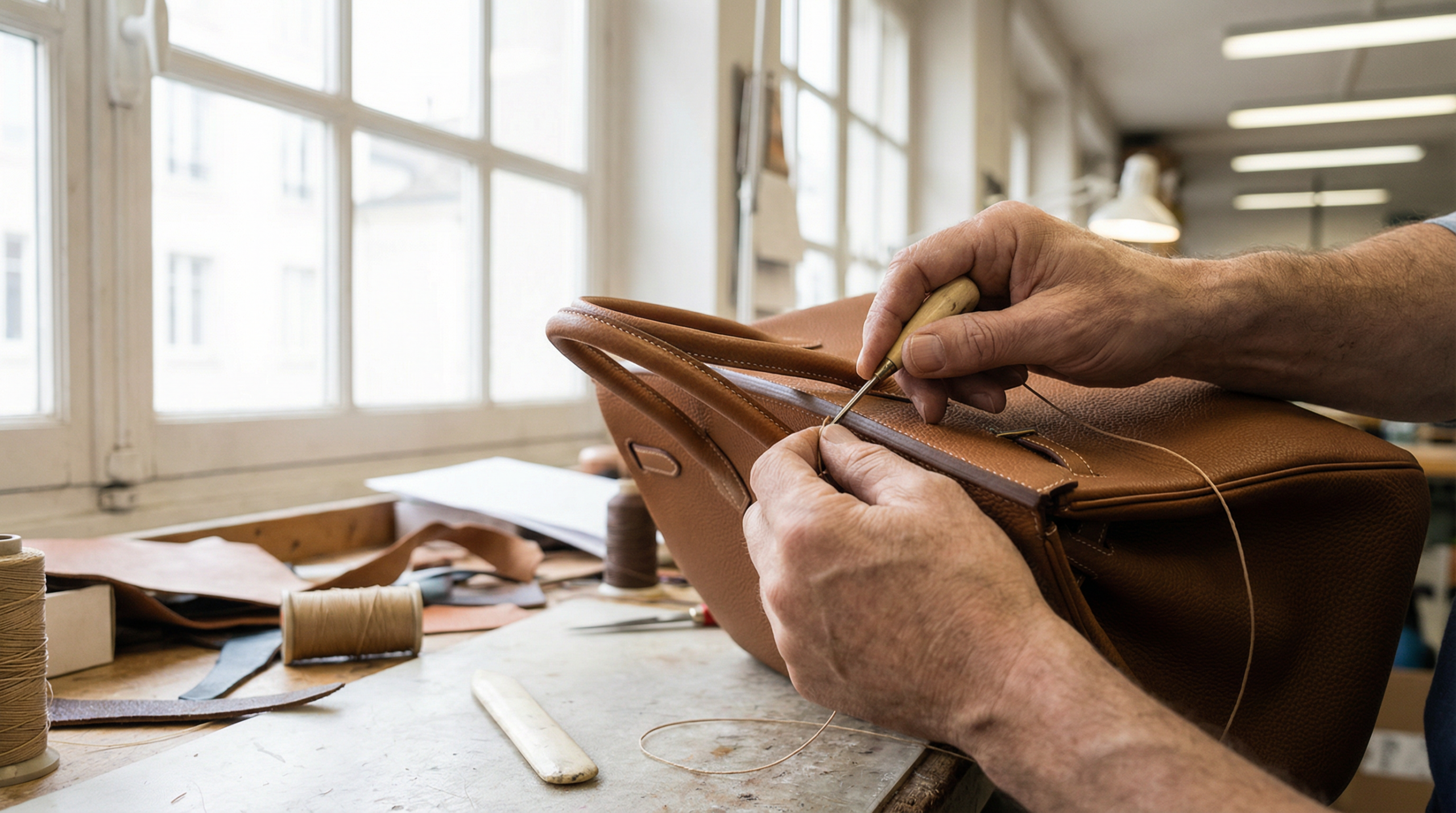
Unparalleled Craftsmanship and Quality: In an era of mass production and fast fashion, the Hermès Birkin stands as a testament to the enduring value of traditional craftsmanship. Each Birkin is a work of art, the product of a single artisan who spends anywhere from 18 to 24 hours meticulously handcrafting the bag from start to finish. This commitment to artisanal production is a key part of the Hermès brand identity, and it is a major contributor to the Birkin’s value. The materials used are of the highest quality, from the finest leathers sourced from the company’s own tanneries to the precious metals used for the hardware. This dedication to quality ensures that a Birkin is not just a beautiful object, but a durable one that can withstand the test of time. This longevity is a key factor in the bag’s investment value, as a well-maintained Birkin can be passed down through generations, retaining and even increasing its value over time.
IV. The Players
The ecosystem of the Hermès Birkin market is a complex and dynamic network of players, each with a specific role and a vested interest in the continued success of this unique asset class. From the brand that started it all to the collectors who fuel the market and the intermediaries who facilitate the transactions, these players are all part of the intricate dance that is the Birkin economy.
| Name | Type | AUM/Scale | Notable |
|---|---|---|---|
| Hermès | Manufacturer | - | The architect of the Birkin's success, Hermès maintains absolute control over the primary market, dictating supply and perpetuating the scarcity that drives the entire ecosystem. |
| The RealReal | Resale Platform | $1.9B GMV (2024 est.) | A publicly traded company that has brought a new level of transparency and professionalism to the luxury resale market. Its rigorous authentication process and large-scale operations have made it a go-to destination for both buyers and sellers of Birkins. |
| Fashionphile | Resale Platform | - | A pioneer in the online luxury resale space, Fashionphile has built a reputation for its curated selection of high-end handbags and its focus on providing a seamless and trustworthy customer experience. Its partnership with Neiman Marcus has further solidified its position as a major player in the market. |
| Rebag | Resale Platform | - | Rebag has differentiated itself in the crowded resale market with its innovative "Clair" technology, which provides instant and transparent pricing for luxury handbags. This focus on data and technology has made it a popular choice for sellers who are looking for a quick and easy way to monetize their collections. |
| Christie's / Sotheby's | Auction House | - | These venerable auction houses have played a key role in elevating the Birkin to the status of a true collectible asset. Their high-profile handbag auctions, which regularly feature rare and exceptional Birkins, have set new records for the market and have brought a new level of attention and legitimacy to the asset class. |
| Bababebi | Authentication Service | - | In a market where counterfeits are a constant threat, independent authentication services like Bababebi play a crucial role. Bababebi is widely regarded as one of the most trusted and respected authenticators of Hermès handbags, and its seal of approval can significantly increase the value and desirability of a Birkin. |
| Luxus | Investment Fund | $2M+ | The launch of Luxus in 2025 marked a new chapter in the financialization of the Birkin. As the first hedge fund dedicated exclusively to investing in Hermès bags, Luxus has created a new and more accessible way for accredited investors to gain exposure to this asset class. |
V. Geography
The allure of the Hermès Birkin is a global phenomenon, but the market for this iconic handbag is not evenly distributed. The concentration of wealth, cultural attitudes towards luxury, and the maturity of the resale market all play a role in shaping the geographic landscape of Birkin ownership and investment. Understanding these regional dynamics is key to understanding the global Birkin market as a whole.
| Region | Market Characteristics |
|---|---|
| North America | The United States is the engine of the North American Birkin market, and arguably the largest and most dynamic Birkin market in the world. It is a mature and sophisticated market, with a deep pool of collectors and a highly developed resale ecosystem. The American consumer's appetite for luxury goods, combined with a culture that celebrates success and status, has made the Birkin a must-have item for the wealthy elite. The presence of major resale platforms like The RealReal and Fashionphile, as well as a vibrant network of private dealers, makes the U.S. a highly liquid and transparent market for Birkins. |
| Europe | As the birthplace of the Hermès brand, Europe has a long and storied history with the Birkin. It is a market characterized by a deep appreciation for craftsmanship and a more understated approach to luxury. The European Birkin collector is often a connoisseur, with a deep knowledge of the brand and a focus on acquiring rare and unique pieces. Paris, as the home of Hermès, is the epicenter of the European Birkin market, with a high concentration of collectors and a thriving resale scene. |
| Asia-Pacific | The Asia-Pacific region has emerged as a powerhouse in the global luxury market, and the Birkin is at the forefront of this trend. In countries like China, Japan, and South Korea, the Birkin is more than just a handbag; it is a potent symbol of social status and economic success. The demand for Birkins in this region is driven by a rapidly growing class of newly wealthy consumers who are eager to display their success. This has led to a boom in the resale market, with a proliferation of online platforms and physical stores catering to the insatiable demand for Birkins. |
| Middle East | The Middle East is a region synonymous with luxury, and the Birkin is a key part of the opulent lifestyle of the region's elite. In cities like Dubai and Abu Dhabi, the Birkin is a common sight, a symbol of the immense wealth that has been generated by the region's oil and gas industries. The Middle Eastern Birkin market is characterized by a demand for the most exclusive and expensive bags, with a particular focus on exotic skins and diamond-encrusted hardware. |
VI. How to Actually Invest
The path to Birkin ownership is not a straightforward one. It is a journey that can be as complex and nuanced as the bag itself. For the aspiring Birkin investor, there are several avenues to explore, each with its own unique set of challenges and opportunities. The choice of which path to take will depend on a variety of factors, including the investor’s budget, risk tolerance, and investment horizon.
| Vehicle | Minimum Investment | Liquidity | Expected Return | Risk Level |
|---|---|---|---|---|
| Direct Purchase (Primary Market) | High (requires significant prior spending at Hermès) | Low | High | High |
| Direct Purchase (Secondary Market) | $15,000+ | Moderate | High | High |
| Specialized Investment Funds (e.g., Luxus) | Varies (typically for accredited investors) | Low | Moderate to High | Moderate |
| Fractional Ownership Platforms (e.g., Rally Rd.) | Low (as little as a few hundred dollars) | Moderate | Moderate | Moderate |
Direct Purchase (Primary Market): This is the holy grail of Birkin acquisition, the path that leads to the highest potential returns. But it is also the most challenging and, in many ways, the most expensive. The process of being offered a Birkin at an Hermès boutique is a long and arduous one, a game of patience and, above all, spending. It requires building a strong relationship with a sales associate and a consistent and significant spending history on a wide range of other Hermès products. The benefit of this approach is the ability to acquire a Birkin at its retail price, which is a fraction of its value on the secondary market. The downside is the lack of control over the process. The investor has no say in when they will be offered a bag, or what size, color, or leather it will be. It is a game of chance, and a very expensive one at that.
Direct Purchase (Secondary Market): For the majority of Birkin investors, the secondary market is the only viable option. This is where the real action is, a vibrant and dynamic marketplace where Birkins are traded like stocks. The secondary market is comprised of a diverse range of players, from large online platforms like The RealReal and Fashionphile to smaller, more specialized dealers and private collectors. The advantage of the secondary market is the immediacy and the choice. An investor can acquire the exact Birkin they want, in the size, color, and leather of their choosing, without having to play the Hermès game. The downside is the price. A Birkin on the secondary market will always trade at a significant premium to its retail price. The risk of counterfeits is also a major concern, making it essential to buy from a reputable and trusted source.
Specialized Investment Funds: The financialization of the Birkin has reached its logical conclusion with the emergence of specialized investment funds. These funds, like the much-publicized Luxus, treat Birkin bags as a formal asset class, pooling investor capital to acquire a diversified portfolio of bags. The advantage of this approach is that it offers investors a way to gain exposure to the Birkin market without having to become an expert in the asset class themselves. The fund’s managers handle the sourcing, authentication, and storage of the bags, and they make the decisions about when to buy and sell. The downside is that these funds are typically only open to accredited investors, and they have high minimum investment requirements. The liquidity is also low, as capital is typically locked up for the life of the fund.
Fractional Ownership Platforms: The latest innovation in the Birkin investment landscape is the rise of fractional ownership platforms. These platforms, such as Rally Rd., are democratizing access to the Birkin market, allowing investors to buy shares in a specific bag for as little as a few hundred dollars. This is a game-changer for the market, as it opens up the asset class to a whole new generation of investors who may not have the capital to acquire a whole bag. The advantage of fractional ownership is the low barrier to entry and the ability to diversify across multiple bags. The downside is that the investor does not have physical possession of the bag, and the returns are tied to the performance of a single asset.
VII. Unit Economics
To truly grasp the financial mechanics of the Birkin market, it is essential to dissect the unit economics of a single bag. The entire investment thesis hinges on the significant and persistent gap between the retail price and the secondary market value. This delta, a direct result of Hermès’s masterful manipulation of supply and demand, is where the profit potential lies. But a simple comparison of retail vs. resale prices only tells part of the story. The true cost of acquiring a Birkin at retail is a far more complex calculation, one that must factor in the infamous “pre-spend.”
| Metric | Description | Example Value (Birkin 30, Togo Leather) |
|---|---|---|
| Retail Price | The price of the bag when purchased directly from an Hermès boutique. | ~$12,940 |
| Required "Pre-Spend" | The amount a client is expected to spend on other Hermès products to be offered a Birkin. | $15,000 - $50,000+ |
| Total Acquisition Cost (Primary Market) | The sum of the retail price and the pre-spend. | $27,940 - $62,940+ |
| Secondary Market Price (New/Unworn) | The price the bag can be sold for on the resale market immediately after purchase. | ~$25,000 - $30,000 |
| Gross Profit (Primary Market Acquisition) | The secondary market price minus the retail price. | $12,060 - $17,060 |
| Net Profit (Primary Market Acquisition) | The gross profit minus the pre-spend. This can often be negative if the pre-spend items are not also sold at a profit. | -$15,880 - -$45,880+ |
| Acquisition Cost (Secondary Market) | The price of purchasing a Birkin directly from a reseller. | ~$25,000 - $30,000 |
| Potential Resale Value (5-10 Years) | The projected value of the bag after holding it for a period of time. | $35,000 - $50,000+ |
| Gross Profit (Secondary Market Acquisition) | The potential resale value minus the secondary market acquisition cost. | $10,000 - $20,000+ |
The numbers in the table paint a clear picture: the most direct path to profit is to acquire a Birkin at retail and immediately flip it on the secondary market. The arbitrage opportunity is significant and immediate. However, this is a strategy that is only available to a select few, those who have already invested significant time and money in the Hermès brand. For the majority of investors, the more accessible and realistic strategy is to acquire a Birkin on the secondary market and play the long game, holding the bag as a tangible asset and capitalizing on its historical and projected appreciation in value.
VIII. Macroeconomic Sensitivity
In a world of volatile financial markets, the Hermès Birkin has emerged as a surprising beacon of stability. Its ability to weather economic storms and maintain its value across different macroeconomic regimes is one of the most compelling aspects of its investment thesis. This resilience is not a matter of chance; it is the result of a unique set of demand drivers that insulate the Birkin from the fluctuations of the broader economy. However, it is important to remember that no asset is entirely immune to macroeconomic forces, and the Birkin is no exception.
| Regime | Impact | Historical Example |
|---|---|---|
| High Growth, Low Inflation (Goldilocks) | Positive: In a thriving economy with stable prices, consumer confidence is high, and discretionary spending on luxury goods increases. This is the ideal environment for the Birkin market, with strong demand and appreciating prices. | The economic boom of the late 1990s and early 2000s saw a surge in the popularity and value of the Birkin bag. |
| High Growth, High Inflation (Overheating) | Positive to Neutral: Inflation can be a tailwind for tangible assets like the Birkin, as they can act as a store of value when the purchasing power of currency is declining. The ultra-wealthy, who are the primary buyers of Birkins, are also less affected by inflation. | During periods of high inflation, hard assets and collectibles, including luxury watches and handbags, have historically performed well as investors seek to protect their wealth from currency devaluation. |
| Low Growth, Low Inflation (Stagnation) | Neutral: In a stagnant economy, the broader luxury market may soften. However, the Birkin's extreme scarcity and the fact that its core client base is largely insulated from minor economic fluctuations help to maintain its value. The demand from the ultra-wealthy remains relatively constant. | During the 2008 financial crisis, while the broader luxury market saw a downturn, the resale value of Birkin bags remained remarkably stable and continued to appreciate in the following years. |
| Low Growth, High Inflation (Stagflation) | Neutral to Negative: This is the most challenging environment for most asset classes. While the Birkin's status as a tangible asset and a store of value provides some protection, a prolonged period of economic hardship could eventually impact even the wealthiest consumers, potentially leading to a softening of demand and a slowdown in price appreciation. | While there is no perfect historical parallel for the modern Birkin market in a stagflationary environment, the performance of other high-end collectibles suggests that they would likely hold their value better than financial assets, but would not be entirely immune to the economic pressures. |
IX. Tax Considerations: A Global Overview
The thrill of a successful Birkin investment can be quickly tempered by the sobering reality of taxes. Like any other asset that generates a capital gain, the sale of a Birkin is a taxable event in most jurisdictions. The tax treatment of collectibles is a complex and often overlooked aspect of the investment process, and it is one that can have a significant impact on the overall return. The rules vary widely from country to country, and they are subject to change, making it essential for any serious Birkin investor to seek professional tax advice.
| Jurisdiction | Tax Treatment of Collectibles |
|---|---|
| United States | Gains from the sale of collectibles held for more than one year are taxed at a maximum federal rate of 28%. This is higher than the long-term capital gains rate for most other assets. Short-term gains are taxed at ordinary income tax rates. |
| United Kingdom | Capital Gains Tax (CGT) is payable on gains from the sale of personal possessions, including handbags, that are worth £6,000 or more. The annual exempt amount for CGT is £3,000 for the 2024-2025 tax year. The rate of CGT depends on the individual's income tax band. |
| European Union | The tax treatment of collectibles varies by member state. In general, the sale of second-hand goods, including luxury handbags, is subject to Value Added Tax (VAT) on the profit margin, rather than the full selling price. Capital gains tax rules also differ between countries. |
| Singapore | There is no capital gains tax in Singapore. This makes it a highly attractive jurisdiction for investing in collectibles, as any profit from the sale of a Birkin bag is not subject to tax. |
| United Arab Emirates | The UAE does not have any personal income tax or capital gains tax. This means that any profit from the sale of personal property, including a Birkin bag, is not taxed. |
| Australia | Collectibles are subject to Capital Gains Tax (CGT) if they are acquired for $500 or more. However, if a collectible is sold for $500 or less, any capital gain or loss is disregarded. For collectibles sold for more than $500, the capital gain is calculated and included in the individual's assessable income. |
X. Case Studies
The theoretical returns of the Birkin market are impressive, but it is the real-world case studies that truly bring the investment potential of this asset class to life. These stories of record-breaking auction sales and savvy investment flips provide a glimpse into the world of high-stakes handbag trading, and they offer valuable lessons for any aspiring Birkin investor.
Case Study 1: The Jane Birkin Original
- •The Asset: The very first Birkin bag, created for and owned by Jane Birkin herself.
- •The Story: In July 2025, this piece of fashion history was sold at a Sotheby’s auction in Paris. The bag, a black leather Birkin 35, showed signs of wear and tear, a testament to its use by its famous owner. It was a unique and highly coveted item, not just as a handbag, but as a cultural artifact.
- •The Numbers: The bag sold for a staggering €8.6 million ($10 million), making it the most expensive handbag ever sold at auction. The original price of the bag in 1984 is not known, but it would have been a fraction of this auction price. This case study demonstrates the immense value that provenance and historical significance can add to a collectible asset.
Case Study 2: The Diamond Himalaya Birkin
- •The Asset: A rare Hermès Diamond Himalaya Birkin 30.
- •The Story: The Himalaya Birkin is considered the “holy grail” of handbags. It is crafted from Nile crocodile hide, and its distinctive white and grey gradation is meant to evoke the snow-capped peaks of the Himalayas. The Diamond Himalaya is even rarer, featuring a diamond-encrusted white gold hardware.
- •The Numbers: In 2021, a Diamond Himalaya Birkin 30 was sold at a Christie’s auction for $450,000. This was a world record at the time for a handbag sold at auction. The original retail price of this bag would have been in the range of $200,000 – $300,000, demonstrating a significant appreciation in value in a relatively short period.
Case Study 3: The Sac Birkin Faubourg
- •The Asset: A limited edition Hermès Sac Birkin Faubourg.
- •The Story: Released in 2019, the Sac Birkin Faubourg is a whimsical and highly collectible riff on the classic Birkin. It is designed to look like the facade of the Hermès flagship store on the Rue du Faubourg Saint-Honoré in Paris, complete with miniature orange awnings and a tiny Hermès shopping bag charm. This playful and exclusive design made it an instant hit with collectors.
- •The Numbers: The Sac Birkin Faubourg retailed for around $30,000. On the secondary market, it now commands prices in the range of $150,000 – $200,000, a staggering return on investment in just a few years. This case study highlights the immense value that can be created by a limited edition, highly desirable design.
Case Study 4: The Savvy Investor's Flip
- •The Asset: A standard, new-in-box Birkin 30 in a popular color like black or gold, with Togo or Epsom leather.
- •The Story: This case study represents a more typical investment scenario for a Birkin bag. An investor with a good relationship with an Hermès boutique is offered a Birkin at the retail price. They purchase the bag with the intention of immediately reselling it on the secondary market.
- •The Numbers:
- •Retail Price: ~$12,940
- •Resale Price: ~$25,000 – $30,000
- •Gross Profit: ~$12,060 – $17,060
- •Retail Price: ~$12,940
- •Resale Price: ~$25,000 – $30,000
- •Gross Profit: ~$12,060 – $17,060
This case study highlights the immediate arbitrage opportunity that exists between the primary and secondary markets for Birkin bags. While it requires a significant upfront investment and access to the primary market, it offers a quick and substantial return.
XI. The Core Constraint
For all its strengths, the Birkin investment thesis has a single, glaring vulnerability: its absolute and total dependence on the Hermès brand. The entire value proposition of the Birkin as an asset class is a house of cards built on the foundation of the brand’s mystique. If that foundation were to crack, the entire structure could come tumbling down. This is the core constraint of the Birkin market, the single biggest risk that every investor must be willing to accept.
If Hermès were to suddenly increase production of the Birkin, or make it more readily available to the public, the scarcity that underpins its value would evaporate, and the secondary market would collapse. Similarly, if the brand’s reputation were to be tarnished by a scandal, a decline in quality, or a misstep in its marketing or communications, the desirability of the Birkin would diminish, taking its investment value with it. The recent legal challenges to the company’s sales practices, while ultimately unsuccessful, are a reminder of the constant scrutiny that the brand is under. Any perception that the “Hermès Game” is unfair or anti-competitive could damage the brand’s reputation and, by extension, the value of its most iconic product.
This reliance on a single company’s brand management strategy is a unique and significant risk for investors. Unlike other asset classes that are influenced by a broad range of market forces, the value of a Birkin is ultimately in the hands of the executives at Hermès. While the company has a long and successful track record of managing its brand, the future is never certain, and this core constraint is a factor that every Birkin investor must consider.
XII. Inside the Asset
To hold a Hermès Birkin is to experience the pinnacle of craftsmanship. The bag is not just an accessory; it is a work of art, a testament to the skill and dedication of the artisans who create it. The Birkin is available in a range of sizes, each with its own distinct character and utility. The most common sizes are the Birkin 25, 30, 35, and 40. The Birkin 25 is the smallest and is often seen as a more ‘evening’ bag, while the Birkin 40 is the largest and is more of a travel bag. The Birkin 30 and 35 are the most popular sizes, offering a balance of practicality and elegance.
The leather is the heart of the Birkin, and Hermès offers a wide variety of options, each with its own unique texture, durability, and character. Some of the most popular leathers include:
- •Togo: A calfskin leather with a natural pebbled grain. It is scratch-resistant and holds its shape well, making it a popular choice for everyday use.
- •Epsom: A pressed leather with a fine, uniform grain. It is lightweight, durable, and easy to clean, but it can be more prone to showing wear at the corners.
- •Clemence: A bull leather with a larger, softer grain than Togo. It is known for its slouchy and relaxed feel, but it can be heavier than other leathers.
- •Box Calf: The original Hermès leather, with a smooth, glossy finish. It is a classic and elegant choice, but it is more susceptible to scratches and water marks.
- •Exotics: For the ultimate in luxury, Hermès offers a range of exotic skins, including crocodile, alligator, ostrich, and lizard. These bags are the rarest and most expensive, and they are often seen as the pinnacle of a Birkin collection.
The hardware of a Birkin is another key element that contributes to its overall aesthetic and value. The most common hardware options are gold-plated and palladium-plated, but Hermès also offers a range of other options, including brushed gold, brushed palladium, and even diamond-encrusted hardware for the most exclusive bags. The hardware is not just decorative; it is also functional, with the iconic turn-lock closure being a key feature of the Birkin’s design.
But the Birkin is more than just the sum of its parts. It is a symbol, a statement, a piece of cultural history. To carry a Birkin is to carry a story, a legacy of craftsmanship and exclusivity that has been carefully cultivated for decades. It is this intangible quality, this sense of being part of an exclusive club, that is the true essence of the Birkin as an asset.
XIII. The Central Dilemma
The Birkin investor is faced with a unique and deeply personal dilemma, a conflict that goes to the very heart of what it means to own a beautiful and valuable object. It is the tension between the desire to use and enjoy the bag, and the knowledge that every scratch, every scuff, every sign of wear diminishes its value as an investment. This is the central dilemma of the Birkin market, a paradox that every owner must navigate. It is a conflict between the emotional return of owning and using a beautiful object, and the financial return of preserving it as a pristine asset. The Birkin is, after all, a handbag. It is designed to be carried, to hold things, to be a part of its owner’s life. But it is also a commodity, an asset that is traded on a global market, and its value is directly tied to its condition. A new-in-box Birkin with the plastic still on the hardware will always command a higher price than a bag that has been used and loved..
This dilemma is at the heart of the Birkin investment experience. Are you a collector, a connoisseur who appreciates the artistry and craftsmanship of the bag, or are you a pure investor, focused solely on the financial return? The two are not mutually exclusive, but they often exist in a state of tension.
The savvy investor understands this dilemma and navigates it with care. They may choose to purchase two Birkins: one to use and enjoy, and one to keep as a pristine investment piece. Or they may choose to use their Birkin sparingly, taking great care to preserve its condition. Ultimately, the decision of how to resolve this dilemma is a personal one, but it is a question that every Birkin investor must confront.
XIV. The Next Frontier
The Birkin market is not a museum piece, frozen in time. It is a living, breathing ecosystem that is constantly evolving and adapting to new technologies, new consumer behaviors, and new financial innovations. The next frontier of the Birkin market is already taking shape, and it is one that promises to be even more dynamic and accessible than the market of today. The forces of technology, sustainability, and globalization are all converging on the world of luxury, and the Birkin is at the center of this transformation.
- •
Fractional Ownership and Tokenization: The rise of platforms that allow for fractional ownership of high-value assets is making it possible for a new generation of investors to gain exposure to the Birkin market. The tokenization of Birkin bags on the blockchain could further democratize access to this asset class, creating a more liquid and transparent market.
- •
The Rise of the Male Collector: While the Birkin has traditionally been a female-dominated market, there is a growing trend of male collectors and investors entering the space. This is driven by a broader shift in menswear towards a more expressive and accessorized aesthetic, as well as a growing recognition of the Birkin as a legitimate investment asset.
- •
Sustainability and the Circular Economy: As consumers become more environmentally conscious, the resale market for luxury goods is likely to see continued growth. The Birkin, with its timeless design and durable construction, is well-positioned to benefit from this trend. The idea of a “circular economy” for luxury goods, where items are bought, sold, and passed down through generations, is a powerful narrative that supports the long-term value of the Birkin.
XV. Lessons from History
History may not repeat itself, but it often rhymes. And in the world of collectibles, the rhymes can be particularly instructive. The story of the Birkin as an investment asset is not a unique one. There are other collectible markets that have followed a similar trajectory, and by studying their history, we can gain valuable insights into the potential future of the Birkin. These historical parallels can help us to understand the potential risks and rewards of investing in this unique asset class, and they can provide a framework for thinking about the long-term sustainability of the Birkin market.
- •
The Vintage Watch Market: The market for vintage watches, particularly brands like Rolex and Patek Philippe, offers a compelling parallel to the Birkin. Like the Birkin, vintage watches are a tangible asset with a strong brand identity, a history of appreciation, and a passionate community of collectors. The vintage watch market has seen a similar trajectory of financialization, with the emergence of specialized dealers, auction houses, and investment funds.
- •
The Fine Art Market: The fine art market is another useful point of comparison. Like a great work of art, a Birkin is a unique and non-fungible asset with a value that is determined by a combination of factors, including rarity, provenance, and cultural significance. The art market has a long history of booms and busts, and it is a reminder that even the most coveted assets are not immune to market cycles.
- •
The Tulip Mania of the 17th Century: While a more extreme example, the Dutch tulip mania of the 1630s serves as a cautionary tale about the dangers of speculative bubbles. The story of tulip bulbs trading for more than the price of a house is a reminder that the value of any collectible asset is ultimately based on a collective belief in its worth. If that belief falters, the consequences can be dramatic.
XVI. The Risks
No investment is without risk, and the Birkin is no exception. For all its glamour and impressive returns, the Birkin market is fraught with potential pitfalls for the unwary investor. A clear-eyed assessment of these risks is an essential part of any due diligence process. The Birkin may be a beautiful object, but it is also a high-stakes investment, and it should be approached with the same level of caution and rigor as any other asset class.
- •
Brand Risk: This is the most significant and existential risk for any Birkin investor. The value of the bag is a direct reflection of the health and desirability of the Hermès brand. A decline in the brand’s prestige, whether due to a change in creative direction, a quality control issue, or a broader shift in consumer tastes, would have a direct and immediate impact on the value of the Birkin. The fact that the company is still family-controlled provides a degree of stability and long-term vision, but it also raises questions about succession planning and the ability of the next generation of leadership to maintain the brand’s unique magic.
- •
Counterfeit Risk: The high value of Birkin bags has made them a prime target for counterfeiters. While reputable resellers and authentication services can help to mitigate this risk, it is a persistent threat in the market.
- •
Market Risk: Like any other market, the market for Birkin bags is subject to fluctuations in supply and demand. A sudden influx of bags onto the market, or a decrease in demand from buyers, could lead to a decline in prices.
- •
Liquidity Risk: While the market for Birkins is more liquid than many other collectibles, it can still take time to find a buyer at the desired price. This is not an asset that can be easily converted to cash in a short period of time.
- •
Regulatory Risk: The tax treatment of collectibles can change, and new regulations could be introduced that could impact the profitability of investing in Birkin bags.
XVII. The Alternative Fortune Verdict
After a deep dive into the world of the Hermès Birkin, one thing is clear: this is not just a handbag. It is a complex and fascinating asset class, a testament to the power of brand, scarcity, and craftsmanship. The Birkin has defied the expectations of the traditional financial world, delivering returns that have outpaced stocks, bonds, and even gold. It is a story of how a luxury good can become a legitimate investment, and a lesson in the enduring power of desire. The Birkin is a triumph of marketing, a masterpiece of brand management, and a cultural phenomenon that shows no signs of slowing down.
However, investing in a Birkin is not for the faint of heart. It requires a significant capital outlay, a deep understanding of the market, and a tolerance for the unique risks associated with this asset class. The core of the Birkin’s value is its manufactured scarcity, a delicate balance that could be disrupted by a change in strategy from Hermès.
For the savvy investor who is willing to do their homework and navigate the complexities of this market, the Birkin offers a unique opportunity to diversify their portfolio and potentially achieve significant returns. But as with any investment, due diligence is essential.
Due Diligence Questions for Investors:
- •What is your investment horizon? Are you looking for a short-term flip or a long-term hold?
- •What is your risk tolerance? Are you comfortable with the unique risks associated with this asset class?
- •How will you authenticate your purchase? Do you have a trusted authenticator or will you rely on the reputation of the seller?
- •How will you store and insure your investment? A Birkin is a valuable asset that needs to be protected.
- •What is your exit strategy? How and when do you plan to sell your Birkin to realize your return on your investment?