The 60-Second Version
Welcome to the world of sports cards, an asset class that has quietly ballooned into a $33.6 billion market in 2024 and is projected to reach a staggering $271 billion by 2034. Once a childhood hobby, sports card investing has captured the attention of Wall Street, with sophisticated investors and fractional ownership platforms piling in. This isn’t just about collecting cardboard pictures of your favorite athletes; it’s about acquiring a piece of sporting history, a tangible asset with the potential for significant appreciation. The market is dominated by a grading oligopoly—PSA, BGS, and SGC—that authenticates and grades cards, creating a standardized system for valuation. Blue-chip assets, like the 1986 Fleer Michael Jordan rookie card, a Mike Trout rookie card, or a Luka Dončić rookie card, have sold for millions, demonstrating the potential for outsized returns. The rise of fractional ownership platforms like Alt and Dibbs has democratized access, allowing investors to buy shares of high-end cards. Meanwhile, blockchain technology is being integrated for enhanced authentication and provenance tracking, adding a new layer of security and transparency to the market. However, the industry is not without its risks, as the “Junk Wax Era” of the late 1980s and early 1990s serves as a cautionary tale of overproduction and subsequent value collapse. This article will guide you through the intricacies of this burgeoning market, from the key players and demand drivers to the nitty-gritty of valuation and the risks involved.
I. What Sports Card Investing Actually Is
At its core, sports card investing is the practice of buying, holding, and selling sports trading cards with the primary goal of generating a financial return. Unlike collecting, which is often driven by nostalgia and personal interest, investing in sports cards is a calculated endeavor focused on appreciation. The ‘asset’ you are buying is a piece of cardboard, typically featuring a photograph of an athlete, along with their statistics and other relevant information. However, the value of that cardboard can range from a few cents to millions of dollars, depending on a variety of factors.
Returns are generated through capital appreciation. You buy a card for a certain price, and you hope to sell it for a higher price in the future. The value of a card is influenced by a combination of factors, including the player’s popularity and performance, the card’s rarity, its condition (or ‘grade’), and the overall demand in the market. The most valuable cards are typically rookie cards of legendary players in pristine condition. For example, a mint condition rookie card of a Hall of Fame athlete will almost always be more valuable than a common card of a lesser-known player.
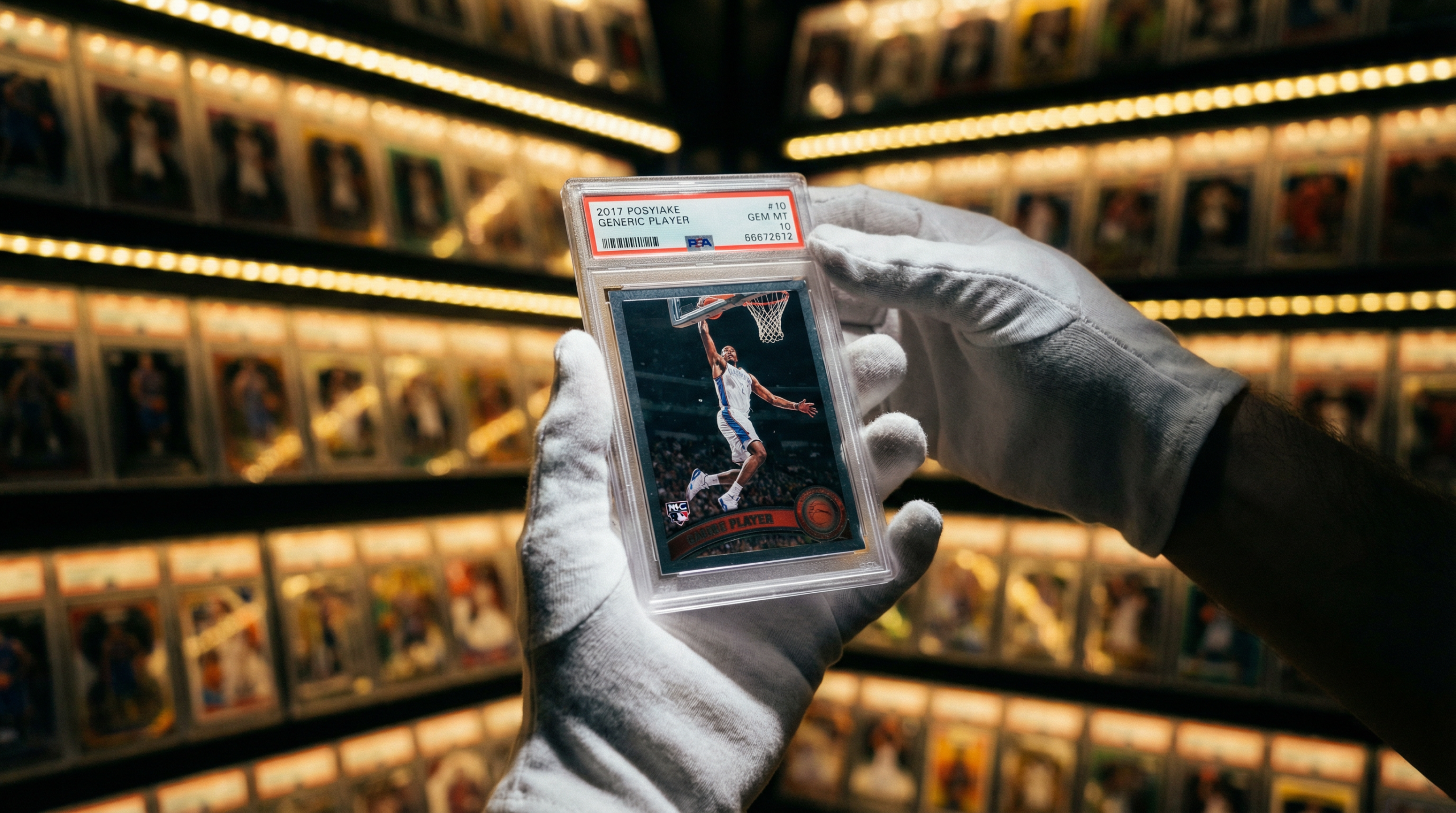
II. The Market
The sports card market has experienced explosive growth in recent years, transforming from a niche hobby into a significant alternative asset class. In 2024, the global sports card market is valued at an estimated $33.6 billion. Projections indicate a meteoric rise to $271.2 billion by 2034, reflecting a compound annual growth rate (CAGR) of over 20%. This growth is fueled by a confluence of factors, including a new wave of collectors entering the market, the rise of online marketplaces, and the increasing acceptance of sports cards as a legitimate investment.
Here is a timeline of key milestones in the history of the sports card market:
| Year | Milestone | Significance |
|---|---|---|
| 1886 | The first widely distributed baseball cards are included in packs of cigarettes. | Marks the beginning of the sports card industry. |
| 1952 | Topps releases its iconic baseball card set, featuring Mickey Mantle's rookie card. | Establishes Topps as a major player and sets a new standard for card design. |
| 1986 | Fleer releases its basketball card set, including the iconic Michael Jordan rookie card. | Ignites a boom in basketball card collecting. |
| 1991 | Professional Sports Authenticator (PSA) is founded. | Revolutionizes the industry by introducing third-party grading and authentication. |
| 2020 | The COVID-19 pandemic leads to a surge in interest in sports card collecting and investing. | The market experiences unprecedented growth and mainstream attention. |
| 2022 | Fanatics acquires Topps for a reported $500 million. | Signals a new era of consolidation and corporate investment in the industry. |
| 2024 | The sports card market reaches a value of $33.6 billion. | Solidifies sports cards as a major alternative asset class. |
III. The Demand Drivers
The remarkable growth of the sports card market is not a random phenomenon. It is underpinned by a set of powerful and interconnected demand drivers that have transformed the hobby into a global investment marketplace.
1. The Rise of the Modern Collector-Investor: The profile of the average sports card enthusiast has evolved. Today’s market is not just driven by nostalgic baby boomers, but by a new generation of digitally native collectors who view sports cards as a viable alternative asset class. These individuals are often younger, more data-savvy, and comfortable with online transactions. They are drawn to the potential for high returns, the cultural cachet of owning a piece of sports history, and the thrill of the chase. This new demographic has brought a fresh wave of capital and energy into the market.
2. The Influence of Social Media and Content Creators: Platforms like YouTube, Instagram, and TikTok have become virtual trading floors and information hubs for the sports card community. Content creators, from individual collectors to professional investors, share their insights, showcase their collections, and broadcast live “box breaks” (the opening of sealed boxes of cards). This constant stream of content fuels excitement, educates newcomers, and creates a sense of community, all of which drive demand.
3. The Professionalization of the Market: The sports card market has matured significantly in recent years. The establishment of third-party grading services like PSA, BGS, and SGC has brought a much-needed layer of transparency and standardization to the industry. This has given investors the confidence to deploy significant capital, knowing that the authenticity and condition of their assets can be independently verified. Furthermore, the emergence of fractional ownership platforms has lowered the barrier to entry, allowing a wider range of investors to participate in the market.
4. The Globalization of Sports Fandom: The world is more interconnected than ever, and so is the world of sports. The increasing popularity of American sports like basketball and football in international markets, particularly in Asia, has created a new and enthusiastic fan base. These international fans are not just watching the games; they are also collecting the cards of their favorite players, adding a new and powerful source of demand to the market.
IV. The Players
The sports card ecosystem is a complex web of companies and individuals, each playing a distinct role in the market. From the manufacturers that produce the cards to the grading companies that authenticate them, and the marketplaces where they are traded, here are some of the key players:
| Name | Type | AUM/Scale | Notable |
|---|---|---|---|
| Fanatics | Manufacturer & Retailer | Privately held, valued at over $30 billion | Acquired Topps in 2022, holds exclusive licensing deals with the NFL, NBA, and MLB. |
| Panini | Manufacturer | Privately held | A major player in the basketball and football card markets, known for its high-end products. |
| Topps | Manufacturer | Subsidiary of Fanatics | An iconic brand with a rich history in the baseball card market. |
| PSA (Professional Sports Authenticator) | Grading & Authentication | Publicly traded (part of Collectors Universe) | The largest and most respected grading company, considered the industry standard. |
| BGS (Beckett Grading Services) | Grading & Authentication | Privately held | A major competitor to PSA, known for its detailed grading reports. |
| SGC (Sportscard Guaranty Corporation) | Grading & Authentication | Privately held | A well-regarded grading company that has been gaining market share. |
| eBay | Online Marketplace | Publicly traded | The largest online marketplace for sports cards, with millions of listings. |
| Alt | Fractional Ownership Platform | Privately held | A platform that allows investors to buy and sell fractional shares of high-end sports cards. |
| Dibbs | Fractional Ownership Platform | Privately held | A platform that tokenizes fractional ownership of sports cards on the blockchain. |
V. Geography
The sports card market, while global in its reach, is not evenly distributed. The United States has historically been and continues to be the epicenter of the hobby, but other regions are rapidly emerging as major players. Understanding the geographical landscape is crucial for any serious investor.
North America: The United States is the undisputed king of the sports card world, accounting for the lion’s share of the market. This is due to a deeply ingrained sports culture, a long history of card collecting, and a robust ecosystem of manufacturers, grading companies, and marketplaces. Canada is also a significant market, with a particularly strong following for hockey cards.
Asia-Pacific: The Asia-Pacific region is the fastest-growing market for sports cards. Countries like China, Japan, and Australia are experiencing a surge in interest, driven by a growing middle class, increasing exposure to American sports, and a strong appetite for collectibles. The potential for growth in this region is immense, and it is quickly becoming a key focus for major players in the industry.
Europe: The European market is more fragmented, with varying levels of interest across different countries. The United Kingdom, Germany, and France are the largest markets, with a strong following for soccer cards. The popularity of American sports is also on the rise in Europe, which is helping to drive growth in the basketball and football card markets.
Here is a regional breakdown of the sports card market:
| Region | Market Size (2024 Estimate) | Key Characteristics |
|---|---|---|
| North America | ~$20 Billion | Mature market, dominated by the United States. Strong infrastructure and a deep-rooted collecting culture. |
| Asia-Pacific | ~$8 Billion | The fastest-growing region, with significant potential for future growth. Driven by a rising middle class and increasing interest in American sports. |
| Europe | ~$4 Billion | A fragmented market with a strong following for soccer cards. The popularity of American sports is growing. |
| Rest of the World | ~$1.6 Billion | A nascent market with pockets of interest in various countries. |
VI. How to Actually Invest
Investing in sports cards is no longer limited to buying individual cards at a local hobby shop. The market has evolved to offer a variety of investment vehicles, each with its own set of characteristics, risks, and potential returns. Here is a comparison of the most common ways to invest in sports cards:
| Vehicle | Min Investment | Liquidity | Expected Return | Risk Level |
|---|---|---|---|---|
| Individual Cards (Graded) | Varies (from a few dollars to millions) | Moderate to Low | High | High |
| Individual Cards (Raw/Ungraded) | Varies (from a few cents to thousands) | Low | Very High | Very High |
| Sealed Wax Boxes | Varies (from a hundred to thousands of dollars) | Moderate | High | High |
| Fractional Ownership | As low as $10 | Moderate to High | Moderate to High | Moderate |
| Sports Card Investment Funds | Typically $25,000+ | Low | Moderate | Moderate to High |
Individual Cards (Graded): This is the most traditional way to invest in sports cards. It involves buying cards that have been authenticated and graded by a third-party service like PSA, BGS, or SGC. The grade of a card has a significant impact on its value, so it is crucial to understand the grading scale and how it affects pricing. Graded cards are more liquid than raw cards, as they can be easily bought and sold on online marketplaces like eBay.
Individual Cards (Raw/Ungraded): Investing in raw cards is a high-risk, high-reward strategy. It involves buying cards that have not been graded, with the hope that they will receive a high grade and increase in value. This strategy requires a keen eye for condition and a deep understanding of the grading process. The potential for returns is high, but so is the risk of buying a card that turns out to be in poor condition or even counterfeit.
Sealed Wax Boxes: A wax box is a sealed box of card packs from a specific year and series. Investing in sealed wax boxes is a bet on the future value of the cards inside. The idea is that as the cards in the set become more valuable, the sealed box will also increase in value. This is a long-term investment strategy, as it can take years for the value of a sealed box to appreciate.
Fractional Ownership: Fractional ownership platforms like Alt and Dibbs have made it possible to invest in high-end sports cards without having to buy the entire card. These platforms securitize the cards and sell shares to investors, who can then trade them on the platform. This has democratized access to the sports card market, allowing a wider range of investors to participate.
Sports Card Investment Funds: For those who want to invest in sports cards but don’t have the time or expertise to do it themselves, there are a growing number of sports card investment funds. These funds are managed by professional investors who have a deep understanding of the market. They typically require a significant minimum investment and have a long lock-up period, but they offer a way to gain diversified exposure to the sports card market.
VII. Unit Economics
To truly understand the business of sports card investing, it is essential to break down the unit economics of a single deal. Let’s walk through a hypothetical, yet realistic, example of buying a raw card, getting it graded, and selling it for a profit.
Let’s assume you purchase a raw (ungraded) 2018 Panini Prizm Luka Dončić rookie card for $500. You believe the card is in pristine condition and has the potential to receive a high grade from PSA.
Here is a breakdown of the potential costs and profit:
| Item | Cost/Revenue | Notes |
|---|---|---|
| Raw Card Purchase Price | -$500 | The initial investment to acquire the asset. |
| Shipping to PSA | -$10 | The cost to securely ship the card to PSA for grading. |
| PSA Grading Fee | -$75 | The fee for PSA's 'Regular' service, for cards with a declared value under $1,500. |
| Shipping from PSA | -$20 | The cost for PSA to ship the graded card back to you. |
| Total Cost | -$605 | The total cash outlay before selling the card. |
| Sale Price (PSA 10) | +$2,500 | The potential sale price of a PSA 10 Gem Mint Luka Dončić rookie card. |
| eBay Final Value Fee | -$325 | eBay's fee is approximately 13% of the final sale price. |
| Net Profit | +$1,570 | The final profit after all costs and fees. |
| Return on Investment (ROI) | 260% | The net profit as a percentage of the total cost. |
In this scenario, a $605 investment yields a $1,570 profit, representing a 260% return on investment. However, this is an idealized outcome. If the card receives a lower grade, the economics change dramatically. A PSA 9 version of the same card might only sell for $800, resulting in a much smaller profit, or even a loss after accounting for all the costs. This illustrates the critical importance of accurately assessing a card’s condition before buying and the significant impact that grading has on the final value.
VIII. Macroeconomic Sensitivity
Like any other asset class, the sports card market is not immune to the broader macroeconomic environment. Understanding how sports cards perform in different economic conditions is crucial for any investor looking to build a resilient portfolio. Here is a breakdown of how the sports card market typically reacts to four key macroeconomic regimes:
| Regime | Impact | Historical Example |
|---|---|---|
| High Growth, Low Inflation (Goldilocks) | Positive | The market tends to thrive in a healthy economy. Consumers have more disposable income, and the appetite for collectibles is strong. The period from 2013 to 2019 saw steady growth in the sports card market, with prices for key cards gradually increasing. |
| High Growth, High Inflation | Mixed to Positive | Inflation can be a double-edged sword for the sports card market. On one hand, as the value of fiat currency erodes, investors may flock to tangible assets like sports cards as a store of value. On the other hand, rising prices for everyday goods can squeeze discretionary spending, reducing the amount of money available for collectibles. The period from 2020 to 2022 saw a boom in the sports card market, partly driven by government stimulus and inflation fears. |
| Low Growth, Low Inflation (Secular Stagnation) | Neutral to Negative | In a stagnant economy, the sports card market can tread water or experience a slight decline. With limited economic growth, there is less new money entering the market, and investors may become more risk-averse. The period following the dot-com bubble in the early 2000s was a relatively quiet time for the sports card market. |
| Low Growth, High Inflation (Stagflation) | Negative | This is the most challenging environment for the sports card market. A combination of a weak economy and high inflation can be a toxic brew for collectibles. Consumers have less money to spend, and the fear of a recession can lead to a sell-off in non-essential assets. The late 1970s and early 1980s were a difficult period for the sports card market, with prices for many cards declining. |
It is important to note that these are general tendencies, and the performance of the sports card market can be influenced by a variety of other factors, including the popularity of specific players and sports, the release of new products, and the overall sentiment of the collecting community.
IX. Tax Considerations: A Global Overview
Investing in sports cards can be a rewarding experience, but it is essential to understand the tax implications of your activities. Tax laws vary significantly from country to country, and it is always advisable to consult with a qualified tax professional. Here is a general overview of the tax treatment of sports card investments in several key jurisdictions:
| Jurisdiction | Tax Treatment |
|---|---|
| United States | Profits from the sale of sports cards are generally treated as capital gains. For cards held for more than one year, a special long-term capital gains tax rate of 28% applies to collectibles. Short-term gains are taxed at ordinary income tax rates. |
| United Kingdom | Capital Gains Tax (CGT) may be payable on profits from the sale of sports cards. However, there is an annual exemption, and certain items with a limited lifespan may be exempt. The rate of CGT depends on your income tax band. |
| European Union | The tax treatment of collectibles varies by member state. In many countries, Value Added Tax (VAT) is applied to the sale of new goods, and capital gains tax may be payable on profits from the sale of collectibles. |
| Singapore | There is no capital gains tax in Singapore, so profits from the sale of sports cards are generally not taxed. However, Goods and Services Tax (GST) may be payable on the importation of cards. |
| United Arab Emirates | The UAE does not have a federal income tax or capital gains tax for individuals. However, a Value Added Tax (VAT) of 5% may be applicable to the sale of goods. |
| Australia | Capital Gains Tax (CGT) may be payable on profits from the sale of sports cards. However, there is a specific exemption for collectibles acquired for $500 or less. If the asset is held for more than one year, a 50% CGT discount may apply. |
Disclaimer: This information is for general guidance only and does not constitute tax advice. You should consult with a qualified tax professional to understand the specific tax implications of your sports card investments.
X. Case Studies
To bring the world of sports card investing to life, let’s examine a few real-world case studies of iconic cards and their remarkable journeys in value.
Case Study 1: The Michael Jordan Rookie Card
The 1986-87 Fleer #57 Michael Jordan rookie card is arguably the most iconic basketball card in existence. For years, it was a sought-after collectible, but its value remained relatively modest. In the early 2000s, a PSA 10 Gem Mint version of the card could be had for a few thousand dollars. However, as the sports card market began to heat up, the Jordan rookie became a bellwether for the entire industry.
In early 2020, before the pandemic-fueled boom, a PSA 10 Jordan rookie was selling for around $30,000. By the end of the year, the price had skyrocketed to over $200,000. In January 2021, two PSA 10 examples sold for a record-breaking $738,000 each. The value of the card has since pulled back from its peak, but it remains a six-figure asset, a testament to the enduring power of the Jordan brand and the growth of the sports card market.
Case Study 2: The Mike Trout Rookie Card
Mike Trout is widely regarded as one of the greatest baseball players of his generation, and his rookie cards are among the most coveted in the modern era. His most sought-after rookie card is the 2009 Bowman Chrome Draft Prospects #BDPP89 Superfractor, a one-of-a-kind card with a shimmering, gold-like finish.
In 2018, the card was sold for $400,000. Just two years later, in August 2020, the same card was sold at auction for a staggering $3.93 million, making it the most expensive sports card ever sold at the time. This sale was a watershed moment for the modern sports card market, demonstrating that cards of current players could achieve the same eye-popping valuations as vintage legends.
Case Study 3: The Luka Dončić Rookie Card
Luka Dončić has taken the NBA by storm since his debut in 2018, and his rookie cards have been a hot commodity among investors. His most valuable rookie card is the 2018-19 Panini National Treasures #127 Logoman Autograph, another one-of-a-kind card featuring the NBA logo from a game-worn jersey and an autograph from Dončić.
In February 2021, the card was sold in a private sale for an astonishing $4.6 million, surpassing the Mike Trout Superfractor to become the most expensive basketball card ever sold. The sale was a testament to the global appeal of Dončić and the insatiable demand for rare and unique sports cards.
XI. The Core Constraint
The single biggest structural challenge facing the sports card market is the ever-present threat of overproduction. The industry has a dark history of succumbing to the temptation of printing more and more cards to meet rising demand, a practice that ultimately leads to a collapse in value. This is not a theoretical risk; it is a lesson that was painfully learned during the “Junk Wax Era.”
From the late 1980s to the early 1990s, the sports card market was in a frenzy. New collectors were flooding into the hobby, and card manufacturers responded by printing an unprecedented number of cards. For a time, it seemed like the good times would never end. But eventually, the market became saturated. There were simply too many cards, and not enough buyers. The result was a catastrophic crash in prices. Cards that were once thought to be valuable became virtually worthless, and a generation of collectors was burned.
Today, the sports card market is in a much healthier place. Manufacturers are more disciplined, and the advent of third-party grading has created a more transparent and efficient market. However, the specter of the Junk Wax Era still looms large. The current boom in the market has once again led to an increase in production, and there are concerns that the industry may be repeating the mistakes of the past. The core constraint of the sports card market is the delicate balance between meeting the demands of a growing market and avoiding the temptation of overproduction.
XII. Inside the Asset
To the uninitiated, a sports card is just a piece of cardboard with a picture of an athlete on it. But to a collector or investor, it is a tangible piece of history, a miniature work of art, and a potential financial asset. Let’s take a closer look at what a sports card actually is.
A typical sports card is a small, rectangular piece of cardstock, usually measuring 2.5 by 3.5 inches. The front of the card features a photograph of the athlete, often in an action shot from a game. The player’s name and team are also prominently displayed. The back of the card typically contains the player’s statistics, a short biography, and other relevant information.
The design of a sports card can vary widely, from the simple and classic designs of the 1950s and 1960s to the more elaborate and technologically advanced designs of today. Modern cards often feature holographic foils, embedded memorabilia (such as pieces of a player’s jersey or a swatch of a game-used ball), and even autographs.
The condition of a card is paramount to its value. A card in pristine, or “gem mint,” condition will be worth significantly more than a card with even minor flaws, such as corner wear, surface scratches, or centering issues. This is why the third-party grading industry has become so important. A high grade from a reputable company like PSA is a seal of approval that can add thousands, or even millions, of dollars to the value of a card.
XIII. The Central Dilemma
The central dilemma that every sports card investor must navigate is the tension between passion and profit. Are you a collector who is hoping to make some money on the side, or are you an investor who happens to be interested in sports? This is not just a philosophical question; it is a practical one that will shape your entire approach to the market.
If you are primarily a collector, your decisions will be driven by your personal interests. You will buy cards of your favorite players and teams, and you will derive joy from the process of building a collection. The financial aspect will be a secondary consideration. If your cards go up in value, that’s great. If they don’t, you still have a collection that you love.
If you are primarily an investor, your decisions will be driven by data and analysis. You will research the market, identify undervalued assets, and make calculated bets on which cards are most likely to appreciate in value. Your goal is to generate a financial return, and you will be less concerned with the personal appeal of the cards you are buying.
There is no right or wrong answer here. Some of the most successful people in the hobby are those who have found a way to balance their passion for collecting with a disciplined approach to investing. They are able to enjoy the thrill of the chase while also making smart financial decisions. The key is to be honest with yourself about your motivations and to develop a strategy that aligns with your goals.
XIV. The Next Frontier
The sports card market is constantly evolving, and there are several emerging trends that are poised to shape the future of the industry.
Blockchain and NFTs: The integration of blockchain technology is one of the most exciting developments in the sports card market. Non-fungible tokens (NFTs) are being used to create digital versions of sports cards, which can be bought, sold, and traded just like physical cards. This has the potential to revolutionize the industry by creating a more secure and transparent market. Blockchain can also be used to track the provenance of physical cards, providing an immutable record of ownership and authenticity.
The Rise of Women’s Sports: The growing popularity of women’s sports is creating a new and exciting market for sports cards. The WNBA, the NWSL, and other women’s leagues are gaining a larger following, and collectors are starting to take notice. The rookie cards of female athletes like Caitlin Clark and Sabrina Ionescu are already commanding high prices, and this is a trend that is likely to continue as women’s sports continue to grow.
The Globalization of the Hobby: The sports card market has traditionally been dominated by the United States, but that is starting to change. The globalization of sports fandom is creating new markets for sports cards all over the world. The NBA is hugely popular in China, the Premier League has a massive following in Asia, and baseball is gaining a foothold in Europe. This is creating a new and diverse generation of collectors, which will help to fuel the growth of the market for years to come.
XV. Lessons from History
History may not repeat itself, but it often rhymes. The sports card market has a rich and storied history, and there are several historical parallels that can help to illuminate the current moment.
The Junk Wax Era (Late 1980s – Early 1990s): As we have already discussed, the Junk Wax Era is a cautionary tale of overproduction and market collapse. The parallels to the current market are clear. The recent boom in sports cards has led to an increase in production, and there are concerns that the industry may be repeating the mistakes of the past. The lesson from the Junk Wax Era is that scarcity is the ultimate driver of value. If everything is a collectible, then nothing is.
The Dot-Com Bubble (Late 1990s): The dot-com bubble was a period of irrational exuberance in the stock market, with technology companies reaching astronomical valuations. The bubble eventually burst, and many investors lost a lot of money. The parallels to the sports card market are again clear. The recent surge in prices has been driven by a combination of factors, including low interest rates, government stimulus, and a new wave of speculative investors. There is a risk that the market has become detached from its fundamentals, and that a correction is inevitable. The lesson from the dot-com bubble is to be wary of hype and to focus on assets with real, intrinsic value.
XVI. The Risks
Investing in sports cards can be a thrilling and potentially lucrative endeavor, but it is not without its risks. It is essential to be aware of the potential pitfalls before you dive in.
Market Volatility: The sports card market can be extremely volatile. Prices can swing wildly in a short period of time, and there is no guarantee that the cards you buy will go up in value. The market is susceptible to bubbles and crashes, and you could lose a significant portion of your investment.
Counterfeiting and Fraud: The sports card market is rife with counterfeits and fakes. It is essential to buy from reputable dealers and to have your cards authenticated and graded by a third-party service. Even then, there is a risk that you could be a victim of fraud.
Overproduction: As we have discussed, overproduction is a constant threat to the sports card market. If manufacturers print too many cards, the market can become saturated, and prices can collapse.
Player Performance and Popularity: The value of a sports card is closely tied to the performance and popularity of the player. If a player gets injured, has a decline in performance, or is involved in a scandal, the value of their cards can plummet.
Liquidity Risk: Sports cards are not as liquid as stocks or bonds. It can take time to find a buyer for your cards, and you may not be able to sell them at the price you want. If you need to sell your cards quickly, you may have to accept a lower price.
XVII. The Alternative Fortune Verdict
So, what is the final verdict on sports card investing? Is it a legitimate alternative asset class, or is it a speculative bubble waiting to burst?
The answer, as is often the case, is that it is a bit of both. There is no doubt that the sports card market has matured significantly in recent years. The advent of third-party grading, the rise of online marketplaces, and the influx of sophisticated investors have all helped to create a more transparent and efficient market. There is real money to be made in sports cards, and the potential for outsized returns is undeniable.
However, the risks are also very real. The market is volatile, it is susceptible to bubbles, and there is no guarantee of success. The specter of the Junk Wax Era looms large, and the threat of overproduction is ever-present.
Our verdict is that sports card investing can be a rewarding and profitable endeavor, but it is not for the faint of heart. It requires a deep understanding of the market, a keen eye for value, and a healthy dose of skepticism. If you are willing to do the work, the rewards can be significant. But if you are looking for a get-rich-quick scheme, you are likely to be disappointed.
Here are a few due diligence questions to ask yourself before you invest in a sports card:
- •Who is the player? Are they a Hall of Famer, a rising star, or a flash in the pan?
- •What is the card? Is it a rookie card, a rare insert, or a common card?
- •What is the condition of the card? Has it been graded by a reputable company?
- •What is the population of the card? How many of them are there in existence?
- •What is the story of the card? Is there a unique story or a historical significance to the card?
By asking these questions, you can start to develop a framework for making smart investment decisions in the exciting and dynamic world of sports cards.
More on What Sports Card Investing Is
Beyond the simple definition, understanding the nuances of what makes a card valuable is key. The concept of scarcity is the bedrock of the sports card market. Scarcity can be created in several ways. Limited production runs are the most obvious; manufacturers will often release high-end products with a limited number of boxes and packs, and the cards within those products will have serial numbers to prove their rarity. For example, a card might be numbered “1/1” (a one-of-a-kind card), or “/99” (meaning only 99 copies exist).
Another form of scarcity is condition sensitivity. For older cards, finding a copy in pristine condition is incredibly difficult. The printing technology of the past was not as advanced as it is today, and cards were often handled by children, leading to wear and tear. A 1952 Topps Mickey Mantle card is not particularly rare in a low grade, but a PSA 9 or 10 example is exceedingly scarce, which is why it commands such a high price.
Finally, there are unannounced print runs, where the manufacturer does not disclose the number of cards produced. This creates a sense of mystery and encourages collectors to speculate on the rarity of certain cards. This was a common practice in the past, and it is still used today for certain promotional cards and inserts.
The Different Types of Cards
Not all sports cards are created equal. Here are some of the most common types of cards you will encounter:
- •Base Cards: These are the common cards that make up the bulk of a set. They are typically not very valuable, unless they feature a key rookie player or are in exceptionally high grade.
- •Rookie Cards (RCs): These are the first cards of a player to be released in a major set. Rookie cards are the most sought-after and valuable cards in the hobby, as they represent the beginning of a player’s career.
- •Inserts: These are special cards that are randomly inserted into packs. They often have a different design from the base cards and are produced in smaller quantities, making them more valuable.
- •Parallels: These are variations of a base card or an insert that have a different color scheme or a serial number. Parallels are a modern invention, and they have become a major driver of the market.
- •Autograph Cards: These are cards that have been signed by the athlete. Autograph cards are highly desirable, and their value depends on the popularity of the player and the rarity of the autograph.
- •Memorabilia Cards: These are cards that contain a piece of memorabilia, such as a swatch of a player’s jersey or a piece of a game-used bat. These cards offer a tangible connection to the athlete and are popular among collectors.
A Deeper Dive into the Market Growth
The projected growth of the sports card market to $271.2 billion by 2034 is not just a continuation of the recent boom; it is a reflection of a fundamental shift in how sports cards are perceived. The market is no longer just a hobby for children; it is a sophisticated alternative asset class that is attracting serious investment from a wide range of individuals and institutions.
The Compound Annual Growth Rate (CAGR) of over 20% is a staggering figure, and it is driven by a number of factors. The increasing globalization of sports is a major contributor. As sports like basketball and American football gain popularity in new markets, the demand for the cards of star players from those sports will continue to grow. The rise of online marketplaces and fractional ownership platforms has also made it easier than ever for people to invest in sports cards, which has brought a new wave of capital into the market.
Another key factor is the generational transfer of wealth. As baby boomers begin to pass on their wealth to their children and grandchildren, a significant portion of that wealth is likely to find its way into alternative assets like sports cards. The younger generation is more comfortable with digital assets and alternative investments, and they are drawn to the cultural significance and potential for high returns that sports cards offer.
Key Market Segments
The sports card market can be broken down into several key segments, each with its own characteristics and investment potential.
- •Vintage Cards (Pre-1980): This segment is the blue-chip of the sports card world. It includes cards of legendary players like Babe Ruth, Mickey Mantle, and Honus Wagner. These cards are rare, they have a long track record of appreciation, and they are highly sought-after by serious collectors and investors. The supply of vintage cards is fixed, which provides a strong foundation for their value.
- •Modern Cards (1980-2010): This segment includes cards from the “Junk Wax Era” as well as the early days of the modern hobby. While many cards from this era are worthless, there are also some hidden gems, such as the 1986 Fleer Michael Jordan rookie card. The key to investing in modern cards is to focus on the rookie cards of Hall of Fame players in high grade.
- •Ultra-Modern Cards (2010-Present): This is the most dynamic and speculative segment of the market. It includes the rookie cards of current stars like Mike Trout and Luka Dončić, as well as a dizzying array of parallels, inserts, and autographed cards. The potential for returns in this segment is high, but so is the risk. The value of ultra-modern cards is closely tied to the performance of the players, and it can be subject to wild swings in price.
The Psychology Behind the Demand
To truly grasp the forces propelling the sports card market, we must delve into the psychology of the collector-investor. The demand for these small pieces of cardboard is not purely rational; it is a complex interplay of emotional and financial drivers.
Nostalgia and the Quest for Authenticity: For many, collecting sports cards is a way to reconnect with their childhood. It is a tangible link to a time of innocence and hero worship. In an increasingly digital and artificial world, sports cards offer a sense of authenticity and nostalgia that is hard to replicate. The feel of a vintage card, the smell of an old pack of wax, these are powerful sensory experiences that evoke strong emotions.
The Thrill of the Hunt: The process of finding a rare card, whether it is in a dusty old shoebox or a freshly opened pack, is a thrilling experience. It is a modern-day treasure hunt, and the adrenaline rush that comes with a big find is a powerful motivator. This is why “box breaks” have become so popular. They allow people to experience the thrill of the hunt vicariously, and they create a sense of community around the shared experience of opening packs.
The Social and Cultural Aspect: Collecting sports cards is a social hobby. It is a way to connect with other people who share your passion for sports and collecting. Card shows, online forums, and social media groups are all places where collectors can come together to share their knowledge, showcase their collections, and make deals. This sense of community is a powerful force that helps to sustain the market, even during downturns.
The Gamification of Investing: The sports card market has become increasingly gamified in recent years. The rise of fractional ownership platforms, the introduction of new and exotic parallels, and the constant stream of new products have all contributed to a sense of excitement and speculation. This has attracted a new generation of investors who are drawn to the fast-paced and dynamic nature of the market. They are not just investing in an asset; they are playing a game, and the potential for a big payoff is a powerful incentive.
The Power Dynamics of the Sports Card Market
The sports card market is not a level playing field. It is a complex ecosystem with a clear hierarchy of power. At the top of the food chain are the manufacturers, who control the supply of new cards. Below them are the grading companies, who act as the gatekeepers of the secondary market. And at the bottom are the collectors and investors, who are ultimately at the mercy of the decisions made by the players higher up the food chain.
The Manufacturers: A Near Monopoly
Fanatics has emerged as the dominant force in the sports card industry. Its acquisition of Topps in 2022, combined with its exclusive licensing deals with the major American sports leagues, has given it a near-monopoly on the production of licensed sports cards. This gives Fanatics immense power to control the supply of new products, set prices, and shape the direction of the market. While Panini remains a significant player, its future is uncertain as its licensing deals are set to expire.
The Grading Companies: The Arbiters of Value
PSA is the undisputed king of the grading world. Its brand is synonymous with trust and authenticity, and its grades are the industry standard. A PSA 10 Gem Mint card will almost always sell for a significant premium over a card with the same grade from another company. BGS and SGC are the main competitors to PSA, but they have struggled to make a significant dent in its market share. The grading companies wield immense power, as their opinions can make or break the value of a card. This has led to concerns about conflicts of interest and the potential for market manipulation.
The Marketplaces: Where the Action Happens
eBay is the largest and most important marketplace for sports cards. It is where the vast majority of secondary market transactions take place, and it is the best place to get a real-time pulse of the market. However, eBay is not the only game in town. A growing number of specialized online marketplaces and auction houses are catering to the high-end of the market. And fractional ownership platforms like Alt and Dibbs are opening up the market to a new generation of investors.
The Nuances of the Global Market
While North America, Asia-Pacific, and Europe are the three main hubs of the sports card market, there are important nuances to understand within each region.
In North America, the United States is not a monolithic market. Tastes and preferences can vary significantly from region to region. For example, baseball cards are more popular in the Northeast and Midwest, while football cards are king in the South. The Canadian market is dominated by hockey, but basketball has been gaining ground in recent years, thanks to the success of the Toronto Raptors.
In the Asia-Pacific region, China is the engine of growth. The country has a massive and rapidly growing middle class, and there is a huge appetite for American sports, particularly basketball. The NBA has invested heavily in the Chinese market, and this has paid off in the form of a large and passionate fan base. Chinese collectors are particularly drawn to the rookie cards of star players like LeBron James and Stephen Curry. Japan has a long and rich history of baseball, and there is a strong domestic market for Japanese baseball cards. However, there is also a growing interest in American sports, and the market for NBA and MLB cards is expanding. Australia has a strong sporting culture, and there is a growing community of sports card collectors. Australian Rules Football and rugby are the most popular sports, but there is also a significant following for American sports.
In Europe, the market is more fragmented. The United Kingdom is the largest market, with a strong following for Premier League soccer cards. Germany and France are also significant markets, with a growing interest in American sports. The Italian market is dominated by soccer, but there is also a niche market for vintage basketball cards. The European market is still in its early stages of development, but it has the potential to become a major force in the global sports card market.
Building a Diversified Portfolio
Just as with any other investment, diversification is key to managing risk in the sports card market. A well-diversified portfolio should include a mix of different players, sports, eras, and investment vehicles. Here are a few strategies for building a diversified sports card portfolio:
- •The Blue-Chip Strategy: This strategy focuses on acquiring the rookie cards of iconic, Hall of Fame players in high grade. These cards are the blue-chips of the sports card world, and they have a long track record of appreciation. The downside of this strategy is that it requires a significant amount of capital, as these cards can be very expensive.
- •The Rising Star Strategy: This strategy focuses on acquiring the rookie cards of up-and-coming players who have the potential to become superstars. This is a higher-risk, higher-reward strategy, as the value of these cards is closely tied to the performance of the players. If you can identify the next Michael Jordan or Mike Trout before they become household names, the potential for returns is enormous.
- •The Contrarian Strategy: This strategy involves going against the grain and investing in players or sports that are currently out of favor. For example, you might invest in the rookie cards of a player who is coming off an injury, or in a sport that is not as popular as basketball or football. This is a long-term strategy that requires patience and a deep understanding of the market.
- •The Sealed Wax Strategy: This strategy involves buying and holding sealed wax boxes of unopened packs. The idea is that as the cards in the set become more valuable, the sealed box will also increase in value. This is a long-term, passive investment strategy that requires a significant amount of storage space.
By combining these strategies, you can build a diversified portfolio that is tailored to your risk tolerance and investment goals.
The Hidden Costs of Sports Card Investing
While the potential for profit in sports card investing is undeniable, it is essential to be aware of the hidden costs that can eat into your returns. The example above provides a simplified overview of the unit economics, but in reality, there are a number of other costs that you need to factor into your calculations.
- •Shipping and Insurance: When you are buying and selling high-value cards, you need to make sure they are shipped securely and fully insured. This can add a significant cost to your transactions, especially for international shipments.
- •Storage: If you are building a large collection of sports cards, you need to have a safe and secure place to store them. This may involve investing in a high-quality safe, a climate-controlled storage unit, or a specialized third-party vaulting service.
- •Transaction Fees: In addition to the final value fee on platforms like eBay, you may also have to pay payment processing fees (such as PayPal fees) and other transaction costs. These fees can add up, especially if you are a high-volume seller.
- •Research and Education: To be a successful sports card investor, you need to stay up-to-date on the latest market trends, player news, and product releases. This may involve subscribing to industry publications, attending card shows, and spending a significant amount of time on research and analysis. While these costs are not always direct, they are an important part of the overall investment.
By factoring in these hidden costs, you can get a more realistic picture of the potential profitability of your sports card investments.
The Psychology of Spending in Different Economic Climates
The impact of the macroeconomic environment on the sports card market is not just a matter of numbers; it is also a matter of psychology. The way people feel about the economy has a direct impact on their willingness to spend money on discretionary items like sports cards.
In a booming economy, people are optimistic about the future. They are more likely to have a secure job, a rising income, and a growing investment portfolio. This creates a sense of wealth and confidence, which makes them more willing to spend money on hobbies and collectibles. The sports card market thrives in this environment, as there is a steady stream of new buyers entering the market and a general sense of excitement and optimism.
In a recessionary economy, the mood is much more somber. People are worried about losing their jobs, their incomes are stagnant or declining, and their investment portfolios are shrinking. This creates a sense of fear and uncertainty, which makes them more likely to cut back on discretionary spending. The sports card market can struggle in this environment, as there are fewer buyers and a general sense of pessimism. However, a recession can also create opportunities for savvy investors. As prices fall, it can be a good time to acquire high-quality assets at a discount.
The Role of Interest Rates
Interest rates are another important macroeconomic factor that can affect the sports card market. When interest rates are low, it is cheaper to borrow money. This can encourage people to take on more debt and to invest in higher-risk assets like sports cards. Low interest rates also make it less attractive to hold cash, which can further fuel the demand for alternative investments.
When interest rates are high, the opposite is true. It is more expensive to borrow money, which can discourage people from taking on debt and investing in risky assets. High interest rates also make it more attractive to hold cash, which can reduce the demand for alternative investments. The recent rise in interest rates has been a headwind for the sports card market, as it has made it more expensive for people to finance their purchases and has reduced the overall level of liquidity in the market.
The Hobby vs. Business Distinction
One of the most important distinctions in the world of sports card taxation is whether your activities are considered a hobby or a business. This distinction has a significant impact on how you are taxed and what expenses you can deduct.
In the United States, the Internal Revenue Service (IRS) has a set of guidelines to help you determine whether you are a hobbyist or a business owner. The IRS will look at factors such as whether you carry on the activity in a businesslike manner, whether you have a profit motive, and whether you have the expertise to run a successful business. If your activities are deemed to be a hobby, you must report all of your income, but you can only deduct your expenses up to the amount of your income. If your activities are deemed to be a business, you can deduct all of your ordinary and necessary business expenses, even if they exceed your income.
In the United Kingdom, Her Majesty’s Revenue and Customs (HMRC) has a similar set of guidelines. HMRC will look at the “badges of trade” to determine whether you are a hobbyist or a business owner. These badges include things like the frequency of your transactions, the length of time you hold your assets, and whether you have a profit motive. If you are deemed to be a business, you will be subject to income tax on your profits. If you are deemed to be a hobbyist, you may be subject to Capital Gains Tax on your profits.
In Australia, the Australian Taxation Office (ATO) also has a set of guidelines to help you determine whether you are a hobbyist or a business owner. The ATO will look at factors such as whether you have a significant commercial purpose, whether you have a profit motive, and whether you carry on your activities in a systematic and organized way. If you are deemed to be a business, you will be subject to income tax on your profits. If you are deemed to be a hobbyist, you may be subject to Capital Gains Tax on your profits.
Given the complexity of these rules, it is essential to consult with a qualified tax professional to determine your status and to ensure that you are complying with all of the relevant tax laws.