The 60-Second Version
The final frontier has become the next investment frontier. Once the domain of governments, the space economy is undergoing a seismic shift, with private capital flooding in to fund a new generation of ambitious startups. Projections from McKinsey, in partnership with the World Economic Forum, estimate the space economy will triple in size to $1.8 trillion by 2035, growing nearly twice as fast as global GDP . Between 2020 and 2025, venture capitalists have poured over $15 billion into the sector, backing everything from satellite internet constellations like Amazon’s Project Kuiper to in-space manufacturing, orbital debris removal, and even the first steps towards lunar mining . This isn’t just about rockets and moonshots; it’s about building the infrastructure for a new economy in orbit and beyond. The convergence of plummeting launch costs, driven by innovators like SpaceX, and the insatiable demand for data and connectivity is creating a fertile ground for venture returns. As the Artemis program signals a renewed public commitment to space exploration, private investors are realizing that the companies building the picks and shovels for this new gold rush may be the most attractive opportunities of all. For those with a long-term horizon and an appetite for high-risk, high-reward ventures, the space economy represents a chance to invest in the very fabric of the future.
I. What Space Economy Investing Actually Is
Investing in the space economy is no longer the exclusive realm of billionaires and governments. At its core, it means deploying capital into private companies that are building the infrastructure, products, and services that will define the next generation of commercial activity beyond Earth’s atmosphere. You aren’t buying a plot of land on Mars; you are buying equity in the companies that might one day make that possible.
Unlike traditional aerospace and defense investing, which is often dominated by large, established government contractors, space economy venture capital focuses on early-stage, high-growth companies. These are the startups developing everything from new launch vehicles and satellite technologies to in-orbit services and data analytics platforms. The returns are not generated from steady government contracts, but from the potential for massive value creation as these new markets mature and scale. An investment in a space economy startup is a bet on a future where satellite data powers autonomous cars, where manufacturing in zero-gravity unlocks new materials, and where humanity’s economic sphere extends into the solar system.
II. The Market
The space economy is not just growing; it’s accelerating at a pace that will reshape numerous industries back on Earth. In 2023, the global space economy was valued at approximately $630 billion. However, the most conservative and credible projections, published by McKinsey & Company in partnership with the World Economic Forum, forecast this figure to nearly triple, reaching $1.8 trillion by 2035. This represents an average annual growth rate of 9%, almost double the projected growth of global GDP over the same period . To put this in perspective, the space economy’s projected value is comparable to the entire semiconductor industry and roughly half the size of the global payments industry.
This growth is not a monolithic boom. It’s composed of two distinct but interconnected segments:
- •Backbone Applications ($330 billion in 2023): This is the foundational infrastructure of the space economy. It includes the manufacturing of satellites and launch vehicles, the operation of launch services, and the provision of core satellite services like broadcast television and GPS. This segment is the bedrock upon which the rest of the space economy is built.
- •Reach Applications ($300 billion in 2023): This is where the space economy touches our daily lives. It encompasses the vast range of services and products on Earth that are enabled by space technology. Think of the GPS in your smartphone that allows Uber to function, the satellite imagery that helps farmers monitor crop health, or the global connectivity that enables financial transactions. The growth in this segment is driven by the increasing integration of space-based data and services into terrestrial industries.
Key Milestones in the Commercial Space Economy
The journey to a multi-trillion dollar space economy has been marked by a series of pivotal moments, transitioning from a government-led endeavor to a vibrant commercial market.
| Year | Milestone | Significance |
|---|---|---|
| 1962 | Telstar 1 Launch | First privately sponsored space launch, broadcasting the first transatlantic television signal. |
| 1984 | Commercial Space Launch Act | US legislation allowing private companies to operate launch services, opening the door for a commercial launch industry. |
| 2002 | SpaceX Founded | The founding of SpaceX by Elon Musk marked a turning point in the commercial space industry, with a focus on reducing launch costs through reusable rocket technology. |
| 2009 | First Commercial Resupply Mission to ISS | SpaceX's Dragon becomes the first commercial spacecraft to deliver cargo to the International Space Station, demonstrating the viability of private companies in space logistics. |
| 2015 | Blue Origin's First Successful Rocket Landing | Blue Origin, founded by Jeff Bezos, successfully lands its New Shepard rocket booster, further validating the concept of reusable rockets. |
| 2020 | First Crewed Commercial Spaceflight | SpaceX's Crew Dragon transports NASA astronauts to the ISS, ending Russia's monopoly on crewed flights and heralding a new era of commercial human spaceflight. |
| 2021 | First All-Civilian Orbital Mission | The Inspiration4 mission, funded by Jared Isaacman and flown by SpaceX, becomes the first orbital spaceflight with no professional astronauts on board, opening the door for space tourism. |
| 2024 | McKinsey/WEF Report | The projection of a $1.8 trillion space economy by 2035 galvanizes investor interest and solidifies the sector's long-term growth narrative. |
III. The Demand Drivers
The exponential growth of the space economy is not speculative; it is underpinned by powerful, tangible demand drivers that are creating entirely new markets while disrupting existing ones. These are not distant, futuristic concepts but near-term catalysts that are already attracting significant investment and generating revenue.
1. The Insatiable Demand for Global Connectivity:
Over one-third of the world’s population still lacks reliable internet access. This digital divide represents a massive untapped market. Satellite internet constellations, particularly those in Low Earth Orbit (LEO), are poised to fill this gap. Companies like Starlink (SpaceX) and the upcoming Project Kuiper (Amazon) are deploying thousands of small satellites to provide high-speed, low-latency internet to rural, remote, and underserved areas. The satellite internet market is projected to grow from $10.4 billion in 2024 to over $22.6 billion by 2030, a compound annual growth rate of nearly 14% . This demand is not just from individual consumers; it extends to maritime, aviation, and enterprise customers who require connectivity in areas beyond the reach of terrestrial infrastructure.
2. The Rise of In-Space Manufacturing:
The unique environment of space, particularly microgravity, offers profound advantages for the production of certain high-value materials and products. In-space manufacturing is moving from the realm of science fiction to a commercial reality. The unique environment of space, particularly microgravity, offers profound advantages for the production of certain high-value materials and products. In-space manufacturing is moving from the realm of science fiction to a commercial reality, with several key areas of focus:
- •Advanced Materials: Manufacturing fiber optics in space can produce ZBLAN cables with significantly lower signal loss than their terrestrial counterparts, potentially revolutionizing the telecommunications industry. The microgravity environment allows for the creation of more perfect glass structures, free from the defects that are introduced during manufacturing on Earth.
- •Biotechnology and Pharmaceuticals: The ability to grow human tissue and protein crystals in microgravity without the distorting effects of gravity has the potential to revolutionize drug development and regenerative medicine. Companies like Varda Space Industries are pioneering the production of pharmaceuticals in orbit, leveraging microgravity to create more perfect crystalline structures that can lead to more effective drugs. The International Space Station has hosted numerous experiments in this area, demonstrating the potential for space-based research and manufacturing to lead to breakthroughs in human health.
- •Semiconductors: The vacuum of space and the absence of contaminants provide an ideal environment for the production of flawless semiconductor wafers, a critical component in the electronics industry. The ability to manufacture chips in orbit could lead to the development of more powerful and efficient processors, with applications in everything from artificial intelligence to quantum computing.
3. The “Picks and Shovels” of a New Space Age:
As activity in space accelerates, so does the need for a whole new ecosystem of in-orbit services. This is the “picks and shovels” play of the space economy, providing the essential services that enable everything else. With tens of thousands of satellites planned for launch in the coming years, the threat of orbital debris is becoming a critical issue. Companies like Astroscale and ClearSpace are developing technologies to actively remove defunct satellites and other debris from orbit, a market that is expected to grow significantly as space becomes more congested. Additionally, the ability to refuel, repair, and upgrade satellites in orbit has the potential to extend their operational life and significantly improve the economics of satellite operations. Northrop Grumman’s Mission Extension Vehicle (MEV) has already demonstrated this capability, and a new generation of startups is entering the field.
4. The Dawn of Space Tourism:
While still in its infancy, the space tourism market has captured the public imagination and demonstrated a willingness among high-net-worth individuals to pay significant sums for the experience of spaceflight. Companies like Virgin Galactic and Blue Origin are offering suborbital flights, while SpaceX has already flown all-civilian crews into orbit. While the market size is currently limited, the technological advancements and cost reductions driven by this sector have a ripple effect across the entire space industry.
IV. The Players
The space economy is a complex ecosystem of established giants, disruptive startups, and the venture capitalists who fund them. Understanding the key players is essential to navigating this emerging investment landscape.
| Name | Type | AUM/Scale | Notable |
|---|---|---|---|
| SpaceX | Launch Provider / Satellite Operator | Privately valued at over $200 billion | Dominates the global launch market with its reusable Falcon 9 and Falcon Heavy rockets. Operates the Starlink satellite internet constellation. |
| Blue Origin | Launch Provider / Engine Manufacturer | Privately funded by Jeff Bezos | Developing the New Glenn orbital rocket and the Blue Moon lunar lander. A major competitor to SpaceX. |
| Rocket Lab | Launch Provider / Spacecraft Manufacturer | Publicly traded (RKLB) | A leader in small satellite launch with its Electron rocket. Expanding into larger rockets and satellite components. |
| Varda Space Industries | In-Space Manufacturing | Raised over $50 million in venture funding | Focused on manufacturing high-value products like pharmaceuticals in microgravity. |
| Astroscale | In-Orbit Services | Raised over $300 million in venture funding | A global leader in the development of technologies for satellite servicing and orbital debris removal. |
| Planet Labs | Earth Observation | Publicly traded (PL) | Operates the largest constellation of Earth-imaging satellites, providing daily imagery and data analytics. |
| Seraphim Space | Venture Capital | Over $500 million in AUM | The world's first publicly listed fund dedicated to space technology investments. A prolific investor in early-stage space startups. |
| Space Capital | Venture Capital | Over $100 million in AUM | A seed-stage venture firm focused on the space economy, with a portfolio that includes companies like Rocket Lab and Planet Labs. |
| Lockheed Martin Ventures | Corporate Venture Capital | N/A | The venture arm of the aerospace and defense giant, investing in startups with technologies relevant to Lockheed Martin's strategic interests. |
| NASA | Government Agency | Annual budget of ~$25 billion | While not a commercial entity, NASA's role as a customer, partner, and funder of new technologies (e.g., through the Artemis program) is a critical driver of the commercial space economy. |
V. Geography
The space economy, while global in its reach, is highly concentrated in a few key regions that have historically invested heavily in space technology and are now fostering vibrant commercial ecosystems. The United States remains the undisputed leader, but other nations are rapidly closing the gap, creating a multi-polar landscape of innovation and investment.
| Region/Country | Key Strengths | Notable Hubs | 2024 Government Space Budget (Approx.) |
|---|---|---|---|
| United States | Dominant in launch, satellite technology, and venture capital. Strong government support through NASA and the Department of Defense. | California (Los Angeles, San Francisco Bay Area), Florida (Space Coast), Texas (Houston, Austin), Washington (Seattle) | $65 billion |
| China | Rapidly growing capabilities in launch, human spaceflight, and satellite navigation (BeiDou). Strong state-led investment. | Beijing, Shanghai | $12 billion |
| Europe | Collaborative strength through the European Space Agency (ESA). Expertise in satellite manufacturing and Earth observation. | Toulouse (France), Munich (Germany), Harwell (UK) | $8 billion (ESA budget) |
| Russia | Legacy strength in launch and human spaceflight (Soyuz). Facing increasing competition from new players. | Moscow | $3.5 billion |
| Japan | Expertise in robotics, sample return missions, and space exploration. Growing commercial space sector. | Tokyo, Tsukuba | $4.9 billion |
| India | Cost-effective launch services and a rapidly developing satellite industry. Ambitious space exploration goals. | Bengaluru | $2.2 billion |
While these established players dominate the landscape, a new wave of emerging space nations is on the rise. Countries like the United Arab Emirates (UAE), Australia, and Canada are making significant investments in their domestic space industries, creating niche capabilities and attracting international talent and capital. The geography of the space economy is becoming increasingly diffuse, with new hubs of innovation emerging around the world.
VI. How to Actually Invest
Investing in the space economy is no longer limited to accredited investors and venture capitalists. A growing number of investment vehicles provide exposure to this high-growth sector, each with its own risk-return profile, liquidity, and minimum investment.
| Vehicle | Min Investment | Liquidity | Expected Return | Risk Level |
|---|---|---|---|---|
| Publicly Traded Stocks | Low (cost of one share) | High | Varies by company | High |
| Space-Themed ETFs | Low (cost of one share) | High | Moderate | Moderate-High |
| Venture Capital Funds | High ($100k+) | Low | High | Very High |
| Direct Angel Investing | High ($25k+) | Very Low | Very High | Extreme |
Publicly Traded Stocks: A growing number of space companies have gone public in recent years, often through mergers with Special Purpose Acquisition Companies (SPACs). These stocks offer the most direct way for retail investors to gain exposure to the space economy. Examples include Rocket Lab (RKLB), a leader in small satellite launch; Planet Labs (PL), which operates a large constellation of Earth-imaging satellites; and AST SpaceMobile (ASTS), which is developing a space-based cellular broadband network.
Space-Themed ETFs: For investors seeking diversified exposure to the space economy, several Exchange-Traded Funds (ETFs) offer a convenient and lower-risk option. These ETFs typically hold a basket of publicly traded companies involved in various aspects of the space industry. The most well-known is the ARK Space Exploration & Innovation ETF (ARKX), an actively managed fund that invests in companies engaged in orbital and suborbital aerospace, enabling technologies, and beneficiaries of aerospace activities. Other options include the Procure Space ETF (UFO) and the SPDR S&P Kensho Final Frontiers ETF (ROKT).
Venture Capital Funds: For accredited investors with a higher risk tolerance and a long-term investment horizon, venture capital funds offer the potential for outsized returns. These funds invest in early-stage, private space companies that are not yet accessible to the public markets. Leading space-focused VC firms include Seraphim Space, Space Capital, Founders Fund (a major backer of SpaceX), and Lux Capital. These funds typically require a significant minimum investment and a lock-up period of several years.
Direct Angel Investing: Directly investing in a space startup as an angel investor offers the highest potential return, but also the highest risk. This approach requires deep domain expertise, a strong network, and the ability to conduct thorough due diligence on early-stage companies. Angel investing in the space sector is not for the faint of heart, but for those with the right combination of capital and expertise, it can be a way to get in on the ground floor of the next SpaceX.
VII. Unit Economics
Understanding the unit economics of the space economy is crucial for any investor. The sector is characterized by high upfront capital expenditures, but the potential for significant long-term returns is driven by a handful of key metrics. The most important of these is the cost to launch a kilogram of payload to orbit.
The Launch Cost Revolution
For decades, the high cost of space launch was the single biggest barrier to the development of a commercial space economy. The Space Shuttle, for example, had a launch cost of over $54,000 per kilogram (in today’s dollars). The advent of reusable rockets, pioneered by SpaceX, has fundamentally altered this equation.
| Launch Vehicle | Cost per kg to LEO (2024 Dollars) | Reusable? |
|---|---|---|
| Space Shuttle | ~$54,500 | Partially |
| Delta IV Heavy | ~$13,000 | No |
| Ariane 5 | ~$9,000 | No |
| Falcon 9 | ~$2,700 | Yes |
| Falcon Heavy | ~$1,400 | Yes |
| Starship (Projected) | ~$100 | Fully |
The dramatic reduction in launch costs has a cascading effect across the entire space economy. It makes the deployment of large satellite constellations economically viable, it lowers the barrier to entry for new startups, and it opens up entirely new markets like in-space manufacturing and space tourism.
The Economics of a Satellite Constellation
Let’s consider the unit economics of a satellite internet provider. The key metrics are the cost of building and launching the satellites, and the revenue generated per user. A large LEO constellation can require thousands of satellites, each costing several hundred thousand dollars to build. The total capital expenditure can run into the tens of billions of dollars. Even with the reduced costs of a Falcon 9, launching thousands of satellites is a major expense. The key to profitability is the Average Revenue Per User (ARPU). Satellite internet providers are targeting a monthly ARPU of $50 to $150 from residential customers. For enterprise, maritime, and aviation customers, the ARPU can be significantly higher. For a constellation to be profitable, the lifetime revenue from its subscribers must exceed the massive upfront investment in building and launching the satellites. This is a high-stakes, capital-intensive business, but the potential rewards are enormous.
The Future: In-Space Manufacturing
The unit economics of in-space manufacturing are still emerging, but they hold the promise of even greater returns. The concept is to manufacture high-value, low-mass products in the unique environment of space. For example, a new drug that can be produced more effectively in microgravity could be worth billions of dollars, justifying the high cost of an in-space production facility. The key will be to identify products where the value created by in-space manufacturing outweighs the significant costs of building and operating in orbit.
VIII. Macroeconomic Sensitivity
The space economy, with its long investment horizons and high reliance on venture capital, is not immune to the cycles of the broader economy. Its performance is tied to investor sentiment, capital availability, and government spending, all of which are influenced by the prevailing macroeconomic regime.
| Regime | Impact on Space Economy | Historical/Hypothetical Example |
|---|---|---|
| High Growth / Low Inflation (Goldilocks) | Highly Favorable. Abundant venture capital, low cost of capital, and strong investor appetite for high-risk, long-term investments. Government budgets for science and exploration are typically robust. | (2010s) The post-GFC era of low interest rates and quantitative easing fueled a boom in venture capital investment, leading to the rise of SpaceX and a new wave of space startups. |
| High Growth / High Inflation | Mixed. Strong economic growth can support government and commercial demand for space services. However, rising interest rates to combat inflation can increase the cost of capital and make investors more risk-averse, potentially slowing the flow of venture funding. | (Hypothetical) A future scenario where rapid economic growth is accompanied by persistent inflation could see a bifurcation in the space economy, with established, revenue-generating companies faring well while early-stage, capital-intensive startups struggle to raise funding. |
| Low Growth / Low Inflation (Recession) | Challenging. Venture capital funding tends to dry up as investors flee to safer assets. Consumer and enterprise demand for non-essential services may decline. Government budgets may be redirected to social programs, potentially impacting space exploration funding. | (2022-2023) The rise in interest rates and fears of a recession led to a significant slowdown in venture capital funding for space startups, with many companies forced to downsize or delay ambitious projects. |
| Low Growth / High Inflation (Stagflation) | Highly Unfavorable. The combination of a stagnant economy and high inflation creates a toxic environment for long-term, high-risk investments. The cost of capital soars, and investor sentiment plummets. This is the most dangerous regime for the capital-intensive space economy. | (1970s) While the commercial space economy was nascent at the time, the stagflation of the 1970s led to significant cuts in NASA's budget and a general malaise in the aerospace industry. |
It is important to note that the space economy also has some counter-cyclical drivers. Government spending on defense and national security-related space activities can increase during times of geopolitical tension, providing a floor for the industry even during economic downturns. Nevertheless, the commercial space economy remains highly sensitive to the availability of private capital, making it a cyclical industry in the short to medium term.
IX. Tax Considerations: A Global Overview
The taxation of space-related activities and investments is a complex and evolving area of law. As a nascent asset class, the tax treatment is often not explicitly defined and can vary significantly between jurisdictions. However, some general principles apply, particularly concerning the taxation of venture capital gains.
| Jurisdiction | Tax Treatment of Venture Capital Gains | Specific Space Industry Incentives |
|---|---|---|
| United States | Long-term capital gains (held >1 year) are taxed at preferential rates (0%, 15%, or 20%). Qualified Small Business Stock (QSBS) rules can allow for 100% exclusion of capital gains up to $10 million. | R&D tax credits are a significant incentive for technology-focused startups. Some states offer additional tax credits for aerospace and space-related activities. |
| United Kingdom | Capital gains are taxed at 20% for higher-rate taxpayers. The Enterprise Investment Scheme (EIS) and Seed Enterprise Investment Scheme (SEIS) offer significant income tax relief and capital gains tax exemptions for investments in qualifying startups. | The UK government has been actively promoting the space sector, with various grants and support programs. Discussions are ongoing about further tax incentives to attract space businesses. |
| European Union | Varies by member state. Some countries, like Luxembourg, have favorable tax regimes for investment funds and holding companies. Others have higher capital gains taxes. | The EU is developing a unified Space Act, which may include provisions to harmonize the regulatory and investment landscape, but tax policy remains largely at the national level. |
| Singapore | No capital gains tax. This makes Singapore a highly attractive jurisdiction for investors and fund managers. | The Singapore government has identified the space industry as a strategic growth area and offers various grants and incentives through its Office for Space Technology & Industry (OSTIn). |
| United Arab Emirates | No personal income tax or capital gains tax. Free zones, like the Dubai International Financial Centre (DIFC), offer a 0% corporate tax rate for a specified period. | The UAE has ambitious space goals and is actively seeking to attract foreign investment and talent to its space sector, leveraging its favorable tax environment. |
| Australia | Capital gains are taxed at the individual's marginal income tax rate, with a 50% discount for assets held for more than 12 months. | The Australian government offers R&D tax incentives and has established the Australian Space Agency to support the growth of the domestic space industry. |
Important Note: The taxation of space activities is a highly specialized field. The information above is a general overview and should not be considered tax advice. Investors should consult with qualified tax professionals in their respective jurisdictions to understand the specific tax implications of their investments in the space economy.
X. Case Studies
The story of the new space economy is best told through the companies that are building it. These case studies illustrate the immense potential, the significant risks, and the different paths to success in this emerging sector.
Case Study 1: SpaceX - The Disruptor
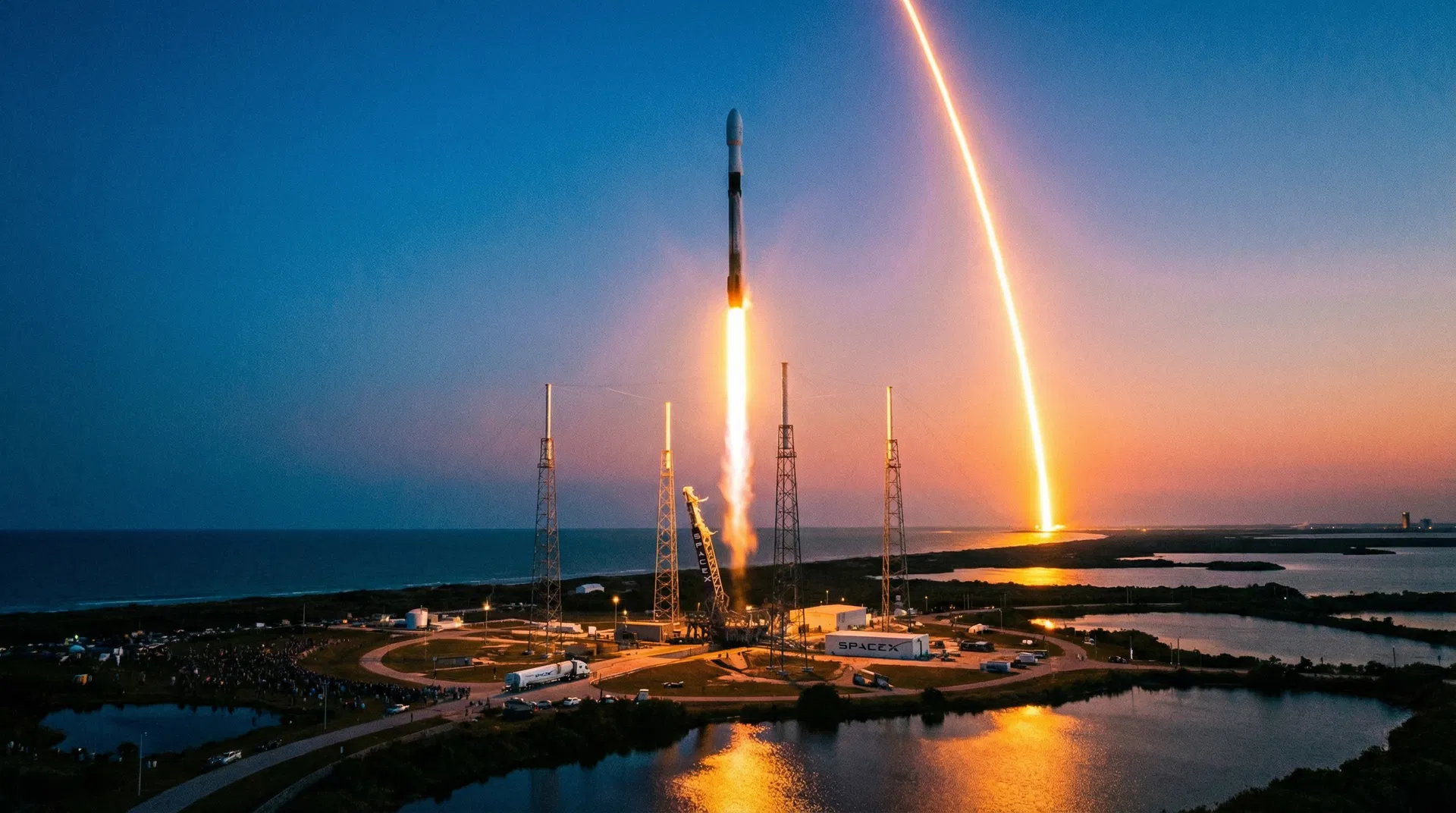
No company has done more to shape the modern space economy than SpaceX. Founded in 2002 by Elon Musk with the audacious goal of making humanity a multi-planetary species, SpaceX has systematically dismantled the old aerospace paradigm. The core innovation that propelled SpaceX to dominance was the development of reusable rockets. By successfully landing and reflying the first stage of its Falcon 9 rocket, SpaceX was able to dramatically reduce the cost of launch, undercutting its competitors and opening up a new range of possibilities for satellite deployment and space exploration. SpaceX has raised over $11.9 billion in private funding from investors like Founders Fund, Google, and Fidelity. Its valuation has soared to over $200 billion, making it one of the most valuable private companies in the world. The company now dominates the global launch market, with its Falcon 9 and Falcon Heavy rockets accounting for the majority of all commercial launches. SpaceX is not just a launch provider; it is a vertically integrated space company. Its Starlink division is deploying a massive constellation of satellites to provide global internet access, a business that could eventually dwarf its launch revenue. The company is also developing the Starship, a fully reusable super-heavy-lift launch vehicle that could further revolutionize the economics of space travel and enable Musk’s long-term vision of a city on Mars.
Case Study 2: Planet Labs - The Data Play
Planet Labs represents a different, but equally compelling, facet of the space economy. Founded in 2010 by three former NASA scientists, Planet’s mission is to image the entire Earth every day, making global change visible, accessible, and actionable. Planet pioneered the use of small, relatively inexpensive satellites, known as CubeSats, to build its constellation. This approach, combined with an agile aerospace development philosophy, allowed the company to deploy a vast fleet of satellites far more quickly and cheaply than traditional satellite operators. Planet went public in 2021 through a SPAC merger that valued the company at $2.8 billion. In its fiscal year ending January 31, 2021, the company generated over $100 million in revenue, a figure that has continued to grow steadily. The company sells its data and analytics to a wide range of customers in agriculture, government, and financial services. Planet has successfully demonstrated the power of a space-based data business. By providing unprecedented insight into the changing planet, the company has created a valuable and growing revenue stream. Its success has inspired a new wave of Earth observation companies, each seeking to carve out its own niche in the rapidly expanding market for geospatial intelligence.
Case Study 3: Iridium - The Cautionary Tale
The story of Iridium is a powerful reminder of the risks inherent in the space economy. The original Iridium constellation, launched in the late 1990s, was a technological marvel, a constellation of 66 satellites designed to provide global satellite phone service. Despite its technological prowess, the original Iridium was a commercial disaster. The company had spent $5 billion to build and launch its constellation, but it failed to attract enough customers to cover its massive operating costs. The satellite phones were expensive and bulky, and the service was quickly rendered obsolete by the rapid expansion of terrestrial cellular networks. In 1999, just nine months after its launch, Iridium filed for bankruptcy. The Iridium story could have ended there, with its satellites being deorbited and burned up in the atmosphere. However, a group of investors saw the underlying value of the network. They purchased the assets out of bankruptcy for a mere $25 million and relaunched the service with a new business model. The new Iridium focused on niche markets that were not well-served by cellular networks, such as maritime, aviation, and government. The relaunched Iridium has been a resounding success. The company is profitable, has a loyal customer base, and has even launched a second-generation constellation of satellites. The Iridium story is a classic example of a phoenix rising from the ashes of a spectacular failure. It demonstrates that even in the high-stakes world of satellite communications, a sound business model and a focus on real-world customer needs are the ultimate keys to success.
XI. The Core Constraint
For all its futuristic promise, the space economy is shackled by a very terrestrial and unforgiving reality: the immense, front-loaded capital required to build anything, and the long, uncertain path to profitability. This is the core constraint that governs the physics of investment in this sector.
Unlike a software startup that can be launched with a few engineers and a cloud computing subscription, a space company must contend with the immutable laws of physics and the staggering cost of placing hardware into orbit. Building a new rocket, a satellite constellation, or an in-space manufacturing facility requires hundreds of millions, if not billions, of dollars in upfront investment. This capital is spent years before a single dollar of revenue is generated.
This extreme capital intensity creates a cascade of challenges. It raises the stakes to a binary outcome. A software company can pivot, iterate, and find product-market fit over time. A space company, on the other hand, often faces a single, make-or-break moment: the launch. If the rocket explodes, or the satellites fail to deploy, the entire investment can be wiped out in an instant. It makes the sector highly sensitive to the macroeconomic environment. As we saw in Section VIII, the flow of venture capital is the lifeblood of the space economy. When the cost of capital rises or investors become risk-averse, the funding for these long-term, high-risk projects can evaporate, leaving even promising companies stranded. It also creates a chasm between the dreamers and the builders. The vision of a vibrant, multi-trillion-dollar space economy is compelling, but the practicalities of building the infrastructure to support it are daunting. This creates a constant tension between the grand ambitions of the sector and the harsh realities of its financial and engineering challenges.
While launch costs are coming down and new technologies are emerging, the fundamental constraint of high capital intensity and long timelines remains. For investors, this means that the space economy is not a place for the impatient or the faint of heart. It is a sector that demands a long-term perspective, a deep understanding of the underlying technology, and a willingness to accept the possibility of spectacular failure in the pursuit of equally spectacular returns.
XII. Inside the Asset
Imagine standing in the cleanroom of a satellite manufacturing facility. The air hums with the quiet efficiency of the filtration system, and the stark white walls are bathed in the glow of fluorescent lights. Before you, on a meticulously grounded workbench, sits a satellite. It’s not the school-bus-sized behemoth of a bygone era, but a compact, densely packed marvel of modern engineering, no larger than a washing machine.
This is a modern communications satellite, one of thousands being built to form a new constellation in low Earth orbit. Its body, a honeycomb of lightweight aluminum and carbon fiber, is a testament to the relentless pursuit of mass reduction. Every gram has been scrutinized, as every gram costs thousands of dollars to launch into orbit. The satellite’s exterior is a patchwork of gold and silver multi-layer insulation, a high-tech blanket that will protect its sensitive electronics from the extreme temperature swings of space, from the searing heat of direct sunlight to the absolute zero of the Earth’s shadow.
From its sides, folded like a metallic origami, are the solar arrays. In the cleanroom, they are inert, but in the vacuum of space, they will unfurl to become the satellite’s lifeblood, converting sunlight into the electrical power that will animate its systems. At one end of the satellite, a cluster of small, cone-shaped thrusters hints at its ability to maneuver in orbit, to dodge debris, and, at the end of its life, to guide itself into a fiery reentry into the atmosphere.
But the real magic is inside. Peering through a small access panel, you can see a dense, three-dimensional tapestry of electronics. This is the satellite’s brain and its voice. Here, powerful processors and sophisticated software will manage the flow of data, receiving signals from the ground, routing them through the constellation, and beaming them back down to a user on the other side of the world. This is where the value is created, in the invisible dance of electrons that will connect the unconnected and power a new generation of applications.
This satellite, sitting silently in its terrestrial cradle, is more than just a piece of hardware. It is a node in a global network, a testament to human ingenuity, and a tangible piece of the multi-trillion-dollar economy being built, piece by piece, in the vast expanse of space.
XIII. The Central Dilemma
The central dilemma for any investor in the space economy is the tension between infrastructure and applications. It is the classic “picks and shovels” versus “gold miners” debate, played out on a cosmic scale.
On one side, you have the infrastructure plays: the launch providers, the satellite manufacturers, and the in-orbit servicing companies. These are the “picks and shovels” of the space economy. They are building the fundamental infrastructure that will enable everything else. The investment case here is straightforward: as activity in space grows, so will the demand for these essential services. A rising tide lifts all boats, and these companies are the boat builders.
The risk, however, is that infrastructure is a capital-intensive, low-margin business. Launch, in particular, is becoming increasingly commoditized. While SpaceX has a commanding lead, a new generation of launch providers is emerging, and the downward pressure on prices is likely to continue. The winners in the infrastructure game will be those who can achieve massive scale and ruthless efficiency.
On the other side, you have the application plays: the satellite internet providers, the Earth observation companies, and the in-space manufacturers. These are the “gold miners,” the companies that are using the infrastructure to create new products and services. The investment case here is for a higher-margin, more scalable business model. A successful satellite data analytics platform, for example, could have the recurring revenue and high margins of a software company.
The risk is that it is notoriously difficult to predict which applications will win. For every successful satellite data company, there will be a dozen that fail to find product-market fit. The history of the technology industry is littered with the corpses of companies that had a great product but no viable business model. The winners in the application game will be those who can not only build a compelling product but also find a large and willing customer base.
This is the central dilemma for the space economy investor. Do you bet on the picks and shovels, with their lower margins but more predictable demand? Or do you bet on the gold miners, with their higher potential returns but also their higher risk of failure? There is no easy answer, and the most successful investors will likely have a portfolio that includes a mix of both.
XIV. The Next Frontier
As the space economy matures, its center of gravity is beginning to shift from Low Earth Orbit (LEO) to the next great frontier: the Moon. The confluence of renewed government interest, driven by NASA’s Artemis program, and the emergence of new commercial capabilities is laying the groundwork for a self-sustaining lunar economy. This is not a distant dream; the first pieces are being put in place today.
The Lunar Gold Rush:
The initial driver of the lunar economy will be the demand for services to support government-led exploration. This includes the transportation of cargo and crew to the lunar surface, the development of lunar habitats, and the provision of power and communication infrastructure. Companies like Intuitive Machines and Astrobotic have already won contracts under NASA’s Commercial Lunar Payload Services (CLPS) program to deliver scientific instruments and other payloads to the Moon. This is the lunar equivalent of the picks and shovels play, and it is happening now.
Mining the Moon:
The long-term vision for the lunar economy is the extraction and utilization of lunar resources. The most valuable of these is water ice, which is believed to exist in permanently shadowed craters at the lunar poles. Water can be split into hydrogen and oxygen, the primary components of rocket fuel. The ability to refuel spacecraft in orbit using lunar-derived propellant would fundamentally change the economics of space exploration, opening up the entire solar system to commercial development.
Beyond the Moon: Asteroid Mining and the Trillion-Dollar Prize:
While the lunar economy is the next frontier, the one after that is even more audacious: the mining of asteroids. Asteroids are rich in valuable resources, including platinum-group metals, which are rare on Earth but abundant in space. A single, large, metal-rich asteroid could contain more platinum than has ever been mined in human history, a prize worth trillions of dollars.
Companies like AstroForge are already developing the technologies to identify and extract these resources. The challenges are immense, but the potential rewards are equally staggering. The development of a viable asteroid mining industry would not only create immense wealth but also provide the resources needed to build a true in-space economy, breaking our reliance on the finite resources of Earth.
The next frontier of the space economy is a journey from LEO to the Moon and beyond. It is a journey that will be fraught with challenges, but it is also a journey that holds the promise of unlocking unimaginable wealth and securing the long-term future of humanity in space.
XV. Lessons from History
The current excitement surrounding the space economy is not without precedent. History offers several powerful parallels that can help us understand the opportunities and the risks of this new frontier.
1. The Age of Exploration:
The current era of commercial space exploration bears a striking resemblance to the European Age of Exploration in the 15th and 16th centuries. Then, as now, a combination of new technology (the caravel), government sponsorship (the royal courts of Spain and Portugal), and private enterprise (the trading companies) led to a rapid expansion of the known world. The explorers who set out across the Atlantic were not just seeking new lands; they were seeking new trade routes and new sources of wealth. The parallels to today’s space entrepreneurs, seeking to unlock the resources of the Moon and the asteroids, are uncanny. The lesson from the Age of Exploration is that these periods of rapid expansion are often messy, chaotic, and fraught with risk, but they also have the power to reshape the global economy and create immense fortunes for those who are bold enough to venture into the unknown.
2. The Dot-Com Boom and Bust:
The dot-com boom of the late 1990s is perhaps the most frequently cited parallel to the current space economy. Then, as now, a transformative new technology (the internet) captured the public imagination and led to a speculative frenzy in the stock market. Investors poured billions of dollars into any company with “.com” in its name, often with little regard for traditional metrics of valuation or profitability. The result was a massive bubble that ultimately burst in spectacular fashion, wiping out trillions of dollars in market value.
However, the dot-com bust was not the end of the story. The infrastructure that was built during the boom – the fiber optic cables, the data centers, the e-commerce platforms – laid the groundwork for the next two decades of technological innovation. The companies that survived the bust, like Amazon and Google, went on to become some of the most valuable and dominant companies in the world. The lesson from the dot-com era is that even in the midst of a speculative bubble, real and lasting value is being created. The challenge for investors is to distinguish the hype from the reality, and to identify the companies that have the resilience and the vision to survive the inevitable shakeout.
3. The Shale Revolution:
The shale revolution in the early 2000s offers a more recent and perhaps more direct parallel to the current revolution in launch costs. The development of new technologies, namely hydraulic fracturing and horizontal drilling, unlocked vast new reserves of oil and natural gas, fundamentally reshaping the global energy landscape. This technological breakthrough was not the result of a single, government-led program, but of the cumulative efforts of thousands of small, independent operators, each experimenting with new techniques and driving down the cost of production.
The parallel to the space economy is the way in which SpaceX and other new players have systematically driven down the cost of launch. This is not just an incremental improvement; it is a step-change in the economics of the industry. The lesson from the shale revolution is that technological innovation can come from unexpected places, and that a relentless focus on cost reduction can unlock massive new markets and create enormous value.
XVI. The Risks
Investing in the space economy is not for the faint of heart. The potential for outsized returns is matched only by the potential for spectacular failure. A clear-eyed understanding of the risks is essential for any investor considering this sector. These risks can be broadly categorized into five key areas:
1. Technical Risk:
Space is an unforgiving environment. Rockets explode, satellites fail, and software glitches can have catastrophic consequences. Despite decades of experience, the technical risk associated with space operations remains high. A single launch failure can wipe out hundreds of millions of dollars in hardware and set a company back for years. The history of space exploration is littered with the debris of failed missions, and even the most experienced players are not immune. This risk is not limited to launch; it extends to the entire lifecycle of a space asset, from deployment and commissioning to on-orbit operations and eventual decommissioning.
2. Market Risk:
Many of the markets that space companies are targeting are still nascent and unproven. It is not yet clear how large the market for space tourism will be, or whether in-space manufacturing will ever be economically viable. Companies that are building for these future markets are making a bet that the demand will materialize. If it doesn’t, they will be left with expensive hardware and no customers. This risk is compounded by the long lead times and high capital costs of space projects, which make it difficult to pivot or adapt to changing market conditions.
3. Regulatory Risk:
The space economy is heavily regulated, and the legal framework is struggling to keep pace with the rapid pace of technological change. Issues like orbital debris, spectrum allocation, and the legal status of resources mined in space are still being debated. A change in government policy or the introduction of new regulations could have a profound impact on the business models of space companies. For example, stricter regulations on orbital debris could increase the cost of satellite operations, while a lack of clear rules on asteroid mining could deter investment in this promising sector.
4. Geopolitical Risk:
Space is increasingly seen as a critical domain for national security. The growing competition between the United States and China, in particular, is extending into space. This can be a double-edged sword for space companies. On the one hand, it can lead to increased government spending on space technology. On the other hand, it can also lead to export controls, restrictions on foreign investment, and the risk of being caught in the crossfire of a geopolitical conflict. A company that is perceived as being too close to one geopolitical bloc could find itself shut out of markets in another.
5. Capital Risk:
As discussed in Section XI, the space economy is incredibly capital-intensive. Companies require vast sums of money to build and launch their products, and the path to profitability is often long and uncertain. This makes them highly vulnerable to the cycles of the capital markets. A downturn in the economy or a shift in investor sentiment can make it difficult or impossible for even promising companies to raise the capital they need to survive. This risk is particularly acute for early-stage companies that have not yet generated significant revenue.
1. Technical Risk:
Space is an unforgiving environment. Rockets explode, satellites fail, and software glitches can have catastrophic consequences. Despite decades of experience, the technical risk associated with space operations remains high. A single launch failure can wipe out hundreds of millions of dollars in hardware and set a company back for years. The history of space exploration is littered with the debris of failed missions, and even the most experienced players are not immune.
2. Market Risk:
Many of the markets that space companies are targeting are still nascent and unproven. It is not yet clear how large the market for space tourism will be, or whether in-space manufacturing will ever be economically viable. Companies that are building for these future markets are making a bet that the demand will materialize. If it doesn’t, they will be left with expensive hardware and no customers.
3. Regulatory Risk:
The space economy is heavily regulated, and the legal framework is struggling to keep pace with the rapid pace of technological change. Issues like orbital debris, spectrum allocation, and the legal status of resources mined in space are still being debated. A change in government policy or the introduction of new regulations could have a profound impact on the business models of space companies.
4. Geopolitical Risk:
Space is increasingly seen as a critical domain for national security. The growing competition between the United States and China, in particular, is extending into space. This can be a double-edged sword for space companies. On the one hand, it can lead to increased government spending on space technology. On the other hand, it can also lead to export controls, restrictions on foreign investment, and the risk of being caught in the crossfire of a geopolitical conflict.
5. Capital Risk:
As discussed in Section XI, the space economy is incredibly capital-intensive. Companies require vast sums of money to build and launch their products, and the path to profitability is often long and uncertain. This makes them highly vulnerable to the cycles of the capital markets. A downturn in the economy or a shift in investor sentiment can make it difficult or impossible for even promising companies to raise the capital they need to survive.
XVII. The Alternative Fortune Verdict
The space economy is at an inflection point. The convergence of falling launch costs, massive government investment, and a new generation of ambitious entrepreneurs has created a genuine opportunity for venture-scale returns. The projected growth to $1.8 trillion by 2035 is not a speculative fantasy; it is a credible forecast based on tangible demand drivers. For investors with a long-term horizon and a high tolerance for risk, the space economy represents one of the most compelling, and potentially lucrative, investment themes of the 21st century.
However, this is not an asset class for the uninitiated. The technical, market, and financial risks are immense. The history of the space industry is a graveyard of ambitious projects that failed to achieve financial escape velocity. Success in this sector requires more than just a great idea; it requires deep domain expertise, a resilient and adaptable team, and a clear path to profitability.
Our verdict is that the space economy is a highly attractive but equally challenging asset class. We believe the most successful investors will be those who take a diversified approach, building a portfolio that includes both the “picks and shovels” infrastructure plays and the high-growth “gold miner” application plays. We also believe that the most promising opportunities are in the private markets, where investors can get in on the ground floor of the next SpaceX or Planet Labs.
For investors considering an allocation to the space economy, we offer the following due diligence questions:
- •The Team: Does the team have a track record of success in the aerospace industry? Do they have the technical expertise to execute on their vision and the business acumen to navigate the challenges of the market?
- •The Technology: Is the technology truly differentiated? Does it offer a 10x improvement over existing solutions, or is it merely an incremental advance?
- •The Market: Is the target market large and growing? Is there a clear and compelling customer need for the product or service?
- •The Business Model: Is there a clear and credible path to profitability? How will the company generate revenue, and what are the key assumptions underlying its financial projections?
- •The Capital Plan: Does the company have a realistic plan to fund its development and growth? How much capital will it need to reach profitability, and where will that capital come from?
The space economy is the final frontier, not just of human exploration, but of venture capital. The journey will be long and arduous, but for those who choose their vehicles wisely, the destination could be a truly astronomical return.