The 60-Second Version
The investment case for uranium is undergoing a profound resurgence, transitioning from a forgotten commodity to a critical element in the global energy transition. After a decade in the doldrums following the 2011 Fukushima disaster, the uranium spot price has tripled since 2020, breaking past $100 per pound for the first time in over 15 years. This rally isn’t just speculative froth; it’s underpinned by a powerful, long-term structural supply deficit and a seismic shift in public and political sentiment towards nuclear energy.
At the heart of this thesis is the $2.2 trillion of investment projected for the nuclear value chain through 2050. The global energy crisis, exacerbated by geopolitical instability, has forced a pragmatic re-evaluation of energy security, and nuclear power is emerging as the only carbon-free, baseload energy source capable of meeting the world’s insatiable electricity demand. This was starkly underscored at COP28, where 31 countries pledged to triple their nuclear capacity by 2050. The demand side of the equation is clear and accelerating. Yet, the supply side is fragile. Decades of underinvestment have left the world heavily reliant on a few key producers, with Kazatomprom (Kazakhstan) and Cameco (Canada) dominating the landscape. Recent production downgrades from these giants have sent shockwaves through the market, signaling that the much-anticipated supply response will be slower and more expensive than previously thought. Compounding this is a critical bottleneck in the nuclear fuel cycle: enrichment. Russia currently controls nearly 40% of global enrichment capacity, a precarious dependency that Western utilities are desperately trying to unwind.
For investors, the opportunity lies in this widening supply-demand gap. The most direct way to gain exposure is through physical uranium trusts like the Sprott Physical Uranium Trust (SPUT), which has been aggressively accumulating physical uranium and effectively cornering a portion of the spot market. Equity in miners, developers, and explorers offers higher beta, while the burgeoning Small Modular Reactor (SMR) revolution, led by companies like NuScale and Rolls-Royce, presents a longer-term, technology-driven play. The narrative is further bolstered by the unprecedented electricity demand from data centers, with tech giants like Microsoft and Google exploring nuclear Power Purchase Agreements (PPAs). This isn’t just a commodity story; it’s a story about energy security, decarbonization, and the rewiring of the global energy map. The nuclear renaissance is here, and uranium is its fuel.
I. What Uranium Investing Actually Is
Investing in uranium is not like buying shares in a software company or a consumer brand. It’s a bet on the fundamental building block of nuclear energy. At its core, when you invest in uranium, you are gaining exposure to the price of Uranium oxide concentrate (U3O8), the stable, powdered form of uranium that is shipped from mines to converters. This is the raw material that, after a series of complex industrial processes, ends up as fuel rods inside a nuclear reactor, generating immense heat to create steam and spin turbines, producing electricity.
Unlike gold or oil, uranium has only one significant commercial use: as fuel for nuclear power plants. This makes its demand profile incredibly inelastic and predictable. Utilities that operate nuclear reactors need a consistent, long-term supply of uranium to keep their plants running. They can’t simply switch to another fuel source if prices rise. This unique characteristic means that returns are not generated through dividends or cash flow in the traditional sense, but through the appreciation of the commodity’s price. The investment thesis is a straightforward one: as the demand for clean, reliable nuclear energy grows, and the supply of uranium struggles to keep up, the price of U3O8 must rise.
Investors are essentially buying a call option on the future of nuclear power. The profit mechanism is driven by the capital appreciation of the assets tied to the uranium price. This can be achieved through several avenues:
- •Physical Uranium: Holding the actual commodity in a secure facility, benefiting directly from spot price increases.
- •Equity in Mining Companies: Investing in the companies that explore for, develop, and extract uranium from the ground. Their profitability is directly linked to the price of uranium, but with operational leverage that can lead to outsized returns (and risks).
- •ETFs and Funds: Pooled investment vehicles that hold a basket of uranium-related assets, offering diversification across the sector.
Ultimately, an investment in uranium is a conviction that the global energy landscape is undergoing a structural shift, and that nuclear power will play an indispensable role in a decarbonized future. It is a hard asset play, grounded in the physics of nuclear fission and the economics of global energy demand.
II. The Market
The global uranium market is in the early innings of a major structural bull market, driven by a confluence of supply constraints, resurgent demand, and a paradigm shift in energy policy. After years of languishing in obscurity, the market has roared back to life, with the spot price of U3O8 surging from a low of around $28 per pound in 2020 to over $100 in early 2026. This price action is a reflection of a market that is waking up to a stark reality: the world needs a lot more uranium, and it’s not clear where it’s going to come from.
The market size, when measured by the value of annual primary mine production, is projected to grow significantly. In 2023, global uranium production was approximately 130 million pounds. At an average price of, say, $70/lb, this represents a market value of around $9.1 billion. However, the World Nuclear Association projects that reactor requirements will rise to nearly 200 million pounds by 2040 in their reference case. Assuming a more conservative long-term price of $80/lb, the annual market value would swell to $16 billion, a substantial increase. The total investment required across the entire nuclear value chain, from mining to enrichment to new reactor builds, is estimated to be a staggering $2.2 trillion by 2050.
This is a market defined by long lead times and significant capital investment. It can take 10-15 years to bring a new uranium mine from discovery to production. This inelasticity on the supply side is a crucial feature of the market and a primary driver of the current price environment.
Key Milestones in the Uranium Market
| Year | Milestone | Significance |
|---|---|---|
| 1938 | Discovery of nuclear fission by Otto Hahn and Fritz Strassmann. | Laid the scientific foundation for both nuclear weapons and nuclear energy, creating the first source of demand for uranium. |
| 1954 | The world's first nuclear power plant, the Obninsk Nuclear Power Plant in the USSR, is connected to the grid. | Demonstrated the viability of nuclear power for commercial electricity generation, kicking off the first wave of reactor construction. |
| 1979 | Three Mile Island accident in the United States. | A partial meltdown of a reactor core led to a major public backlash against nuclear energy, halting new reactor construction in the US for decades. |
| 1986 | Chernobyl disaster in the USSR. | The world's worst nuclear accident, which released a massive amount of radioactive material and further eroded public trust in nuclear power. |
| 2001-2007 | The "First Uranium Bull Market". | A combination of rising demand and supply disruptions (including the Cigar Lake mine flood) sent the uranium price soaring from $10/lb to $137/lb. |
| 2011 | Fukushima Daiichi nuclear disaster in Japan. | A tsunami triggered by a major earthquake led to meltdowns at three reactors, causing a global shutdown of nuclear plants and a crash in the uranium price. |
| 2021 | Launch of the Sprott Physical Uranium Trust (SPUT). | Created a new, highly liquid vehicle for investors to buy and hold physical uranium, significantly impacting the spot market dynamics. |
| 2023 | COP28 in Dubai, where 31 nations pledge to triple nuclear capacity by 2050. | A landmark moment signaling a global political consensus on the essential role of nuclear energy in achieving climate goals. |
| 2024 | Major production downgrades announced by Kazatomprom and Cameco. | The world's two largest producers signaled that the expected supply response would be delayed, confirming a structural deficit in the market. |
III. The Demand Drivers
The demand side of the uranium equation is arguably the most compelling aspect of the investment thesis. It is driven by a powerful set of secular trends that are both predictable and accelerating. Unlike other commodities whose demand can be cyclical and tied to economic growth, uranium demand is determined by the number of nuclear reactors in operation, their generating capacity, and their refueling schedules. This creates a stable and growing baseline of demand that is largely insulated from short-term economic fluctuations.
- •
The Global Energy Transition and Decarbonization: The world is facing the monumental challenge of decarbonizing its energy systems to combat climate change. While renewable energy sources like solar and wind are crucial, their intermittency poses a significant grid stability problem. Nuclear energy is the only proven, large-scale, carbon-free power source that can provide baseload electricity—a constant, reliable supply of power, 24/7. As countries get serious about their net-zero commitments, they are increasingly turning to nuclear power as a cornerstone of their energy strategy. The pledge at COP28 to triple nuclear capacity by 2050 is the clearest signal yet of this global policy shift. This translates directly into a massive increase in long-term uranium demand.
- •
Energy Security and Geopolitical Realignment: The war in Ukraine and the resulting European energy crisis have been a brutal wake-up call. Nations have realized the immense strategic vulnerability of relying on hostile or unstable regimes for their energy supplies. This has triggered a global scramble for energy security and independence. Nuclear power, with its dense fuel source and long refueling cycles (typically 18-24 months), offers an unparalleled level of energy sovereignty. A single 1-gigawatt nuclear reactor provides the same amount of electricity as 3.1 million solar panels or 431 utility-scale wind turbines. This renewed focus on energy security is driving a wave of new reactor builds and life extensions for existing plants, particularly in Europe and Asia.
- •
The Electrification of Everything and AI-Driven Demand: Global electricity demand is set to explode in the coming decades, driven by the electrification of transportation (EVs), heating (heat pumps), and industry. On top of this, the rise of Artificial Intelligence is creating a new, and colossal, source of electricity consumption. Data centers are the factories of the 21st century, and they are incredibly power-hungry. A recent report from the International Energy Agency projects that electricity demand from data centers, cryptocurrencies, and AI could double by 2026. Tech giants like Microsoft and Google are already exploring the use of Small Modular Reactors (SMRs) and signing nuclear Power Purchase Agreements (PPAs) to power their data centers with clean, reliable, 24/7 electricity. This emerging demand driver was not on anyone’s radar a few years ago and adds a significant new layer to the uranium demand story.
- •
The End of Underfeeding and the Return of Utility Contracting: For the past decade, the uranium market has been plagued by a phenomenon known as “underfeeding.” When uranium prices were low, enrichment companies (who are paid for their enrichment services, not the uranium itself) found it more economical to use less uranium feedstock and more processing to produce the required amount of enriched uranium. This effectively created a secondary source of supply, depressing prices. Now, with enrichment capacity tight and prices for enrichment services soaring, underfeeding is no longer economical. Enrichers are switching back to normal or even “overfeeding,” which requires more uranium feedstock. This is removing a significant source of secondary supply from the market. Simultaneously, after years of holding off on long-term contracts, utilities are returning to the market to secure their future fuel needs. This wave of utility contracting is locking up future supply and putting upward pressure on the long-term uranium price.
IV. The Players
The uranium market is a concentrated ecosystem, with a relatively small number of players dominating the landscape, from mining and exploration to the financial vehicles that provide investment exposure. Understanding these key players is crucial to navigating the sector.
| Name | Type | AUM/Scale | Notable - |
|---|---|---|---|
| Kazatomprom | Producer (State-Owned) | ~43% of global production (pre-production cuts) | The world's largest and lowest-cost uranium producer, based in Kazakhstan. Its production decisions have a major impact on the global market. - |
| Cameco | Producer (Public) | ~18% of global production | The largest publicly traded uranium producer, with tier-one assets in Canada's Athabasca Basin (McArthur River, Cigar Lake). A bellwether for the industry. - |
| Sprott Physical Uranium Trust (SPUT) | Physical Fund | ~63 million lbs of U3O8 (as of early 2026) | A game-changing investment vehicle that allows investors to buy shares representing a direct interest in physical uranium. Its aggressive accumulation has been a major driver of the spot price. - |
| Global X Uranium ETF (URA) | ETF | ~$2.5 billion in AUM | The largest and most liquid uranium ETF, providing diversified exposure to a basket of uranium mining companies and other related assets. - |
| NuScale Power | SMR Developer | First SMR design approved by the U.S. NRC | A leading player in the Small Modular Reactor space, representing the next wave of innovation in nuclear technology. - |
V. Geography
The geography of the uranium market is highly concentrated, both in terms of production and resources. This concentration is a key feature of the market and a significant source of both risk and opportunity. Unlike oil, which is produced in dozens of countries around the world, the vast majority of the world’s uranium comes from a handful of key jurisdictions.
Production:
In 2023, just three countries—Kazakhstan, Canada, and Namibia—accounted for over 70% of global uranium production. Kazakhstan alone, with its low-cost In-Situ Recovery (ISR) mines, produces over 40% of the world’s uranium. This heavy reliance on a single country, which is a former Soviet republic with close ties to Russia, is a major source of geopolitical risk for the industry.
| Country | 2023 Production (million lbs U3O8) | % of Global Production |
|---|---|---|
| Kazakhstan | 55.0 | 42.3% |
| Canada | 20.0 | 15.4% |
| Namibia | 15.0 | 11.5% |
| Australia | 8.0 | 6.2% |
| Uzbekistan | 7.0 | 5.4% |
| Russia | 6.0 | 4.6% |
| Niger | 5.0 | 3.8% |
| Total | 116.0 | 89.2% |
Resources:
The geographic concentration of uranium resources (i.e., the amount of uranium that is known to exist in the ground) is also significant. Australia holds the world’s largest known uranium resources, with over 28% of the global total. However, due to a complex and often restrictive political environment, it is a relatively minor producer. Kazakhstan and Canada also have vast resources, which underpins their position as the world’s leading producers.
| Country | Uranium Resources (tonnes U) | % of Global Resources |
|---|---|---|
| Australia | 2,046,700 | 28.3% |
| Kazakhstan | 969,200 | 13.4% |
| Canada | 588,500 | 8.1% |
| Russia | 480,900 | 6.6% |
| Namibia | 470,100 | 6.5% |
| South Africa | 320,900 | 4.4% |
| Brazil | 276,800 | 3.8% |
| Niger | 276,400 | 3.8% |
| Total | 5,430,500 | 75.0% |
This geographic concentration has several important implications for investors. First, it means that events in a single country, such as a production cut in Kazakhstan or a political shift in Australia, can have an outsized impact on the global market. Second, it places a premium on companies with assets in stable, mining-friendly jurisdictions like Canada and Australia. As geopolitical risk becomes an increasingly important consideration for investors, this jurisdictional premium is likely to grow.
VI. How to Actually Invest
For investors looking to gain exposure to the uranium bull market, there are several distinct avenues to consider, each with its own risk-reward profile. The choice of investment vehicle will depend on an investor’s risk tolerance, time horizon, and desired level of direct exposure to the commodity.
| Vehicle | Minimum Investment | Liquidity | Expected Return | Risk Level |
|---|---|---|---|---|
| Physical Uranium Trusts | Low (share price) | High | Moderate | Low |
| Uranium ETFs | Low (share price) | High | Moderate-High | Moderate |
| Major Uranium Miners | Low (share price) | High | High | Moderate |
| Junior/Developer Miners | Low (share price) | Medium-Low | Very High | Very High |
| Royalty/Streaming Companies | Low (share price) | Medium | Moderate | Low-Moderate |
1. Physical Uranium Trusts:
For those seeking direct, unleveraged exposure to the uranium price, physical trusts are the most straightforward option. The Sprott Physical Uranium Trust (SPUT) is the dominant player in this space. It trades on the Toronto Stock Exchange and holds physical U3O8 in secure storage facilities. By buying shares in SPUT, investors are effectively buying a slice of a growing stockpile of physical uranium. The trust’s aggressive accumulation of uranium on the spot market has been a major catalyst for the current bull market. The key benefit here is simplicity and direct price exposure, without the operational risks of mining. The main downside is the lack of leverage; the trust’s value will move in line with the uranium price, but it won’t offer the explosive upside potential of a successful mining stock.
2. Uranium ETFs:
Exchange-Traded Funds (ETFs) offer a diversified way to invest in the sector. The Global X Uranium ETF (URA) and the Sprott Uranium Miners ETF (URNM) are the two largest and most liquid options. These ETFs hold a basket of uranium-related companies, including miners, developers, and in some cases, physical uranium trusts. They provide instant diversification across the industry, reducing single-stock risk. They are an excellent option for investors who are bullish on the sector but don’t want to pick individual winners.
3. Major Uranium Miners:
Investing in the shares of established uranium producers like Cameco (Canada) and Kazatomprom (Kazakhstan) offers a leveraged play on the uranium price. These companies have operating mines, and their profitability is highly sensitive to the price of the commodity they produce. As the uranium price rises, their margins expand, and their share prices can increase at a much faster rate than the commodity itself. This is known as operational leverage. The risks are higher than with physical trusts, as these companies face operational challenges, but the potential returns are also greater.
4. Junior/Developer Miners:
This is the highest-risk, highest-reward segment of the market. Junior and developer miners are companies that are exploring for new uranium deposits or are in the process of developing a known deposit into a mine. These stocks are essentially call options on the uranium price and on the company’s ability to successfully execute its business plan. If a junior makes a major discovery or a developer successfully brings a mine into production, the returns can be astronomical—10x, 50x, or even 100x. However, the risks are equally immense. Exploration is a high-risk endeavor, and many of these companies will fail. This is a space for speculative capital and requires deep due diligence.
5. Royalty/Streaming Companies:
A lower-risk way to gain exposure to the mining sector is through royalty and streaming companies. These companies provide upfront financing to miners in exchange for a percentage of the mine’s future production or revenue. This business model offers exposure to the upside of rising commodity prices with reduced exposure to the operational risks of mining. Uranium Royalty Corp (URC) is a key player in this space.
VII. Unit Economics
To understand the investment case for uranium miners, it’s essential to drill down into the unit economics of a single mine. The profitability of a uranium mine is determined by a simple equation: the price of uranium minus the cost of production. The key is to understand the different components of that cost and how they vary from mine to mine.
There are two main methods of uranium mining, each with its own distinct cost structure:
- •In-Situ Recovery (ISR): This method is used for deposits in porous sandstone. A solution is pumped underground to dissolve the uranium, and the uranium-bearing solution is then pumped to the surface for processing. ISR is the lowest-cost mining method, with all-in sustaining costs (AISC) typically in the range of $25-$40 per pound of U3O8.
- •Conventional Mining (Open Pit or Underground): This involves physically excavating the ore from the ground. It is a more expensive method, with AISC typically ranging from $40-$70 per pound or even higher, depending on the grade and geometry of the deposit.
Let’s look at a hypothetical example of a mid-sized ISR mine producing 1 million pounds of U3O8 per year:
| Metric | Value (per lb U3O8) |
|---|---|
| Uranium Price | $80.00 |
| Cash Operating Costs | $20.00 |
| Labor | $8.00 |
| Reagents & Consumables | $7.00 |
| Power | $3.00 |
| Other | $2.00 |
| Royalties & Severance Taxes | $5.00 |
| Sustaining Capital | $10.00 |
| All-In Sustaining Cost (AISC) | $35.00 |
| AISC Margin | $45.00 |
In this example, at an $80/lb uranium price, the mine is generating a very healthy margin of $45 per pound. The total annual profit would be $45 million. Now, consider the impact of a higher uranium price. If the price rises to $100/lb, the AISC margin expands to $65/lb, and the annual profit jumps to $65 million—a 44% increase in profitability from a 25% increase in the uranium price. This is the power of operational leverage.
For a conventional mine, the numbers are different, but the principle is the same. Let’s look at a hypothetical underground mine in the Athabasca Basin, known for its high-grade deposits:
| Metric | Value (per lb U3O8) |
|---|---|
| Uranium Price | $80.00 |
| Cash Operating Costs | $35.00 |
| Labor | $15.00 |
| Mining & Haulage | $10.00 |
| Milling & Processing | $7.00 |
| Other | $3.00 |
| Royalties & Severance Taxes | $8.00 |
| Sustaining Capital | $12.00 |
| All-In Sustaining Cost (AISC) | $55.00 |
| AISC Margin | $25.00 |
Even with a higher cost structure, the conventional mine is still profitable at an $80/lb price. The key takeaway is that the higher the uranium price goes, the more profitable all mines become, and the more marginal or high-cost projects become economically viable. This is why the incentive price to bring on new supply is often quoted in the $80-$100/lb range. It is the price required to make these higher-cost projects attractive to investors.
VIII. Macroeconomic Sensitivity
The uranium market, while driven by its own unique fundamentals, is not entirely immune to the broader macroeconomic environment. However, its sensitivity to different macro regimes is quite distinct from that of other commodities. The inelasticity of demand provides a strong defensive buffer, but the price can still be influenced by investor sentiment and capital flows.
| Macro Regime | Impact on Uranium - |
|---|---|
| High Growth, Low Inflation (Goldilocks) | Positive. In a stable and growing economy, the long-term demand for electricity is secure. Investor appetite for risk assets, including uranium equities, is typically strong. Capital is readily available for new mine development. - |
| High Growth, High Inflation (Overheating) | Very Positive. This is the ideal environment for hard assets like uranium. Inflation erodes the value of fiat currencies, driving investors towards real assets. More importantly, high and volatile fossil fuel prices (a key driver of inflation) make the stable, low-cost electricity from nuclear power even more attractive. This was a major driver of the 1970s nuclear boom. - |
| Low Growth, Low Inflation (Stag-deflation) | Neutral to Negative. In a recessionary environment, overall electricity demand may soften. More significantly, investor risk aversion tends to rise, leading to a flight from speculative assets like junior uranium miners. The 2008 financial crisis was a prime example, which contributed to the end of the last uranium bull market. However, the underlying demand from existing reactors remains stable. - |
| Low Growth, High Inflation (Stagflation) | Positive. Similar to an overheating environment, stagflation is generally positive for hard assets. The high inflation component is the dominant factor, driving investors to seek refuge in real assets. The energy security argument for nuclear power also becomes more potent in a stagflationary environment, as governments look for ways to reduce their dependence on volatile fossil fuel imports. - |
IX. Tax Considerations: A Global Overview
Tax treatment is a critical but often overlooked aspect of investment returns. The taxation of gains from uranium investments can vary significantly depending on the investor’s country of residence and the specific investment vehicle used. The following table provides a high-level, generalized overview. This is not tax advice, and investors should always consult with a qualified tax professional in their jurisdiction.
| Jurisdiction | Physical Uranium Trusts (e.g., SPUT) - | Uranium Equities (Miners, ETFs) - |
|---|---|---|
| United States | Gains are typically taxed as long-term capital gains (if held >1 year) at rates up to 20%. However, SPUT is structured as a Passive Foreign Investment Company (PFIC), which can lead to complex and potentially punitive tax treatment. Investors should consult a tax advisor. | Gains are taxed as long-term capital gains (if held >1 year) at rates up to 20%. Dividends are taxed as ordinary income. - |
| United Kingdom | Gains are subject to Capital Gains Tax (CGT) at rates up to 20%. The annual exempt amount can be used to offset gains. - | Gains are subject to CGT at rates up to 20%. Dividends are taxed at specific dividend tax rates, with a tax-free allowance. - |
| European Union | Tax treatment varies by member state. Generally, gains are taxed as capital gains, with rates varying widely. Some countries have wealth taxes that may apply. - | Tax treatment varies by member state. Most countries tax capital gains and dividends, but rates and rules differ significantly. - |
| Singapore | No capital gains tax. Gains from the sale of investments are generally not taxed. - | No capital gains tax. No tax on dividends from foreign sources. Singapore is a highly tax-friendly jurisdiction for investors. - |
| UAE | No capital gains tax or income tax for individuals. The UAE is a zero-tax jurisdiction for most forms of investment income. - | No capital gains tax or income tax for individuals. - |
| Australia | Gains are subject to Capital Gains Tax (CGT). A 50% discount on the capital gain is available for assets held for more than 12 months. - | Gains are subject to CGT, with the 50% discount available. Dividends are taxed as ordinary income, but a system of franking credits can reduce the tax paid. - |
X. Case Studies
Theory and market analysis are essential, but the real lessons in investing are often learned through specific examples. The uranium market, with its dramatic cycles of boom and bust, offers a wealth of case studies that illustrate both the incredible potential for wealth creation and the painful risks of capital destruction.
Case Study 1: The High-Grade King – Cameco's Cigar Lake Mine
The Asset: The Cigar Lake mine in the Athabasca Basin of Northern Saskatchewan, Canada, is a geological freak of nature. It is the world’s second-largest high-grade uranium deposit, with an average grade of 15.9% U3O8. To put that in perspective, that is more than 100 times the world average. The deposit is located 450 meters underground and is co-owned by Cameco (54.5%), Orano Canada (40.5%), and TEPCO Resources (5%).
The Story: The journey of Cigar Lake from discovery to production is a masterclass in persistence and engineering ingenuity. Discovered in 1981, the project was plagued by technical challenges from the outset. The orebody is located in unstable, water-saturated sandstone, making conventional mining impossible. The solution was a bespoke, high-tech mining method called Jet Boring System (JBS), where the ore is blasted with a high-pressure water jet and the resulting slurry is pumped to the surface. Development was slow and expensive. Then, disaster struck. In 2006, a catastrophic flood completely inundated the underground workings, delaying the project by years and costing hundreds of millions of dollars to remediate. A second, smaller flood occurred in 2008. Many analysts wrote the project off as a white elephant.
However, Cameco and its partners persevered. After a monumental dewatering and remediation effort, the mine finally entered production in 2014. The timing was terrible. The uranium price was in the doldrums post-Fukushima, trading below $30/lb. But the mine’s incredibly high grade gave it a crucial advantage: even at low prices, it was one of the few uranium mines in the world that could operate profitably. Its cash costs are among the lowest in the world, in the range of $15-$20 per pound.
The Outcome: As the uranium market began to turn in the early 2020s, Cigar Lake became a cash-generating machine. In 2023, the mine produced 15 million pounds of U3O8. At an average realized price of over $50/lb, the mine generated hundreds of millions in revenue for its owners. For investors in Cameco, Cigar Lake represents a tier-one asset that provides a massive, low-cost production base and significant leverage to a rising uranium price. The story of Cigar Lake is a testament to the value of high-grade, long-life assets and the importance of operational expertise in navigating the complexities of uranium mining.
Case Study 2: The Geopolitical Quagmire – Orano's Imouraren Project
The Asset: The Imouraren deposit in northern Niger is one of the largest uranium deposits in the world, with estimated reserves of over 200,000 tonnes of uranium. The project is owned by the French state-owned company Orano (formerly Areva) and the government of Niger. It was envisioned as a massive open-pit mine that would produce 5,000 tonnes of uranium per year for 35 years, making it one of the largest uranium mines in Africa.
The Story: The mining license for Imouraren was granted in 2009, at the height of the last uranium bull market. Construction began in 2012, with an initial investment of over $1.5 billion. The project was a cornerstone of Niger’s economic development strategy and a key future asset for Orano. However, the timing could not have been worse. The 2011 Fukushima disaster sent the uranium market into a tailspin. Prices collapsed from over $70/lb to below $30/lb, making the development of a large, relatively low-grade open-pit mine like Imouraren economically unviable.
In 2015, with the uranium price showing no signs of recovery, Orano made the difficult decision to suspend development of the project. The site was placed on care and maintenance, and the massive investment was effectively mothballed. The situation was further complicated by the deteriorating security situation in the Sahel region, with the rise of Islamist insurgencies and political instability. Niger has a long history of uranium production, but it is also one of the poorest and most unstable countries in the world. In July 2023, a military coup overthrew the democratically elected government, leading to international sanctions and further uncertainty for foreign investors.
The Outcome: As of early 2026, the Imouraren project remains frozen. The massive deposit of uranium sits in the ground, a stranded asset hostage to low uranium prices and high geopolitical risk. Orano has been in protracted negotiations with the new military junta in Niger about the future of the project, but the path forward is unclear. The story of Imouraren is a stark reminder of the geopolitical risks inherent in uranium investing. A world-class deposit is worthless if you can’t get it out of the ground and to market safely and profitably. It highlights the importance of jurisdictional risk and the premium that should be placed on assets located in stable, mining-friendly countries like Canada and Australia.
XI. The Core Constraint
If there is one single structural challenge that defines the uranium market and forms the core of the long-term investment thesis, it is the profound and persistent inelasticity of primary mine supply. In simple terms, the uranium mining industry is simply incapable of responding quickly to changes in demand. This is not a bug; it is a fundamental feature of the industry, and it is the primary reason why many analysts believe the current bull market has a long way to run.
The timeline from the initial discovery of a new uranium deposit to the first pound of production is brutally long, typically ranging from 10 to 15 years. This is a multi-stage, capital-intensive, and highly uncertain process:
- •Exploration (3-5+ years): This is the initial phase of searching for new deposits. It involves geological mapping, geophysical surveys, and drilling. It is a high-risk, low-probability endeavor. For every 1,000 exploration projects, only one will ever become a mine.
- •Feasibility & Permitting (5-10+ years): Once a deposit is discovered, the company must conduct extensive studies to determine if it can be mined economically and environmentally. This involves drilling out the resource, conducting metallurgical test work, and developing a detailed mine plan. The company must then navigate a labyrinthine permitting process, which can involve multiple government agencies at the local, regional, and national levels. This is often the longest and most arduous part of the process, particularly in Western jurisdictions.
- •Financing & Construction (2-4 years): Once the permits are in hand, the company must raise the significant capital required to build the mine. This can range from a few hundred million dollars for a small ISR mine to several billion dollars for a large conventional mine. Construction itself is a major engineering project that can take several years to complete.
This long lead time means that the supply response to the current high prices is not a matter of flipping a switch. The mines that will be producing uranium in the late 2020s and early 2030s are the ones that are already in the permitting or construction phase today. There are simply not enough of them. The pipeline of new projects is woefully inadequate to meet the projected demand from the coming wave of new reactor builds and life extensions.
Furthermore, even existing mines that were placed on care and maintenance during the bear market cannot be restarted overnight. It can take 1-2 years and tens or even hundreds of millions of dollars to restart a mothballed mine. This has been demonstrated by Cameco’s restart of its McArthur River mine, which has been a slow and deliberate process.
This structural supply inelasticity is the central pillar of the uranium bull thesis. It creates a situation where, as demand continues to grow, the market is likely to remain in a structural deficit for many years to come. The only mechanism to balance the market is a higher uranium price – a price high enough to incentivize the massive, long-term investment required to bring new mines into production.
XII. Inside the Asset
To truly understand uranium as an investment, it helps to move beyond the charts and financial statements and get a sense of the physical reality of the asset. What does it look like? How does it get from a rock in the ground to a high-tech fuel assembly inside a nuclear reactor? The journey is a fascinating intersection of geology, chemistry, and advanced engineering.
Imagine standing in the Athabasca Basin in northern Canada. The landscape is a vast, remote wilderness of boreal forest and pristine lakes. But beneath your feet, 500 meters down, lies the richest treasure in the energy world. Here, in the Cigar Lake mine, the ore is not just rock with a few flecks of uranium. It is a massive, solid vein of almost pure, black pitchblende, so radioactive that it cannot be mined by humans. Instead, a remotely operated jet boring machine, guided by cameras and sensors, pulverizes the ore with a high-pressure water jet. The resulting slurry is pumped to the surface, a thick, black mud that is the first physical manifestation of the asset.
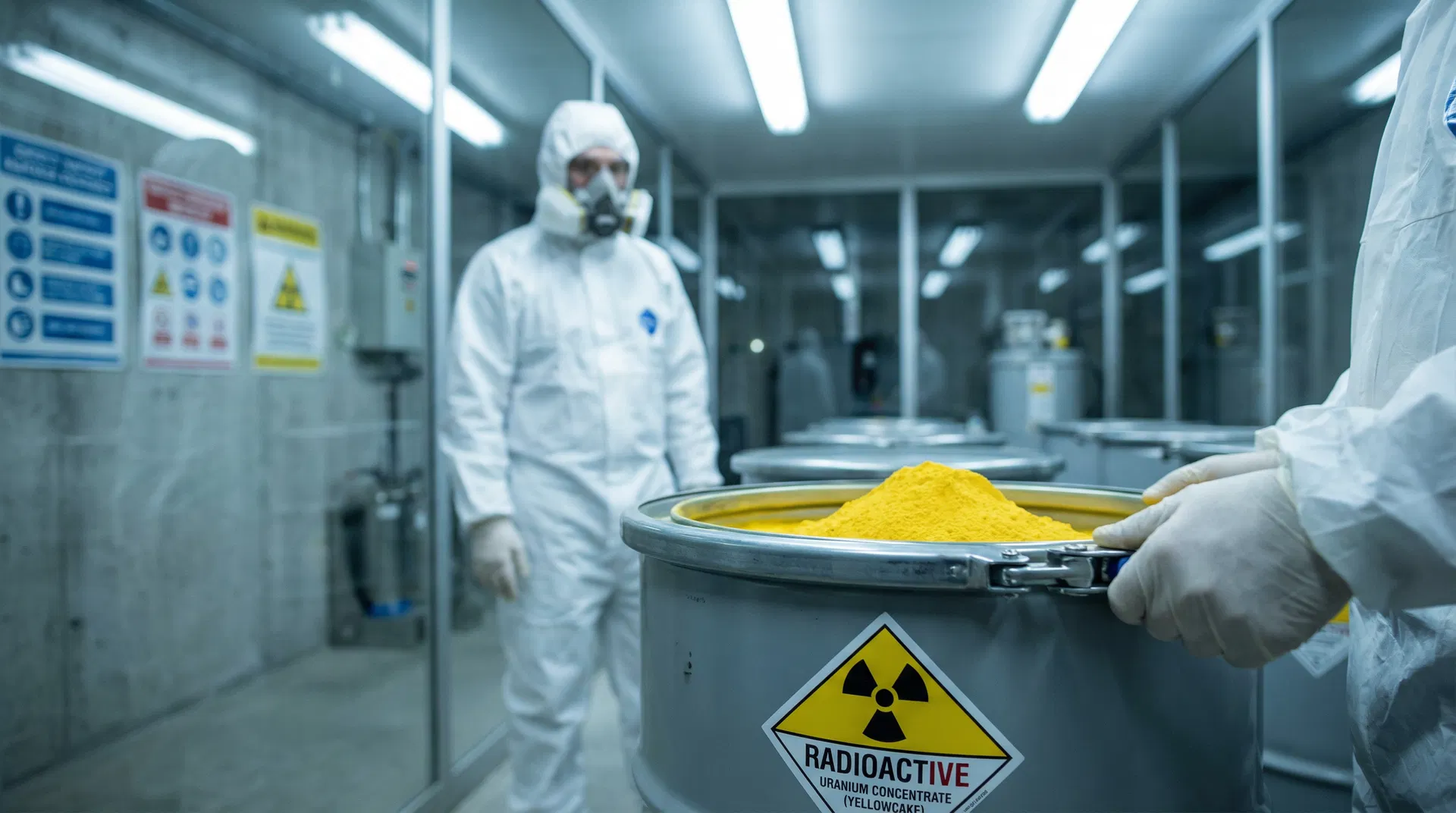
This slurry is then trucked to a mill, where it is crushed, leached with acid, and processed to extract the uranium. The end product of this process is uranium oxide concentrate (U3O8), more commonly known as yellowcake. Despite its name, modern yellowcake is not actually yellow. It is a dull, brownish-black powder with the consistency of fine sand. It is packaged in 200-liter steel drums, each holding about 800 pounds of U3O8. A single drum, worth around $80,000 at today’s prices, contains the energy equivalent of 40,000 barrels of oil. This is the raw commodity that the Sprott Physical Uranium Trust buys and stores in secure warehouses in Canada, France, and the United States.
But the journey is far from over. The yellowcake must then be sent to a conversion facility, where it is chemically converted into uranium hexafluoride (UF6). This is a highly corrosive gas that is solid at room temperature. The UF6 is then transported in specialized steel cylinders to an enrichment plant. Here, in a cascade of thousands of rapidly spinning centrifuges, the concentration of the fissile Uranium-235 isotope is increased from its natural level of 0.7% to the 3-5% required for commercial reactor fuel. This is the most technologically challenging and capital-intensive part of the fuel cycle, and the reason why enrichment capacity is such a critical bottleneck.
Finally, the enriched UF6 is sent to a fuel fabrication plant. Here, it is converted back into a solid ceramic powder, uranium dioxide (UO2), which is then pressed into small, black pellets, each about the size of a pencil eraser. A single one of these pellets contains the energy equivalent of one ton of coal. These pellets are then stacked into long, thin metal tubes made of a zirconium alloy. These tubes, called fuel rods, are bundled together to form a fuel assembly. A typical fuel assembly is about 4 meters long and contains several hundred fuel rods. It is a masterpiece of precision engineering, designed to withstand the intense heat and radiation inside a reactor core for several years.
This is the final form of the asset: a high-tech, energy-dense fuel source that will power a city for a year. From a black rock deep underground to a precisely engineered fuel assembly, the journey of uranium is a testament to human ingenuity. Investing in uranium is a bet on the enduring importance of this remarkable element in powering the modern world.
XIII. The Central Dilemma
The central dilemma for any investor considering the uranium market is a profound and often uncomfortable one: how to reconcile the undeniable environmental and energy security benefits of nuclear power with its persistent and deeply ingrained public perception of risk. This is the core tension that has defined the nuclear industry for decades, and it is a paradox that every investor in the space must navigate.
On one hand, the case for nuclear energy has never been stronger. It is a proven, reliable, and carbon-free source of baseload electricity. In a world grappling with the existential threat of climate change and the geopolitical instability of fossil fuel markets, nuclear power offers a compelling solution. It is the silent workhorse of the clean energy transition, providing more than half of all carbon-free electricity in the United States and Europe. The data is clear: from a purely analytical, evidence-based perspective, a massive expansion of nuclear power is essential to achieving our climate goals.
On the other hand, the word “nuclear” itself is freighted with a heavy historical baggage of fear and anxiety. The specter of Three Mile Island, Chernobyl, and Fukushima looms large in the public imagination. These events, though rare, have created a deep-seated and often irrational fear of nuclear technology. The issue of nuclear waste is another major public concern. While the volume of waste is incredibly small (all the used fuel from the entire US nuclear industry could fit on a single football field), and it can be safely stored in dry casks for centuries, the public perception is one of a dangerous, unsolved problem.
This creates a fundamental disconnect between the reality of nuclear energy and the perception of it. It is a classic “head versus heart” problem. The head looks at the data on safety, reliability, and carbon emissions and concludes that nuclear is a vital part of the solution. The heart feels a primal fear of radiation and meltdown, and recoils from the technology.
For investors, this dilemma manifests in several ways:
- •ESG Scrutiny: For years, nuclear energy was excluded from many ESG (Environmental, Social, and Governance) investment mandates due to concerns about waste and safety. This has started to change, with the **EU Taxonomy including nuclear as a green” investment, but the debate is far from over. Uranium investors must be prepared to defend their position against ESG-related criticism.
- •Political Risk: The public perception of nuclear power can have a significant impact on government policy. A change in government or a shift in public opinion can lead to the premature closure of nuclear plants, the cancellation of new build projects, or the imposition of punitive taxes and regulations. This political risk is a constant overhang for the industry.
- •Valuation Discount: The perceived risks of nuclear energy often lead to a “nuclear discount” in the valuation of uranium-related equities. These companies often trade at lower multiples than comparable companies in other sectors, reflecting the market’s unease with the industry.
The central dilemma for the uranium investor, therefore, is whether to bet on the eventual triumph of logic and data over fear and perception. It is a bet that, as the realities of climate change and energy security become more acute, the world will be forced to embrace nuclear power, not as a perfect solution, but as a necessary one. It is a bet that the undeniable physics of energy density and the economics of reliability will ultimately outweigh the emotional baggage of the past. Navigating this dilemma requires not just financial acumen, but also a deep understanding of public policy, social psychology, and the art of communicating complex and controversial ideas.
XIV. The Next Frontier
While the current uranium bull market is driven by the needs of the existing global fleet of nuclear reactors, the long-term future of the industry is being shaped by a wave of innovation that promises to make nuclear power cheaper, safer, and more versatile than ever before. This is the next frontier of nuclear technology, and it represents a significant source of future demand and investment opportunity.
The Small Modular Reactor (SMR) Revolution:
The most significant near-term innovation is the development of Small Modular Reactors (SMRs). These are nuclear reactors that are much smaller than traditional gigawatt-scale plants, typically with a capacity of less than 300 megawatts. The key innovation is in the manufacturing process: SMRs are designed to be factory-built in a standardized, assembly-line fashion and then transported to the site for installation. This modular approach promises to dramatically reduce the cost and construction time of nuclear power, which has been plagued by the massive upfront costs and lengthy construction schedules of large-scale projects.
SMRs offer several key advantages:
- •Lower Cost: The upfront capital investment for an SMR is a fraction of that for a large reactor, making them more accessible to a wider range of customers and financing models.
- •Faster Deployment: Factory production and simpler site preparation mean that SMRs can be deployed in a matter of years, rather than decades.
- •Enhanced Safety: Most SMR designs incorporate passive safety features, which rely on the laws of physics (like gravity and natural circulation) to cool the reactor in the event of an emergency, rather than requiring active electrical or mechanical systems. This makes them inherently safer than previous generations of reactors.
- •Siting Flexibility: Their small footprint and lower cooling water requirements mean that SMRs can be sited in a much wider range of locations, including remote industrial sites, data centers, and even as replacements for retiring coal plants.
Leading the charge in the SMR space are companies like NuScale Power, whose design was the first to be approved by the U.S. Nuclear Regulatory Commission, and Rolls-Royce, which is developing a 470 MWe SMR for the UK market. The potential applications for SMRs are vast, from providing clean, reliable power to remote communities and industrial facilities, to powering the massive data centers of the AI revolution, to producing clean hydrogen and desalinating water.
Advanced Reactor Designs and New Applications:
Beyond SMRs, there is a whole ecosystem of advanced reactor designs in development, often referred to as Generation IV reactors. These include technologies like molten salt reactors, high-temperature gas-cooled reactors, and sodium-cooled fast reactors. These designs promise even greater efficiency, safety, and waste reduction. Some advanced reactors are even designed to run on different fuel cycles, such as thorium, which is more abundant than uranium and produces less long-lived waste.
This new generation of nuclear technology is also opening up new applications for nuclear power beyond electricity generation. The high-temperature heat produced by some advanced reactors can be used for a range of industrial processes, such as:
- •Clean Hydrogen Production: High-temperature steam electrolysis is a highly efficient way to produce clean hydrogen, which is a critical fuel for decarbonizing heavy industry and transportation.
- •District Heating: In colder climates, the waste heat from nuclear plants can be used to provide carbon-free heating to entire cities.
- •Desalination: Nuclear-powered desalination plants can provide a reliable source of fresh water in arid regions.
The Distant Dream of Fusion:
Looking further out, the ultimate prize in energy is nuclear fusion. This is the process that powers the sun, where atomic nuclei are fused together, releasing immense amounts of energy. Fusion has the potential to provide a virtually limitless, safe, and carbon-free source of energy. While commercial fusion power is still likely decades away, there has been a surge in private investment in the space, with dozens of startups pursuing a range of innovative approaches. Recent breakthroughs, such as the achievement of “net energy gain” at the Lawrence Livermore National Laboratory, have generated significant excitement. While not a direct driver of the uranium market (as most fusion reactors would use hydrogen isotopes as fuel), the development of fusion is a testament to the long-term potential of nuclear science to solve the world’s energy challenges.
XV. Lessons from History
The past is never dead. It’s not even past. For investors in the uranium market, this is a crucial lesson. The current bull market, while driven by a unique set of modern circumstances, is also echoing historical patterns that offer valuable insights into the potential path forward.
1. The Commodity Supercycle Rhyme:
The uranium market of the 2020s bears a striking resemblance to the broader commodity supercycles of the past, particularly the oil shocks of the 1970s and the China-driven boom of the 2000s. In each case, a long period of underinvestment in supply collided with a structural increase in demand, leading to a multi-year bull market. The narrative is always the same: low prices lead to a lack of investment in new production, which eventually creates a supply deficit when demand unexpectedly accelerates. The result is a price spike that is necessary to incentivize new investment. The key lesson from these past cycles is that they often last longer and go higher than anyone expects. The supply response is never as fast or as easy as the market anticipates.
2. The Ghost of the Last Uranium Bull Market (2001-2007):
The most direct historical parallel is, of course, the last uranium bull market, which saw the spot price soar from $10/lb in 2001 to a peak of $137/lb in 2007. That bull market was driven by a narrative of a “nuclear renaissance” and a supply shock caused by the flooding of Cameco’s Cigar Lake mine. The price action was spectacular, and many uranium stocks delivered life-changing returns. However, the bust was just as brutal. The 2008 financial crisis and the 2011 Fukushima disaster pricked the bubble, and the uranium price entered a decade-long bear market.
The lessons from that cycle are twofold. First, it demonstrates the explosive potential of the uranium market when the fundamentals align. The leverage in the system, from the physical market to the equity market, can be immense. Second, it serves as a cautionary tale about the dangers of speculative excess and the impact of black swan events. The current bull market is arguably built on a much firmer foundation, with a clearer demand picture and a more severe structural deficit. But the memory of the last bust is a healthy reminder that this is a volatile and high-risk sector.
3. The Long, Slow Road to Public Acceptance:
The history of nuclear power is a history of a battle for public opinion. The initial optimism of the “Atoms for Peace” era in the 1950s and 60s gave way to the fear and skepticism that followed Three Mile Island and Chernobyl. For decades, the nuclear industry was on the defensive, fighting a losing battle against a well-organized and well-funded anti-nuclear movement. The tide is now turning. The urgency of climate change, the reality of energy security, and the impressive safety record of the industry over the past few decades have led to a significant shift in public and political sentiment. The lesson here is that social and political change can be a slow and gradual process, but once a tipping point is reached, the momentum can be powerful. The nuclear industry is finally starting to win the argument, and that is a powerful tailwind for the uranium investment thesis.
XVI. The Risks
No investment thesis is complete without a clear-eyed and honest assessment of the risks. The uranium market, for all its potential, is a high-risk, high-reward arena. Investors must go in with their eyes wide open to the potential pitfalls. The risks can be broadly categorized into market, operational, geopolitical, and black swan risks.
| Risk Category | Specific Risks - |
|---|---|
| Market Risk | Price Volatility: The uranium price is notoriously volatile and can be subject to large swings based on sentiment and news flow. Speculative Bubble: The influx of financial players into the market could create a speculative bubble that is disconnected from the underlying fundamentals. Liquidity: While improving, the market is still relatively small and can be illiquid at times, particularly for smaller stocks. - |
| Operational Risk | Mining is Hard: Uranium mining is a technically challenging and dangerous business. Risks include mine flooding (as seen at Cigar Lake), rock falls, equipment failure, and cost overruns. Geological Risk: Ore bodies can be complex and unpredictable. There is always a risk that the grade and tonnage of a deposit will be lower than estimated. Execution Risk: For developers, there is a significant risk that they will not be able to successfully permit, finance, and construct their mine on time and on budget. - |
| Geopolitical Risk | Jurisdictional Risk: A significant portion of the world's uranium production and resources are located in politically unstable or challenging jurisdictions, such as Kazakhstan, Niger, and Russia. Risks include nationalization, export controls, civil unrest, and coups. Supply Chain Risk: The nuclear fuel cycle is a global and interconnected supply chain. Disruptions in one part of the chain (e.g., enrichment in Russia) can have a ripple effect across the entire industry. - |
| Black Swan Risk | Nuclear Accident: This is the single biggest risk to the entire thesis. Another major nuclear accident on the scale of Fukushima would have a devastating impact on public opinion, government policy, and the uranium price. While modern reactors are safer than ever, this risk can never be completely eliminated. - |
XVII. The Alternative Fortune Verdict
The investment case for uranium in the mid-2020s is one of the most compelling and asymmetric opportunities in the global macro landscape. It is a classic commodity bull market, built on the firm foundation of a structural supply deficit and a powerful, secular demand story. The world is waking up to the fact that it cannot achieve its goals of decarbonization and energy security without a massive expansion of nuclear power. The pledge at COP28 to triple nuclear capacity by 2050 was not just a symbolic gesture; it was a starting gun for a multi-trillion-dollar investment cycle.
The supply side of the equation is, if anything, even more bullish. A decade of underinvestment has left the world with a fragile and concentrated supply chain, and the long lead times of uranium mining mean that there is no quick fix. The structural deficit is real, and it is likely to persist for many years to come. The only mechanism to balance the market is a higher uranium price – a price that is high enough to incentivize the next generation of mines.
However, this is not an investment for the faint of heart. The uranium market is notoriously volatile, and the risks are significant. Geopolitical instability, operational challenges, and the ever-present black swan risk of a nuclear accident are all factors that investors must contend with. This is a sector that demands a long-term perspective and a strong stomach for volatility.
For those willing to do the work and accept the risks, the potential rewards are substantial. The leverage in the system, from the physical commodity to the equities of miners and developers, can create life-changing returns. The key is to be positioned correctly, with a diversified portfolio that balances direct commodity exposure with the leveraged upside of high-quality equities.
Ultimately, an investment in uranium is a bet on the future of energy. It is a bet that logic will triumph over fear, that the world will embrace the clean, reliable power of the atom, and that the laws of supply and demand will assert themselves in a powerful and profitable way. The nuclear renaissance is here, and for the prepared investor, it could be the opportunity of a lifetime.
Due Diligence Questions for Investors:
Before investing in a specific uranium company or fund, here are some key questions to ask:
- •For Mining Companies:
- •Jurisdiction: Where are the company’s assets located? Is it a politically stable and mining-friendly jurisdiction?
- •Asset Quality: What is the grade and scale of the deposit? Is it a low-cost, long-life asset?
- •Management Team: Does the management team have a track record of success in the uranium industry? Have they successfully permitted, built, and operated a mine before?
- •Balance Sheet: Does the company have a strong balance sheet with enough cash to fund its development plans?
- •Share Structure: Is the share structure clean, or is there a large overhang of warrants and options?
- •For ETFs and Funds:
- •Investment Mandate: What is the fund’s investment strategy? Is it a pure-play uranium fund, or does it have a broader mandate?
- •Holdings: What are the top holdings in the fund? Are they high-quality companies?
- •Expense Ratio: What is the fund’s expense ratio? Is it competitive with other funds in the space?
- •Liquidity: Is the fund large and liquid enough to be easily traded?