The 60-Second Version
Once a simple kitchen staple, olive oil is transforming into a compelling, if volatile, alternative asset. The global olive oil market, valued at over $18 billion, is in the throes of a supply-side crisis. A series of historic droughts across the Mediterranean since 2022 has crippled production in powerhouse nations like Spain and Italy, causing wholesale prices for extra virgin olive oil to triple between 2022 and early 2025. This unprecedented price shock has thrust olive oil into the spotlight for investors seeking uncorrelated returns and a hedge against climate-driven volatility. The investment thesis is straightforward: acquire productive olive groves in key regions, improve yields through modern agronomy, and sell the resulting “liquid gold” into a market characterized by structural undersupply. Opportunities are concentrated in established regions like Spain and Portugal, as well as emerging producers like Tunisia, which are gaining market share. However, this is not a simple commodity play. The sector is plagued by rampant fraud and adulteration, making provenance and quality control paramount. Furthermore, the economics of olive grove management, from planting and harvesting to storage and aging, are complex. Investors can gain exposure through direct ownership of olive farms, private equity funds specializing in agriculture, or, for the more sophisticated, the nascent olive oil futures market. As climate change continues to disrupt traditional agriculture, the development of resilient olive cultivars and new growing regions represents the next frontier. For those willing to navigate the risks of weather, fraud, and operational complexity, olive oil offers a tangible, albeit slippery, asset with the potential for significant returns.
I. What Olive Oil Investing Actually Is
Investing in olive oil is not about hoarding bottles in a cellar like fine wine. At its core, it is an agricultural real estate play combined with a commodity production business. Investors are buying a stake in the means of production: the land and the trees. The primary asset is the olive grove, a parcel of agricultural land planted with olive trees. Returns are generated not from passive appreciation of the land, but from the annual or biennial harvest of olives and their subsequent processing into olive oil. The oil is then sold into the global bulk or retail market. Therefore, an investor is purchasing a claim on a future stream of cash flows derived from the sale of a physical commodity. The value of the underlying asset—the grove itself—is intrinsically linked to its productive capacity, which is a function of tree age and health, soil quality, water access, and agronomic management. Unlike financial assets, this is a tangible investment. You can walk the land, inspect the trees, and taste the product. The investment cycle involves significant upfront capital for acquisition, followed by ongoing operational expenditure for cultivation, harvesting, and milling. The return profile is driven by the interplay of two key variables: the yield of the grove (kilograms of olives per hectare) and the market price of olive oil (€ per 100kg). Success requires not just financial acumen, but a deep understanding of agriculture, supply chain logistics, and commodity markets.
The Evolution of Olive Oil as an Asset
Historically, olive groves were primarily lifestyle assets or long-term family holdings, not actively managed financial investments. The shift towards viewing olive oil as a distinct asset class is a recent phenomenon, driven by several factors. The professionalization of agriculture, the entry of private equity, and the increasing correlation of traditional financial assets have all pushed investors to seek returns in non-traditional areas. The climate-driven price volatility of recent years has acted as a powerful accelerant, attracting traders and funds drawn to the high-stakes drama of commodity markets. This evolution is crucial to understanding the current landscape; it is a market in transition, moving from a purely agricultural product to a financialized commodity, with all the opportunities and risks that entails.
II. The Market
The global olive oil market is a significant and mature segment of the broader edible oils industry. While estimates vary slightly between market research firms, a consensus places the market value between $18 billion and $20 billion as of 2025. The market has been on a steady growth trajectory, though recent years have seen unprecedented price volatility. The underlying demand is robust, driven by a global shift towards healthier diets and the recognition of olive oil’s culinary and health benefits. However, the supply side is highly fragmented and vulnerable to climatic shocks, as evidenced by the recent Mediterranean droughts.
Market Segmentation
The olive oil market is not monolithic. It is segmented by quality, production method, and end-user. The primary quality grades are:
- •Extra Virgin Olive Oil (EVOO): The highest grade. It is an unrefined oil with superior taste and aroma, and a free acidity of less than 0.8%. This is the segment of most interest to investors, as it commands the highest prices.
- •Virgin Olive Oil: Also an unrefined oil, but with a free acidity of up to 2.0%. It is of lower quality than EVOO.
- •Refined Olive Oil: This is oil that has been chemically treated to remove defects in flavor and aroma. It is bland and colorless and is often blended with a small amount of virgin oil to be sold as “Pure Olive Oil” or simply “Olive Oil”.
- •Olive Pomace Oil: Extracted from the solid waste (pomace) left over after the initial pressing, using solvents. It is the lowest grade and is not technically “olive oil.”
The market is also segmented by end-user: Retail (bottles sold in supermarkets), Food Service (bulk oil for restaurants and hotels), and Industrial (used as an ingredient in processed foods). The retail segment is the largest by value, but the food service segment is growing rapidly.
| Year | Milestone | Significance |
|---|---|---|
| c. 6000 BC | First evidence of olive cultivation | The olive tree is domesticated in the Levant region, marking the beginning of a multi-millennia relationship with humanity. |
| c. 1500 BC | Olive oil trade flourishes in the Mediterranean | Minoan and Mycenaean civilizations establish olive oil as a cornerstone of trade, used for food, medicine, and fuel. |
| 1959 | Establishment of the International Olive Council | An intergovernmental organization is created to promote olive oil and establish quality standards, providing a framework for the modern global market. |
| 1990s | The “Mediterranean Diet” gains global recognition | Scientific studies popularize the health benefits of the Mediterranean diet, with olive oil as its central fat source, driving a surge in global demand. |
| 2012 | UC Davis Olive Center report on adulteration | A landmark study reveals widespread mislabeling of extra virgin olive oil in the U.S., bringing the issue of fraud to mainstream attention. |
| 2022-2024 | Historic drought cripples Spanish production | Two consecutive years of extreme drought and heatwaves in Spain, the world's largest producer, cut its output by over 50%, triggering a global price crisis. |
| 2025 | Extra Virgin Olive Oil prices peak | Prices for extra virgin olive oil in Andalusia, the benchmark region, exceed €900 per 100kg, more than triple their 2022 levels. |
III. The Demand Drivers
Several powerful, long-term trends are fueling the sustained growth in global olive oil consumption. These are not fleeting fads, but structural shifts in consumer behavior and global economics.
- •
The Global Health & Wellness Movement: This is the most significant driver. As consumers in both developed and emerging markets become more health-conscious, they are actively replacing less healthy fats (like butter, margarine, and other vegetable oils) with olive oil. Its high concentration of monounsaturated fats and polyphenols is associated with a wide range of health benefits, from cardiovascular health to anti-inflammatory properties. This trend is particularly strong in North America and Asia, where per capita consumption is still relatively low but growing rapidly.
- •
Premiumization and Culinary Tourism: A growing cohort of consumers, often referred to as “foodies,” are increasingly interested in high-quality, artisanal food products with a clear provenance. For them, olive oil is not just a cooking fat but a finishing ingredient, much like a fine wine. They are willing to pay a premium for single-origin, early-harvest, or organic extra virgin olive oils, driving growth in the high-end segment of the market.
- •
Rising Incomes in Emerging Markets: As disposable incomes rise in countries like China, India, and Brazil, millions of new consumers are entering the market for premium global food products. While their current consumption levels are low, the sheer scale of these populations represents a massive long-term growth opportunity for the olive oil industry. Olive oil is often perceived as a sophisticated, Western product, making it an aspirational purchase for the growing middle class.
- •
Food Service Industry Adoption: Chefs and restaurants are increasingly using high-quality olive oil not just for cooking but also as a key flavor component on their menus. This professional endorsement has a powerful trickle-down effect, influencing consumer purchasing habits and normalizing the use of premium olive oil in everyday cooking.
- •
The Rise of Private Label: Supermarkets and large retailers are increasingly offering their own private label brands of olive oil. This has made olive oil more accessible to a wider range of consumers and has helped to drive volume growth. These private label brands are often sourced from large producers like Sovena, which specializes in private label supply.
IV. The Players
The global olive oil market is highly fragmented, with a mix of large multinational corporations, national champions, and thousands of small, family-owned producers. The power is concentrated at the processing, bottling, and distribution stages. The industry structure can be broken down into several layers:
- •Growers: Tens of thousands of small, family-owned farms, particularly in Spain, Italy, and Greece. They own the land and trees but often lack the scale to process and market their own oil. Many sell their olives to local cooperatives.
- •Cooperatives: Associations of growers who pool their harvests to achieve economies of scale in milling and selling bulk oil. They are a powerful force in the production landscape, especially in Spain.
- •Millers: Facilities that process olives into oil. Some are part of cooperatives, some are independent, and some are owned by large, vertically integrated companies.
- •Bottlers and Distributors: These are the giants of the industry. They buy bulk olive oil from a variety of sources, blend it to create a consistent product, and market it under their own brands. They control the access to supermarket shelves and have enormous purchasing power.
| Name | Type | Scale | Notable |
|---|---|---|---|
| Deoleo S.A. | Multinational Bottler/Distributor | World's largest olive oil company by volume. Owns major brands like Bertolli, Carapelli, and Carbonell. | A publicly traded Spanish company, it has faced financial struggles but remains a dominant force in the global branded market. It does not own significant groves, instead buying oil from producers. |
| Sovena Group | Vertically Integrated Producer | A major player in Portugal and Spain, with significant grove ownership and a large private label business. | A Portuguese family-owned company that has expanded aggressively. It is a key supplier to retailers like Walmart and Mercadona. |
| Salov S.p.A. | Italian Producer/Bottler | Owner of the Filippo Berio brand, one of the leading brands in the US and UK. | An Italian company with a long history, now owned by the Chinese Bright Food group. |
| California Olive Ranch | US Producer | The largest olive oil producer in the United States, known for its modern, high-density planting methods. | A key player in the “New World” of olive oil, it has been a vocal advocate for stricter quality standards. |
| Cho Group | Tunisian Producer | The largest producer and exporter of olive oil in Tunisia, with its brand Terra Delyssa widely available in North America. | A family-owned company that has been instrumental in putting Tunisian olive oil on the global map. |
| Acorex | Spanish Cooperative | A large Spanish cooperative representing thousands of individual growers in the Andalusia region. | Represents the fragmented nature of the production side, where many small farmers pool their resources. |
V. Geography
The world of olive oil is geographically concentrated. The Mediterranean basin is to olive oil what the Middle East is to crude oil. Over 95% of global production comes from this region, with a handful of countries dominating the landscape.
The Shifting Map of Production
While the Mediterranean remains the heartland of olive oil, the map of production is slowly shifting. Climate change is making some traditional growing areas less viable, while opening up new possibilities elsewhere. The rise of modern, irrigated groves in Portugal is a prime example of this shift. Meanwhile, New World producers in California, Chile, and Australia are carving out a niche for high-quality, locally produced oils. This geographic diversification is a healthy development for the industry, as it reduces the systemic risk of a single-region drought or disease outbreak.
| Region/Country | Production (2023/24 est. tons) | % of Global | Key Characteristics |
|---|---|---|---|
| Spain | 835,000 | ~40% | The undisputed heavyweight, particularly the southern region of Andalusia. Production is highly industrialized with many super-intensive groves. Highly susceptible to drought. |
| Italy | 290,000 | ~14% | A major producer and a massive consumer. Known for its premium, high-quality oils but also plagued by the Xylella fastidiosa bacterium which has devastated groves in Puglia. |
| Greece | 250,000 | ~12% | The third-largest producer, known for its Koroneiki olives. Production is less industrialized than in Spain, with many small family farms. |
| Turkey | 230,000 | ~11% | A rapidly growing producer that has invested heavily in modernizing its olive sector. It periodically imposes export bans to protect its domestic market. |
| Tunisia | 220,000 | ~10% | The largest producer outside the EU. It has vast, ancient olive groves and is increasingly a source of both bulk and high-quality bottled oil to fill the European production gap. |
| Portugal | 150,000 | ~7% | A rising star in the industry. The Alentejo region has seen massive investment in modern, irrigated olive groves, leading to a dramatic increase in production. |
| Rest of World | <100,000 | <5% | Includes “New World” producers like California (USA), Chile, Argentina, and Australia, which focus on high-quality, technology-driven production for local and niche export markets. |
VI. How to Actually Invest
Exposure to the olive oil asset class can be achieved through several vehicles, each with a distinct risk, return, and liquidity profile. The market is still relatively immature from an institutional investment perspective, with most opportunities in the private domain.
| Vehicle | Minimum Investment | Liquidity | Expected Return (IRR) | Risk Level |
|---|---|---|---|---|
| Direct Grove Ownership | €500,000 - €10M+ | Very Low | 10-15% (levered) | High |
| Private Equity Funds | €100,000 - €1M+ | Very Low | 15-20% | High |
| Real Estate Investment Trusts (REITs) | N/A (Currently none are pure-play) | High | N/A | Low |
| Crowdfunding Platforms | €1,000 - €50,000 | Low | 5-8% | Medium |
| Olive Oil Futures | ~€10,000 (margin) | High | Speculative | Very High |
Direct Grove Ownership: This is the most direct way to invest, involving the outright purchase of an olive farm. It offers the greatest control but also requires significant capital and operational expertise (or the budget to hire a professional management company). Investors can buy existing, mature groves or acquire land for new plantings. This is a long-term, illiquid investment best suited for family offices or high-net-worth individuals with a passion for agriculture.
Key Considerations for Direct Ownership:
- •Water Rights: As discussed, this is the most critical factor. In Spain, for example, water rights are complex and often tied to the land, but the availability of water is not guaranteed.
- •Soil Quality: The soil must be well-drained and have the right pH balance for olive trees.
- •Topography: The land should be suitable for mechanical harvesting, which means it should not be too steep.
- •Variety Selection: The choice of olive variety will depend on the climate, soil, and desired oil characteristics. Popular high-density varieties include Arbequina, Arbosana, and Koroneiki.
- •Management: An investor will need to either hire a professional farm manager or have the expertise to manage the grove themselves. This includes everything from pruning and irrigation to pest control and harvesting.
Private Equity Funds: A growing number of specialized private equity funds are focusing on agricultural assets, including olive groves. These funds pool investor capital to acquire and manage a portfolio of farms, often pursuing a value-add strategy by improving irrigation, planting higher-density groves, and building modern mills. This offers professional management and diversification but comes with high fees and long lock-up periods (typically 7-10 years).
Crowdfunding Platforms: A newer, more accessible route to the asset class. Platforms like Spain’s Cocampo or specialized offerings allow smaller investors to buy fractional ownership in a specific grove or project. The returns are typically lower, and the liquidity is limited, but it provides a way to dip a toe in the water without a multi-million euro commitment.
Olive Oil Futures: The most liquid and also the most speculative way to play the market. The primary futures contracts are traded on the Mercado de Futuros del Aceite de Oliva (MFAO) in Spain. This is not an investment in the underlying asset but a bet on the future direction of bulk olive oil prices. It is a tool for professional traders and producers hedging their price risk, not for the average investor.
VII. Unit Economics
To understand the investment case, it is crucial to analyze the economics of a single unit—a one-hectare olive grove. The numbers can vary significantly based on the system (traditional, intensive, super-intensive), location, and level of mechanization. Below is a representative example for a modern, high-density grove in Spain or Portugal.
Establishment Costs (Year 1, Per Hectare)
| Item | Cost (EUR) | Notes |
|---|---|---|
| Land Purchase | €20,000 | Varies wildly by region. Assumes good quality agricultural land with water access. |
| Land Preparation | €1,500 | Deep ripping, laser leveling, and soil amendments. |
| Irrigation System | €5,000 | Drip irrigation is essential for modern, high-yield groves. |
| Trees (1,600 trees/ha) | €8,000 | At €5 per tree for high-density varieties like Arbequina or Arbosana. |
| Planting Labor | €2,000 | Cost to physically plant the trees. |
| Total Establishment Cost | €36,500 | This is the initial, one-time capital investment. |
Comparison of Production Systems
The unit economics differ dramatically between production systems:
- •Traditional: Very low density (less than 200 trees/ha), no irrigation, and manual harvesting. Establishment costs are minimal, but yields are very low (1,000-2,000 kg/ha) and labor costs are high. This system is economically unviable for new investments but persists in many old family groves.
- •Intensive: Medium density (400-600 trees/ha), often with irrigation. A hybrid system that allows for some mechanization. Yields are moderate (5,000-8,000 kg/ha).
- •Super-Intensive: High density (1,200-2,000 trees/ha), fully irrigated, and designed for over-the-row mechanical harvesting. This is the most capital-intensive system but offers the highest yields and lowest operating costs per kilogram of oil produced. This is the model favored by most new institutional investments. |
Annual Operating Costs & Revenue (Mature Grove, Year 5+, Per Hectare)
| Item | Cost/Revenue (EUR) | Notes |
|---|---|---|
| Operating Costs | ||
| Pruning | -€1,000 | Essential for maintaining tree health and productivity. |
| Fertilization & Pest Control | -€800 | Includes both traditional and organic inputs. |
| Water & Electricity | -€1,200 | For irrigation pumps and other machinery. |
| Harvest (Mechanical) | -€1,500 | Mechanical harvesting is key to cost efficiency in high-density systems. |
| Mill Processing | -€2,000 | Cost to transport olives to the mill and have them pressed into oil. |
| Total Annual Operating Costs | -€6,500 | |
| Revenue | ||
| Olive Yield | 10,000 kg | A reasonable target for a mature, irrigated high-density grove. |
| Oil Yield (15%) | 1,500 kg | The amount of oil extracted from the olives. |
| Gross Revenue (@ €7/kg) | €10,500 | Based on a conservative long-term average price, well below the 2025 peak. |
| Net Operating Profit | €4,000 | Represents an annual unlevered yield on total investment of ~11%. |
VIII. Macroeconomic Sensitivity
Olive oil as an asset class exhibits unique sensitivities to broad macroeconomic conditions. Its performance is a blend of agricultural commodity dynamics and consumer staples characteristics. Unlike financial assets, its primary driver is the supply-demand balance, which can often run counter to the general economy.
| Regime | Impact on Olive Oil Investment | Historical Example |
|---|---|---|
| High Inflation & Growth | Positive | (2021-2022) As input costs (fertilizer, fuel) rise, so do operating expenses. However, olive oil is a staple food product, and its price tends to rise with or even faster than general inflation, especially if supply is constrained. The underlying land asset also serves as a real asset hedge against currency debasement. |
| Recession & Low Inflation (Stagflation) | Neutral to Positive | (2008-2009) While demand for ultra-premium, high-end oils may soften as consumers tighten their belts, overall consumption of olive oil is relatively inelastic. People still need to eat. In a deflationary environment, the fixed costs of production can become a burden, but if the recession is caused by a supply-side shock (like a drought), the resulting high commodity price can more than offset weak consumer demand. |
| High Growth & Low Inflation (Goldilocks) | Neutral | (2010s) In a stable economic environment, the performance of olive oil is less about macro trends and more about its own specific supply and demand fundamentals. Prices will be driven by the size of the annual harvest, not by GDP growth or inflation figures. This is the ideal environment for operational efficiency to shine. |
| Recession & Deflation | Negative | (Japan's "Lost Decade") This is the most challenging environment. Consumer demand weakens, leading to lower prices, while the real value of debt taken on to acquire the asset increases. The value of the land itself may also decline. In this scenario, only the most efficient, low-cost producers can remain profitable. |
Currency Effects
As a globally traded commodity, olive oil is also sensitive to currency fluctuations. The benchmark price is set in Euros. For a US-based investor, a strong dollar against the Euro can provide a more attractive entry point, as the cost of acquiring a European grove in dollar terms is lower. However, it also means that the revenue from selling oil in Euros will translate into fewer dollars. Conversely, a weak dollar against the Euro will increase the dollar-denominated returns. This currency exposure can be hedged using financial instruments, but it adds another layer of complexity to the investment. |
IX. Tax Considerations: A Global Overview
Tax treatment is a critical component of returns for any investment, and agricultural assets like olive groves have a unique and often favorable status in many jurisdictions. The rules are complex and vary significantly, but the general theme is that governments often provide incentives for long-term investment in agriculture. This is a high-level overview and not a substitute for professional tax advice.
Key Tax Concepts for Agricultural Investors:
- •Depreciation: The ability to deduct the cost of assets (like irrigation equipment, tractors, and even the trees themselves) over their useful life.
- •Capital Gains: The profit from the sale of an asset. In many countries, long-term capital gains from the sale of agricultural land are taxed at a lower rate than ordinary income.
- •Subsidies: Direct payments from governments to support farmers. These are often treated as taxable income but can be a significant source of revenue.
- •Inheritance/Estate Tax Relief: Special provisions that allow agricultural land to be passed on to the next generation with a reduced or zero tax liability. This is a key feature of the UK’s Agricultural Property Relief.
| Jurisdiction | Tax Treatment of Agricultural Investments |
|---|---|
| United States | Favorable. Farm-related expenses are generally deductible. Land and equipment can be depreciated. A key benefit is the ability to claim "farm losses" against other income, subject to limitations. Gains on the sale of the property held for more than a year are typically taxed at lower long-term capital gains rates. |
| United Kingdom | Highly Favorable. Agricultural Property Relief (APR) can provide up to 100% relief from Inheritance Tax on the agricultural value of the land and farm buildings. This is a powerful tool for inter-generational wealth transfer. Day-to-day profits are subject to income or corporation tax. |
| European Union (Spain/Portugal) | Complex, with benefits. Governed by the EU's Common Agricultural Policy (CAP), which provides direct payments (subsidies) to landowners, though these are being reformed. These subsidies can be a significant part of the annual return. National tax laws apply to profits and capital gains, which are often in line with standard rates, but various deductions and credits for agricultural activities are available. |
| Singapore | Neutral. As a non-resident investor, income sourced from a foreign jurisdiction (e.g., profits from a Spanish olive grove) is generally not taxed in Singapore unless it is remitted to and received in Singapore by a Singaporean tax resident. There are no specific incentives for foreign agricultural investment. |
| UAE | Highly Favorable. The UAE has a 0% corporate and personal income tax rate for most activities, including income derived from foreign investments. This makes it an attractive jurisdiction from which to own international assets, although the new 9% corporate tax for large businesses should be monitored for its application to investment vehicles. |
| Australia | Favorable. The tax system provides several concessions for primary producers. These include Farm Management Deposits (which allow farmers to set aside pre-tax income in good years to draw on in bad years) and accelerated depreciation for agricultural equipment. Capital gains tax applies on sale, but various concessions can reduce the taxable amount. |
X. Case Studies
Theory is useful, but real-world examples bring the investment thesis to life. Here are two case studies that illustrate the opportunities and challenges of olive oil investing.
Case Study 1: The Alentejo Turnaround (Portugal)
- •The Asset: A 500-hectare parcel of underperforming agricultural land in Portugal’s Alentejo region, previously used for low-yield cereal crops. The land was acquired by a European private equity fund in 2018 for approximately €8 million (€16,000/ha).
- •The Strategy: The fund executed a classic value-add strategy. They invested an additional €10 million in a complete overhaul of the property. This involved: (1) Securing water rights and installing a high-efficiency drip irrigation system. (2) Planting a super-high-density grove with 1,600 trees per hectare, using the Arbequina variety known for its high yields and suitability for mechanical harvesting. (3) Constructing a state-of-the-art olive mill on-site to minimize the time between harvest and pressing, a key factor for quality.
- •The Outcome: The first significant harvest occurred in 2022. By 2024, the grove was producing at full capacity, yielding over 12,000 kg of olives per hectare. The on-site mill allowed them to produce high-quality extra virgin olive oil, which they sold in bulk to major bottlers. The timing was impeccable. They were hitting full production just as the price crisis was unfolding. In 2024, they generated over €6 million in revenue, resulting in a net operating profit of over €2.5 million. The fund has reportedly received unsolicited offers to sell the entire operation for over €40 million, representing a 2.2x multiple on their total investment in just six years. This case study is a powerful illustration of the private equity value-add model in agriculture. By deploying capital and expertise, the fund was able to transform an underperforming asset into a highly profitable, institutional-grade operation. The key to their success was the combination of a long-term investment horizon, a willingness to make significant upfront capital expenditures, and a deep understanding of modern agronomy.
Case Study 2: The California Olive Ranch Story (USA)
- •The Asset: California Olive Ranch (COR) was founded in 1998 with a mission to bring modern, high-quality olive oil production to the United States. They started by planting high-density groves in Northern California, a radical departure from the traditional, widely-spaced trees common in Europe.
- •The Strategy: COR’s strategy was built on technology and branding. They pioneered the use of mechanical harvesters, similar to those used in vineyards, which allowed them to harvest olives quickly at the peak of ripeness and at a lower cost. They also invested heavily in building a trusted American brand, emphasizing the freshness and traceability of their product in a market rife with fraudulent imports. They were among the first to use “harvest by” dates on their bottles.
- •The Outcome: COR grew to become the largest olive oil producer in the US. Their success demonstrated the viability of “New World” olive oil production and forced European producers to take notice. However, their journey also highlights the risks. In 2018, they faced a class-action lawsuit alleging that their “100% California” branding was misleading, as they had begun blending their California oil with imported oils to meet demand. The company has since adapted, creating different product tiers to clearly distinguish between their California-grown and blended oils. The case illustrates the tension between scaling a brand and maintaining a commitment to provenance. It also highlights the importance of branding and marketing in the olive oil industry. COR was successful because they told a compelling story about American-made, high-quality olive oil. This allowed them to build a loyal customer base and command a premium price for their products. The lesson for investors is that a strong brand can be a powerful competitive advantage in this crowded market.
XI. The Core Constraint
The single biggest structural challenge facing the olive oil asset class is water. Olive trees are famously drought-resistant, but resistance is not immunity. To achieve the high yields required for a compelling investment return, modern olive groves are dependent on irrigation. The recent crisis was a direct result of a lack of water in the key growing regions of the Mediterranean. This creates a fundamental constraint: the most desirable land for olive cultivation is often in regions facing increasing water stress due to climate change. An investor’s success is therefore critically dependent on securing long-term, reliable water rights. Without water, a super-intensive grove is just a collection of thirsty trees with a negative net present value. This constraint is forcing the industry to innovate, seeking out new growing regions with more abundant water and developing new olive cultivars that can produce more oil with less water.
XII. Inside the Asset
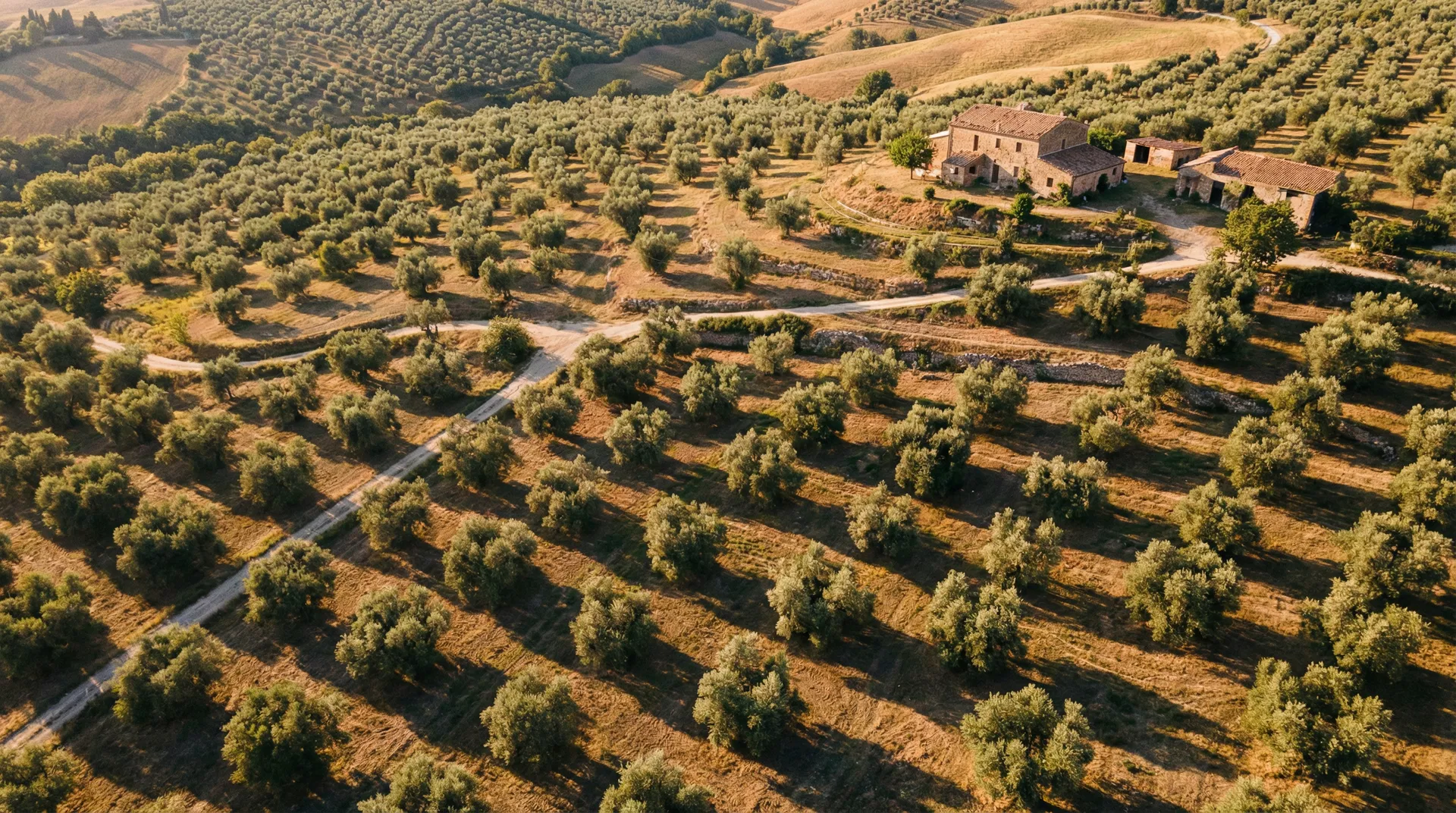
To truly understand the investment, one must visualize the asset. Imagine standing in a modern Portuguese olive grove in late October. The air is cool and crisp. The trees are not the ancient, gnarled giants you might see on a postcard from Tuscany. Instead, they are arranged in neat, dense rows, like a vineyard, forming a continuous green wall about three meters high and two meters wide. This is a super-intensive hedge-row system. The trees, likely an Arbequina or Koroneiki variety, are laden with fruit, small green and purple olives hanging in thick clusters. You can hear the hum of a drip irrigation line, the lifeblood of the operation, delivering a precise amount of water and nutrients directly to the root zone of each tree. In the distance, a massive, over-the-row mechanical harvester is making its way down a row. It looks like a giant tunnel on wheels. As it engulfs the hedge, you can hear the whir of its vibrating rods, which gently shake the olives from the branches onto a conveyor belt. The entire process is fast, efficient, and a world away from the traditional method of beating trees with sticks. The air smells of crushed olive leaves and fresh, green fruit. This is not a romantic, pastoral scene; it is a highly efficient, agricultural factory floor, outdoors.
Now, step into the on-site mill, a gleaming stainless-steel facility that smells intensely of green, peppery olive oil. The freshly harvested olives are tipped into a hopper, where a fan blows away any leaves and twigs. They are then washed and conveyed into the crusher, a hammer mill that pulverizes them into a thick, purple paste. This paste is pumped into a malaxer, a long, trough-like machine with slowly rotating blades. Here, the paste is gently mixed for 20-40 minutes, allowing the small oil droplets to coalesce. This step is critical for both yield and quality. The paste then moves to a decanter centrifuge, a horizontal spinning drum that separates the solids (pomace) and water from the oil. The freshly extracted oil, a vibrant, almost fluorescent green liquid, is then passed through a final vertical centrifuge to remove any remaining sediment and water. The entire process, from olive to oil, takes less than an hour. The oil is immediately pumped into temperature-controlled, stainless-steel tanks, where it will be stored under a blanket of inert nitrogen gas to prevent oxidation until it is ready to be sold.
XIII. The Central Dilemma
The central dilemma for an olive oil investor is the tension between Quality and Scale. The highest quality olive oils—the ones that command stratospheric prices—are often produced in small batches from specific cultivars, harvested by hand at a precise moment of unripeness, and milled within hours. This is the domain of the artisan, the small family farm. However, the economics of this approach are difficult to scale. To generate the returns that attract institutional capital, investors need scale. Scale means large groves, mechanical harvesting, and high volumes. This is the industrial approach. The dilemma is that the industrial approach, while efficient, can compromise the very quality that creates the premium value. Mechanical harvesting can bruise the fruit, and large-scale milling can be less precise. The most successful players in the space are those who can navigate this dilemma—who can apply industrial-scale efficiency without losing the focus on quality that the modern consumer demands. It is a constant balancing act between the factory and the farm.
This dilemma manifests in several key decisions:
- •Harvest Timing: For the highest quality oil, olives should be harvested early in the season when they are still green. This yields less oil, but the oil is more pungent, peppery, and higher in polyphenols. For maximum yield, olives should be harvested later when they are black and fully ripe. An industrial-scale operation is incentivized to harvest later to maximize volume, while a boutique producer will harvest earlier to maximize quality.
- •Milling Temperature: The highest quality oil is “cold-pressed,” meaning the olive paste is not heated above 27°C (80.6°F) during the malaxation process. This preserves the delicate aromas and flavors. However, heating the paste will increase the yield of oil. Again, the temptation for a large-scale producer is to increase the temperature to extract more oil, even if it comes at the expense of quality.
- •Filtration: Filtering olive oil removes sediment and water, which can cause the oil to degrade over time. This increases the shelf life of the oil, which is essential for a product that may sit on a supermarket shelf for months. However, some purists argue that unfiltered oil has a better flavor and texture. Unfiltered oil is a high-risk, high-reward product for a small producer, but it is a non-starter for a large brand that needs a consistent, stable product.
XIV. The Next Frontier
The olive oil world is on the move, driven by the pressures of climate change and the pull of new technology. The next frontier is unfolding in several key areas:
- •
Robotics and Automation: The use of robotics is set to revolutionize the olive grove. Automated drones will not just monitor tree health but will also be used for precision spraying of nutrients and pesticides. Robotic arms are being developed for pruning and even for selective harvesting of high-value olives, bridging the gap between the efficiency of mechanical harvesting and the precision of manual labor.
- •
New Geographies: The search is on for new regions with the right combination of climate and water availability. Areas that were once considered too cool or wet are now being explored. Look for expansion in non-traditional areas like Northern Portugal, parts of the Balkans, and even as far afield as Uruguay and China’s Sichuan province.
- •
Climate-Resilient Cultivars: The future belongs to the olive tree that can produce more with less. Breeders and geneticists are working to develop new cultivars that are more resistant to drought, heat, and diseases like Xylella. The Spanish company Galpagro, for example, is at the forefront of developing and testing new varieties.
- •
Agri-Tech Integration: The olive grove of the future will be a data-driven environment. Drones and satellite imagery will monitor tree health, soil sensors will optimize irrigation down to the individual tree, and blockchain technology will be used to provide consumers with an unalterable record of an oil’s journey from grove to bottle, finally offering a real solution to the problem of fraud.
- •
The Rise of By-Products: Olive oil production creates a significant amount of waste, particularly olive pomace (the solid paste left after pressing) and vegetative water. The next frontier involves turning this “waste” into a revenue stream. Pomace can be used to produce a lower-grade oil, burned as biofuel, or used as a component in animal feed. The polyphenols in the wastewater have potential applications in the pharmaceutical and cosmetic industries.
XV. Lessons from History
The current moment in olive oil is not without historical precedent. By looking back, we can find illuminating parallels.
- •The Phylloxera Crisis in Wine (Late 19th Century): In the 1860s, a tiny aphid called Phylloxera, native to North America, was accidentally introduced to Europe. It devastated the continent’s vineyards, which were planted with susceptible Vitis vinifera vines. The entire French wine industry was on the brink of collapse. The solution was a technological one: grafting the European vines onto Phylloxera-resistant American rootstock. This crisis forced a complete restructuring of the wine industry, leading to the adoption of new agricultural practices and the establishment of appellation systems to guarantee quality. The parallel to the Xylella crisis in Italian olive groves is striking. Xylella is a bacterial pathogen that is spread by insects and causes the leaves of olive trees to dry out, eventually killing the tree. It was first detected in Puglia, Italy, in 2013 and has since devastated the region, which was once the heart of Italian olive oil production. The lesson from Phylloxera is that the industry must invest in research to develop resistant cultivars and new methods of pest control. It also highlights the importance of biosecurity measures to prevent the spread of such diseases to new regions.
- •The “Cod Wars” (1950s-1970s): This series of confrontations between the United Kingdom and Iceland over fishing rights in the North Atlantic shows what happens when a natural resource becomes scarce. As cod stocks dwindled, Iceland progressively extended its exclusive fishing zone, leading to a series of naval standoffs. It demonstrates that as a key commodity becomes more valuable and scarce, the control over its production and geography becomes a matter of national interest. The recent export bans on olive oil by Turkey are a modern echo of this dynamic. As domestic prices for olive oil soared, the Turkish government imposed a ban on bulk olive oil exports to ensure that there was enough supply for its own population. This created a significant disruption in the global market, as Turkey is a major supplier of oil to the EU and other regions. The lesson for investors is that political risk is a real factor in this market. A government can change the rules of the game overnight, and this needs to be factored into any investment decision.
- •The Rise of the New World Wines (1980s-1990s): For centuries, the world of fine wine was dominated by the “Old World” of France, Italy, and Spain. But in the latter part of the 20th century, producers from the “New World”—California, Australia, Chile—began to challenge this hegemony. They used new technology, a focus on branding, and a more consumer-friendly approach to create high-quality wines that won international acclaim. This is precisely what is happening now in the olive oil industry. Producers in California, with their focus on technology and branding; in Portugal, with their modern, irrigated groves; and in Tunisia, with their vast, ancient groves and growing export ambitions, are all challenging the dominance of the traditional European producers. The lesson for investors is that the market is not static. There are opportunities for new players to enter and disrupt the established order, and there are risks for those who are too slow to adapt to the changing landscape.
XVI. The Risks
Despite the compelling thesis, investing in olive oil is not without significant risks. This is a real asset with real-world problems.
- •Climate & Weather Risk: This is the most obvious and impactful risk. A single late frost, a hailstorm, or a prolonged drought can decimate a year’s harvest and therefore a year’s revenue. Climate change is increasing the frequency and severity of these events. For example, the droughts in Spain in 2022 and 2023 were the most severe in decades, leading to a more than 50% reduction in the country’s olive oil production. This is not a theoretical risk; it is a clear and present danger to the industry.
- •Pest & Disease Risk: Olive groves are susceptible to a variety of pests and diseases. The most devastating is the Xylella fastidiosa bacterium, which has killed millions of trees in Southern Italy and for which there is no cure. The risk of it spreading to other major growing regions is a constant threat. Other significant pests include the olive fruit fly, which can damage the fruit and reduce the quality of the oil, and various fungal diseases. Managing these risks requires constant vigilance and a proactive approach to pest and disease control.
- •Price Volatility: While high prices are currently attractive, commodity markets are cyclical. A few years of good harvests in Spain could lead to a price collapse, just as quickly as the drought caused prices to spike. An investment made at the peak of the market could face years of negative returns. The olive oil market is particularly volatile because of the long lead times involved in production. It takes at least 3-5 years for a new grove to become productive, so the supply side cannot respond quickly to changes in demand. This creates a boom-and-bust cycle that can be difficult to navigate.
- •Operational & Management Risk: An olive grove is a complex agricultural business. It requires skilled management to handle everything from pruning and irrigation to harvesting and logistics. Poor management can lead to low yields, poor quality, and high costs. This is not a passive investment. An investor needs to either have the expertise to manage the grove themselves or hire a professional farm manager. The success of the investment will depend heavily on the quality of the management team.
- •Fraud & Reputational Risk: The olive oil industry is notorious for fraud, with lower-grade oils often being mislabeled as extra virgin. An investor in a production facility or a brand could face significant financial and reputational damage if their product is associated with an adulteration scandal. This is a major challenge for the industry, and it is one of the reasons why provenance and traceability are so important. Investors need to be confident that the oil they are producing is what it says it is on the label.
- •Liquidity Risk: An olive grove is a highly illiquid asset. It can take years to sell, and the pool of potential buyers is small. This is not an investment you can exit quickly. Unlike stocks or bonds, you cannot sell your olive grove with the click of a button. This lack of liquidity needs to be factored into the investment decision. An investor should be prepared to hold the asset for the long term.
XVII. The Alternative Fortune Verdict
Olive oil has emerged from the kitchen pantry to become a legitimate, if complex, alternative asset. The structural supply deficit, driven by climate change and chronic underinvestment, has created a powerful tailwind for prices. The investment case is clear: the world wants more of this healthy, premium product, but the traditional sources of supply are struggling to produce it. This creates a tangible opportunity for investors to acquire productive agricultural assets and generate cash flow from the sale of a globally traded commodity.
We believe the most attractive entry point is through direct ownership of modern, irrigated groves in politically stable, water-secure regions. Portugal’s Alentejo region stands out as a prime example of this strategy in action. Private equity funds specializing in permanent crops offer a more passive, diversified route for those without the desire for hands-on management.
However, this is an asset class that demands due diligence. The risks of weather, disease, and price volatility are real and cannot be ignored. The specter of fraud hangs over the industry, making trust and transparency paramount. Before committing capital, an investor must ask the hard questions:
- •Water: What are the long-term water rights associated with the property? Is the source sustainable?
- •Management: Who will be managing the grove? What is their track record? Are their interests aligned with mine?
- •Route to Market: How will the oil be sold? Is there a long-term off-take agreement in place with a reputable buyer? Or will I be exposed to the spot market?
- •Quality Control: What measures are in place to guarantee the quality and authenticity of the oil from the grove to the bottle?
- •Exit Strategy: What is the realistic plan to exit this investment in 7-10 years? Who are the likely buyers?
Olive oil is not a get-rich-quick scheme. It is a long-term, illiquid investment in the future of food and agriculture. For investors who do their homework and are willing to embrace the complexities of a real asset, the potential to harvest alpha from “liquid gold” is very real. The world is not going to stop consuming olive oil, and the challenges of producing it are only going to increase. This is a long-term trend that is likely to provide a tailwind for the asset class for years to come. The key is to be a smart, informed investor who understands the risks and opportunities of this unique and fascinating market.