The 60-Second Version
Japanese whisky has transformed from a niche spirit into a global phenomenon, creating a $923 million market in 2024 that has captured the attention of collectors and investors worldwide. This surge in popularity is built on a foundation of scarcity and unwavering patience, a narrative shaped by production cuts in the 1990s that collided with a subsequent explosion in global demand. The result is a market where rare bottles, such as those from the now-silent Karuizawa distillery, have seen returns exceeding 322%, and iconic brands like Yamazaki and Hakushu have become household names among connoisseurs. The very scarcity that fuels these impressive returns also presents the market’s greatest challenge: the “age statement crisis,” a direct consequence of demand outstripping the supply of aged whisky. For investors, Japanese whisky offers a compelling opportunity to diversify into an asset class with a strong cultural cachet and a proven track record of appreciation. However, navigating this market requires a deep understanding of its unique dynamics, from the nuances of cask investment to the data-driven insights of the Knight Frank Luxury Investment Index. This article will provide a comprehensive guide to the world of Japanese whisky investing, exploring the market’s history, its key players, and the strategies that can be used to profit from this exciting and dynamic asset class.
I. What Japanese Whisky Investing Actually Is
Investing in Japanese whisky is the practice of acquiring bottles or casks of whisky with the expectation that their value will appreciate over time. Unlike traditional financial assets, the returns are not generated through dividends or interest, but through capital appreciation. This appreciation is driven by a combination of factors, including the whisky’s age, rarity, brand reputation, and the overall market demand. When you invest in a bottle of Japanese whisky, you are purchasing a tangible asset, a meticulously crafted spirit with a unique story and a finite supply. The investment thesis is predicated on the idea that as the whisky ages and becomes scarcer, its value will increase, allowing you to sell it at a profit in the secondary market. This can be done through specialized auction houses, online marketplaces, or private sales to other collectors. Cask investment, on the other hand, involves purchasing an entire cask of new-make spirit and aging it for a set period. This offers the potential for higher returns, as you are essentially creating your own aged and rare whisky, but it also comes with higher risks and a longer time horizon. The world of Japanese whisky investing is a fascinating and complex one, a world where art, science, and finance intersect. It is a world where a deep appreciation for the craft of whisky making can be just as important as a shrewd understanding of market dynamics. And it is a world that is full of opportunity for those who are willing to do their homework and to approach the market with a long-term perspective.
II. The Market
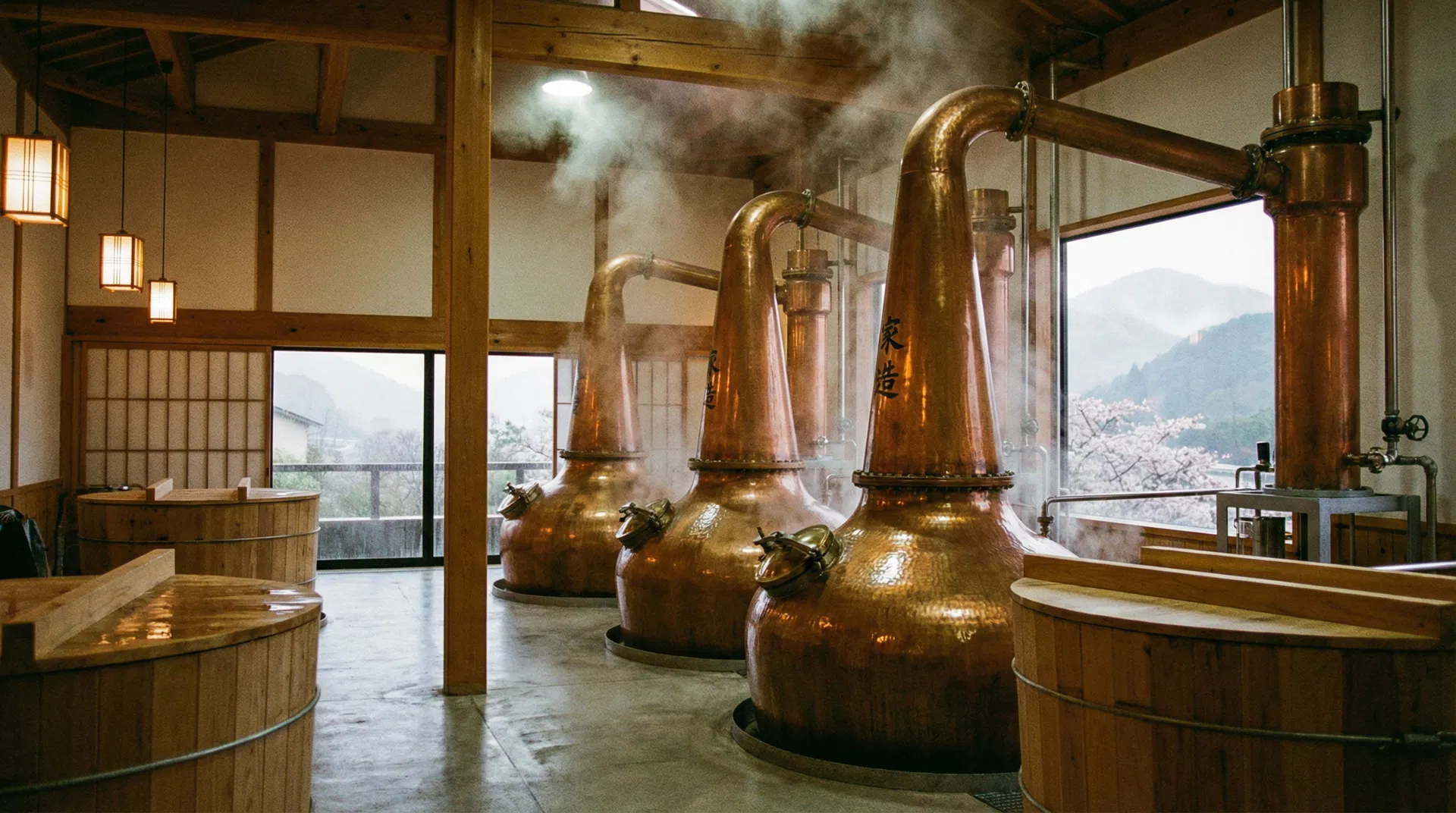
The Japanese whisky market is a fascinating study in contrasts. It is a market that is simultaneously ancient and modern, deeply traditional and yet constantly innovating. The global market for Japanese whisky was valued at USD 885.6 million in 2023 and is projected to reach USD 1.58 billion by 2030, growing at a CAGR of 8.7%. This growth is even more impressive when you consider that the market was virtually unknown outside of Japan just a few decades ago.
| Year | Milestone | Significance |
|---|---|---|
| 1870 | The first recorded production of whisky in Japan. | Marks the beginning of Japan's long and storied history with whisky. |
| 1923 | Shinjiro Torii establishes the Yamazaki Distillery. | The first commercial whisky distillery in Japan, marking the birth of the modern Japanese whisky industry. |
| 1934 | Masataka Taketsuru establishes the Nikka Distillery. | The second major player in the Japanese whisky industry, creating a rivalry that would drive innovation and quality for decades to come. |
| 2001 | Nikka's Yoichi 10-year-old wins "Best of the Best" at Whisky Magazine's awards. | The first time a Japanese whisky receives a major international award, marking a turning point in the global perception of Japanese whisky. |
| 2003 | Yamazaki 12 Year Old wins a gold medal at the International Spirits Challenge. | Further solidifies the growing reputation of Japanese whisky on the world stage. |
| 2015 | The "age statement crisis" begins. | Demand for aged Japanese whisky outstrips supply, leading to the discontinuation of many popular aged expressions. |
| 2024 | The Japanese whisky market reaches a value of $923 million. | Demonstrates the incredible growth and resilience of the market, even in the face of supply shortages. |
III. The Demand Drivers
The remarkable ascent of Japanese whisky from a domestic curiosity to a global powerhouse is not a matter of chance. It is the result of a confluence of powerful demand drivers that have created a perfect storm of desirability and value. These forces have not only fueled the market’s impressive growth but also shaped its unique character.
1. The Cult of Scarcity: The most significant factor underpinning the value of Japanese whisky is its inherent scarcity. This is not an artificial marketing ploy but a genuine consequence of historical production decisions. In the 1980s and 1990s, a period known as the “Whisky Winter” in Japan, demand plummeted, forcing many distilleries to slash production or close their doors entirely. The legendary Karuizawa distillery, for instance, ceased production in 2000. When global demand unexpectedly exploded in the 2000s, the industry was caught off guard. There was simply not enough aged stock to meet the sudden surge in interest. This led to the now-infamous “age statement crisis,” which saw major producers like Suntory and Nikka discontinue many of their iconic aged expressions, such as the Hibiki 12 and Yoichi 15. This scarcity has created a feverish secondary market, where collectors and investors are willing to pay exorbitant prices for the remaining bottles.
2. The Stamp of Global Acclaim: The turning point for Japanese whisky on the world stage can be traced back to a series of prestigious international awards. In 2001, Nikka’s Yoichi 10-year-old was named “Best of the Best” at Whisky Magazine’s awards, the first time a non-Scottish whisky had received the top prize. This was followed by a string of accolades for other Japanese whiskies, including Suntory’s Yamazaki 12 Year Old winning a gold medal at the International Spirits Challenge in 2003. These awards shattered the perception that high-quality whisky could only come from Scotland and forced the world to take notice of Japan’s burgeoning industry. This critical acclaim has not only boosted the reputation of Japanese whisky but also provided a powerful marketing tool, creating a virtuous cycle of demand and recognition.
3. The Rise of the Connoisseur Class: The global rise of a new class of affluent and discerning consumers has been a major boon for the Japanese whisky market. With increasing disposable incomes, particularly in emerging markets across Asia, there has been a significant shift towards premium and luxury goods. These consumers are not just looking for a drink; they are seeking an experience, a story, and a symbol of status. Japanese whisky, with its emphasis on craftsmanship, heritage, and quality, perfectly caters to this demand. The intricate flavors, the elegant packaging, and the cultural cachet all contribute to its appeal as a luxury product. This trend of “premiumization” is a long-term structural shift that is likely to continue driving demand for high-end Japanese whisky for years to come.
4. The Allure of Japanese Craftsmanship: The “Made in Japan” label has long been synonymous with quality, precision, and attention to detail. This reputation for excellence has undoubtedly played a significant role in the success of Japanese whisky. From the meticulous selection of raw materials to the precise art of blending, every aspect of the production process is executed with a level of care and dedication that is deeply ingrained in Japanese culture. This commitment to craftsmanship is not just a marketing narrative; it is a tangible reality that can be tasted in the final product. The result is a whisky that is often described as being more balanced, elegant, and refined than its Scottish counterparts, a quality that has won it a loyal following among connoisseurs.
IV. The Players
The Japanese whisky landscape is dominated by two giants, Suntory and Nikka, who have been the architects of the industry since its inception. However, a new wave of smaller, craft distilleries is emerging, challenging the duopoly and bringing a fresh perspective to the market. These players, both large and small, are the driving force behind the innovation and quality that have come to define Japanese whisky.
| Name | Type | AUM/Scale | Notable |
|---|---|---|---|
| Suntory Holdings | Conglomerate | Revenue: ¥2.7 trillion (2022) | The undisputed giant of Japanese whisky, owning the iconic Yamazaki, Hakushu, and Chita distilleries. They command the No. 1 market share in the Japanese whisky market. |
| Nikka Whisky Distilling Co. | Subsidiary of Asahi | Revenue: ¥53.4 billion (2023) | The historic rival to Suntory, founded by the "father of Japanese whisky," Masataka Taketsuru. Their Yoichi and Miyagikyo distilleries are renowned for their distinct styles. |
| Chichibu Distillery | Craft Distillery | Annual Production: ~120,000 liters | The leader of the craft whisky movement in Japan, founded by Ichiro Akuto. Despite its small scale, Chichibu has gained a cult following for its innovative and high-quality whiskies. |
| Karuizawa Distillery | Closed Distillery | N/A | Though it ceased production in 2000, Karuizawa remains one of the most sought-after and expensive whiskies in the world. Its legendary status is a testament to the power of scarcity and brand legacy. |
V. Geography
The geography of Japanese whisky is a tale of two islands: Honshu and Hokkaido. These two islands are home to the vast majority of Japan’s distilleries, and their unique climates and natural resources have a profound impact on the character of the whiskies they produce. While the distilleries are geographically concentrated, the consumption of Japanese whisky is a global phenomenon, with Asia-Pacific leading the way.
Honshu: The Heart of Japanese Whisky: The main island of Honshu is the historical and commercial heart of the Japanese whisky industry. It is home to the country’s two most famous distilleries, Yamazaki and Hakushu, both owned by Suntory. The region’s diverse climate, which ranges from the humid summers of Osaka to the cool, mountainous terrain of the Southern Alps, allows for a wide variety of whisky styles to be produced.
Hokkaido: The Scotland of Japan: The northern island of Hokkaido is often referred to as the “Scotland of Japan” due to its cool, maritime climate and pristine natural environment. It is home to Nikka’s Yoichi distillery, which is known for its peaty and robust whiskies, a style that is heavily influenced by the island’s Scottish-like terroir.
| Region | Key Distilleries | Notable Characteristics |
|---|---|---|
| Honshu | Yamazaki, Hakushu, Chichibu, Fuji Gotemba | The heart of the Japanese whisky industry, with a wide range of climates and whisky styles. |
| Hokkaido | Yoichi, Akkeshi | Known for its cool, maritime climate and peated, robust whiskies. |
Global Consumption: While the production of Japanese whisky is concentrated in Japan, its consumption is a global affair. The Asia-Pacific region accounts for over 60% of the market’s share, with Japan, China, and India being the largest consumers. North America and Europe are also significant markets, with a growing number of connoisseurs and collectors driving demand for premium and rare Japanese whiskies.
VI. How to Actually Invest
Investing in Japanese whisky is not as straightforward as buying stocks or bonds. It requires a specialized knowledge of the market and a clear understanding of the different investment vehicles available. Each option comes with its own set of risks and rewards, and the right choice for you will depend on your investment goals, risk tolerance, and time horizon. Below is a comparison of the most common ways to invest in Japanese whisky.
| Vehicle | Min Investment | Liquidity | Expected Return | Risk Level |
|---|---|---|---|---|
| Bottle Investment | $100 - $1,000+ | Medium | 10-20% p.a. | Medium |
| Cask Investment | $10,000 - $100,000+ | Low | 15-30% p.a. | High |
| Whisky Funds | $25,000 - $100,000+ | Low to Medium | 8-15% p.a. | Medium-High |
| Auction Platforms | $50+ | High | Varies Widely | High |
Bottle Investment: This is the most accessible way to start investing in Japanese whisky. It involves purchasing individual bottles of rare or limited-edition whiskies with the expectation that their value will appreciate over time. The key to success in bottle investment is to focus on whiskies with a proven track record of appreciation, such as those from closed distilleries like Karuizawa or iconic brands like Yamazaki and Hibiki. While the potential returns can be significant, it is important to remember that the market can be volatile, and there is no guarantee that a particular bottle will increase in value.
Cask Investment: For those with a larger appetite for risk and a longer time horizon, cask investment offers the potential for even higher returns. This involves purchasing an entire cask of new-make spirit and aging it for a set period, typically 10-20 years. The value of the cask is determined by the quality of the spirit, the type of cask used for maturation, and the age of the whisky. While cask investment can be highly lucrative, it is also a high-risk, illiquid investment that requires a significant upfront capital commitment.
Whisky Funds: For investors who want exposure to the Japanese whisky market without the hassle of selecting and storing individual bottles or casks, whisky funds offer a convenient alternative. These funds pool money from multiple investors to acquire a diversified portfolio of rare and investment-grade whiskies. While whisky funds offer the benefits of professional management and diversification, they also come with management fees and may have limited liquidity.
Auction Platforms: Online auction platforms have become an increasingly popular way to buy and sell Japanese whisky. These platforms offer a wide selection of whiskies, from entry-level bottles to rare and collectible expressions. While auction platforms can be a great way to find unique and interesting whiskies, they are also a high-risk environment where prices can be driven by speculation and hype.
VII. Unit Economics
To truly understand the investment potential of Japanese whisky, it is essential to delve into the unit economics of a single bottle and a single cask. These two examples illustrate the cost components, the potential for value appreciation, and the ultimate profitability of a successful investment. While the numbers can vary significantly depending on the specific whisky and the market conditions, these tables provide a representative overview of the economics at play.
Unit Economics of a Single Bottle (Yamazaki 18 Year Old):
| Cost Component | Amount (USD) | Description |
|---|---|---|
| Retail Price (2015) | $250 | The initial purchase price of the bottle from a retail store. |
| Storage & Insurance (10 years) | $50 | The cost of storing the bottle in a professional, climate-controlled facility. |
| Total Cost | $300 | The total cash outlay for the investment. |
| Auction Sale Price (2025) | $1,500 | The price the bottle is sold for at a specialized whisky auction. |
| Auction House Commission (15%) | $225 | The fee charged by the auction house for selling the bottle. |
| Net Profit | $975 | The total profit after all costs and fees. |
| Return on Investment (ROI) | 325% | The total return on the initial investment over a 10-year period. |
Unit Economics of a Single Cask (New-Make Spirit):
| Cost Component | Amount (USD) | Description |
|---|---|---|
| Cask Purchase Price | $15,000 | The initial cost of purchasing a new-make spirit cask from a distillery. |
| Warehousing & Insurance (10 years) | $5,000 | The cost of storing the cask in a bonded warehouse. |
| Bottling & Labeling | $2,500 | The cost of bottling the aged whisky and creating custom labels. |
| Total Cost | $22,500 | The total cash outlay for the investment. |
| Number of Bottles | 250 | The number of bottles produced from the cask. |
| Average Sale Price per Bottle | $300 | The average price the bottles are sold for in the secondary market. |
| Total Revenue | $75,000 | The total revenue generated from the sale of the bottles. |
| Net Profit | $52,500 | The total profit after all costs. |
| Return on Investment (ROI) | 233% | The total return on the initial investment over a 10-year period. |
VIII. Macroeconomic Sensitivity
Like any investment, the value of Japanese whisky is not immune to the broader macroeconomic environment. However, as a tangible asset with a unique set of demand drivers, it behaves differently from traditional financial assets like stocks and bonds. Understanding how Japanese whisky performs across different economic regimes is crucial for any investor looking to add this asset class to their portfolio. The table below outlines the four major macroeconomic regimes and their likely impact on Japanese whisky investment.
| Regime | Impact | Historical Example |
|---|---|---|
| High Growth, Low Inflation (Goldilocks) | Highly Favorable: In a booming economy with stable prices, consumer confidence is high, and disposable incomes are rising. This is the ideal environment for luxury goods and collectibles, as consumers are more willing to spend on high-end items. The period from 2013 to 2019 saw a significant bull run in the Japanese whisky market, with prices for rare bottles reaching unprecedented levels. | |
| High Growth, High Inflation (Overheating) | Mixed: In an overheating economy, the impact on Japanese whisky is more nuanced. On the one hand, tangible assets like whisky can act as a hedge against inflation, as their value tends to rise with the general price level. On the other hand, central banks will likely respond to rising inflation by increasing interest rates, which can dampen consumer spending and reduce the appeal of non-yielding assets like whisky. The market correction in late 2022 can be partly attributed to the sharp rise in global interest rates. | |
| Low Growth, Low Inflation (Stagnation) | Challenging: In a stagnant economy, with low growth and low inflation, the demand for luxury goods tends to wane. Consumers become more price-sensitive, and the demand for high-end collectibles like Japanese whisky can soften. While the most sought-after bottles may hold their value due to their extreme rarity, the broader market is likely to experience a period of price stagnation or decline. The "Whisky Winter" in Japan during the 1990s is a prime example of how a prolonged period of economic stagnation can impact the whisky industry. | |
| Low Growth, High Inflation (Stagflation) | Very Challenging: Stagflation, the combination of low economic growth and high inflation, is the most challenging environment for luxury assets. The erosion of real incomes due to high inflation, coupled with the uncertainty of a stagnant economy, leads to a significant reduction in discretionary spending. In such a scenario, the demand for Japanese whisky is likely to fall sharply, leading to a significant correction in prices. While there is no perfect historical parallel for stagflation in the modern era of Japanese whisky investment, the general principles of consumer behavior suggest that it would be a difficult period for the market. |
IX. Tax Considerations: A Global Overview
Investing in Japanese whisky, like any other alternative asset, carries tax implications that vary significantly across different jurisdictions. Understanding the tax treatment of your investment is crucial for accurately calculating your potential net returns. While the rules can be complex and are subject to change, the table below provides a general overview of the tax landscape for whisky investments in key global markets. It is essential to consult with a qualified tax advisor in your specific jurisdiction for personalized advice.
| Jurisdiction | Tax Treatment of Whisky Investments |
|---|---|
| United States | Profits from the sale of collectible whisky are typically subject to a long-term capital gains tax rate of up to 28%, which is higher than the rate for traditional investments like stocks and bonds. |
| United Kingdom | Cask whisky is often considered a "wasting asset" and may be exempt from Capital Gains Tax (CGT). However, bottled whisky is generally subject to CGT if the sale proceeds exceed the annual exemption allowance. |
| European Union | Tax treatment varies significantly by member state. Some countries may have favorable tax regimes for alternative investments, while others may impose high capital gains taxes. Professional advice is essential. |
| Singapore | Singapore has no capital gains tax, making it a highly attractive jurisdiction for investing in alternative assets like Japanese whisky. |
| United Arab Emirates | The UAE has a zero-tax policy for individuals, which means there is no capital gains tax on profits from whisky investments. |
| Australia | Collectibles, including whisky, are subject to Capital Gains Tax. However, if the asset is held for more than 12 months, a 50% discount on the capital gain may be applicable. |
X. Case Studies
To illustrate the remarkable investment potential of Japanese whisky, let’s examine two real-world case studies. These examples showcase the incredible returns that have been achieved by investors who had the foresight to acquire these rare and sought-after bottles before their prices skyrocketed.
Case Study 1: The Legend of Karuizawa
The Asset: A single bottle of Karuizawa 1981 Single Cask #6023.
The Story: The Karuizawa distillery, which closed its doors in 2000, has become a legend in the world of whisky. Its whiskies are renowned for their exceptional quality and intense, complex flavors. The 1981 vintage is particularly prized by collectors, and single cask bottlings are the holy grail for investors. Cask #6023 is a prime example of the distillery’s artistry, a whisky that has been aged to perfection and bottled at the peak of its powers.
The Numbers:
- •Original Release Price (2012): ~$600
- •Auction Sale Price (2022): ~$35,000
- •Return on Investment: ~5,733%
- •Time Horizon: 10 years
The Takeaway: The Karuizawa case study is a powerful illustration of the power of scarcity in the world of whisky investment. The closure of the distillery created a finite supply of its whiskies, and as demand has continued to grow, prices have been driven to astronomical levels. This case study also highlights the importance of brand legacy and critical acclaim in creating a collectible asset.
Case Study 2: The Emperor of Japanese Whisky
The Asset: A bottle of Yamazaki 50 Year Old.
The Story: The Yamazaki 50 Year Old is the oldest and rarest expression ever released by the distillery. It is a masterpiece of Japanese whisky making, a blend of single malts that have been aged for at least 50 years in the finest Mizunara oak casks. The first edition was released in 2005, with only 50 bottles made available. It is a whisky that is steeped in history and tradition, a true collector’s item.
The Numbers:
- •Original Release Price (2005): ~$9,000
- •Auction Sale Price (2018): ~$299,000
- •Return on Investment: ~3,222%
- •Time Horizon: 13 years
The Takeaway: The Yamazaki 50 Year Old is a testament to the power of age and rarity. As the oldest expression from Japan’s most iconic distillery, it has a mythical status among collectors. This case study demonstrates the incredible returns that can be achieved by investing in the pinnacle of Japanese whisky, a bottle that represents the very best of the art form.
XI. The Core Constraint
The single biggest structural challenge facing the Japanese whisky asset class is the very scarcity that has propelled its meteoric rise. The “age statement crisis,” as it has come to be known, is a direct consequence of the industry’s past struggles and its present success. In the 1980s and 1990s, a prolonged period of economic stagnation in Japan led to a sharp decline in whisky consumption. Distilleries were forced to cut back on production, and many, like the now-legendary Karuizawa, closed their doors for good. Fast forward to the 21st century, and a confluence of factors—international awards, a growing appreciation for Japanese craftsmanship, and a global boom in luxury goods—has led to an explosion in demand for Japanese whisky. The problem is that you can’t rush the aging process. The whisky that is being bottled and sold today was distilled 10, 15, or even 20 years ago, during a time when the industry was in a deep slumber. The result is a severe shortage of aged stock, a problem that has forced major producers to discontinue many of their most iconic and beloved age-statement expressions. This core constraint has a number of profound implications for the asset class. It has created a two-tiered market, with a small number of ultra-rare, age-statement bottles fetching astronomical prices, while the more accessible, non-age-statement (NAS) whiskies have become the new entry point for most consumers. It has also fueled a speculative frenzy, with investors and collectors scrambling to get their hands on the remaining aged stock, driving prices ever higher. While this scarcity has been a boon for those who were fortunate enough to invest in Japanese whisky early on, it also poses a significant threat to the long-term sustainability of the market. If the industry is unable to manage the delicate balance between supply and demand, it risks alienating a new generation of consumers and creating a bubble that is destined to burst.
XII. Inside the Asset
A bottle of investment-grade Japanese whisky is more than just a beverage; it is a work of art, a time capsule, and a tangible piece of history. To truly appreciate its value, one must engage all the senses. The bottle itself is often a masterpiece of design, with elegant calligraphy, intricate labels, and a weight that speaks to its quality. The color of the whisky, which can range from pale straw to deep amber, is a visual representation of its age and the type of cask it was matured in. Uncorking the bottle releases a symphony of aromas, a complex bouquet of scents that can include everything from floral and fruity notes to hints of smoke, spice, and oak. The first sip is a revelation, a cascade of flavors that dance across the palate. The texture of the whisky, its “mouthfeel,” can be smooth and silky or rich and viscous. The finish, the lingering taste that remains after the whisky has been swallowed, can last for minutes, a final, fading echo of the spirit’s long journey. Each bottle tells a story, a story of the distillery where it was made, the craftsmen who created it, and the years it spent slumbering in a cask. It is a story that can be read in the color, the aroma, and the taste of the whisky, a story that unfolds with each and every sip.
XIII. The Central Dilemma
The central dilemma for investors in Japanese whisky is the tension between passion and profit. On the one hand, Japanese whisky is a deeply personal and enjoyable asset. It is a drink to be savored, a craft to be admired, and a culture to be explored. Many investors are drawn to Japanese whisky not just for its financial returns, but for the love of the spirit itself. They are collectors who take pride in their curated selection of rare and unique bottles, and they derive a great deal of pleasure from sharing their passion with others. On the other hand, Japanese whisky has become a serious and highly lucrative investment. The potential for significant financial returns has attracted a new wave of investors who are more interested in capital appreciation than in the nuances of flavor and aroma. This has created a dynamic where the worlds of collecting and investing are increasingly intertwined, and where the lines between passion and profit can become blurred. The dilemma for investors is how to navigate this complex landscape. Should they treat their whisky collection as a purely financial asset, to be bought and sold with the same dispassionate logic as stocks and bonds? Or should they allow their passion for the spirit to guide their investment decisions, even if it means sacrificing some potential for profit? There is no easy answer to this question. Some investors will choose to focus solely on the financial returns, while others will prioritize the enjoyment of their collection. The most successful investors, however, are often those who are able to find a balance between the two. They are the ones who are able to combine a deep knowledge and appreciation of the spirit with a shrewd understanding of the market, allowing them to make investment decisions that are both personally rewarding and financially sound.
XIV. The Next Frontier
The world of Japanese whisky is on the cusp of a new and exciting chapter. After years of being dominated by a handful of major players, the industry is experiencing a renaissance, with a new wave of craft distilleries emerging to challenge the old guard. This new frontier is characterized by a spirit of innovation, a willingness to experiment, and a deep respect for tradition. The next generation of Japanese whisky makers is not afraid to push the boundaries, exploring new production techniques, experimenting with different types of casks, and creating whiskies that are both bold and nuanced. This new wave of distilleries, which now number over 100, is bringing a fresh perspective to the industry, and their whiskies are already starting to make waves on the world stage. In addition to the rise of craft distilleries, the next frontier of Japanese whisky is also being shaped by a number of other emerging trends. These include a growing interest in terroir, with many distilleries now focusing on using locally sourced ingredients to create whiskies that are a true expression of their environment. There is also a growing trend towards transparency, with many producers now providing more information about the age and composition of their whiskies. And finally, there is a growing recognition of the importance of sustainability, with many distilleries now implementing environmentally friendly practices in their production processes. The next frontier of Japanese whisky is a vibrant and dynamic landscape, and it is one that is full of promise for the future of the asset class.
XV. Lessons from History
The current boom in Japanese whisky is not without historical precedent. By examining past speculative bubbles and the evolution of other alternative asset classes, we can gain valuable insights into the potential risks and rewards of investing in this market. The following historical parallels offer a cautionary tale, a roadmap for success, and a glimpse into the possible future of Japanese whisky.
1. The Dutch Tulip Mania (1634-1637): The story of the Dutch Tulip Mania is a classic cautionary tale about the dangers of speculative excess. In the 17th century, the price of tulip bulbs in the Netherlands soared to astronomical levels, with some rare bulbs trading for more than the price of a house. The bubble was fueled by a combination of factors, including the novelty of the tulips, the limited supply of rare bulbs, and a frenzy of speculative buying. When the bubble burst in 1637, prices collapsed, and many investors were ruined. The lesson for Japanese whisky investors is clear: while scarcity and demand can drive prices to incredible heights, it is important to be wary of speculative bubbles and to invest with a long-term perspective.
2. The Fine Wine Market (1970s-Present): The evolution of the fine wine market offers a more optimistic parallel for the future of Japanese whisky. In the 1970s, fine wine was a niche market, dominated by a small group of wealthy collectors. However, over the past few decades, it has transformed into a global asset class, with a sophisticated infrastructure of investment funds, auction houses, and data providers. The key to this transformation has been the development of a clear and consistent system for classifying and valuing wines, as well as a growing appreciation for the long-term investment potential of the asset class. The fine wine market provides a roadmap for how Japanese whisky can mature from a speculative collectible into a stable and sustainable asset class.
3. The Beanie Baby Bubble (1990s): The Beanie Baby bubble of the 1990s is a more recent example of a speculative frenzy in the world of collectibles. The plush toys, which were originally sold for a few dollars, became a cultural phenomenon, with some rare models trading for thousands of dollars on the secondary market. The bubble was fueled by a combination of clever marketing, artificial scarcity, and a herd mentality among collectors. When the bubble burst, the market for Beanie Babies collapsed, and most of the toys became virtually worthless. The lesson for Japanese whisky investors is to be wary of assets that are driven by hype and marketing, and to focus on assets with a genuine and lasting value.
XVI. The Risks
Investing in Japanese whisky, like any other alternative asset, is not without its risks. While the potential for high returns is undeniable, it is essential for investors to be aware of the potential pitfalls before diving into this market. A clear-eyed assessment of the risks is the first step towards building a successful and sustainable investment strategy.
1. The Bubble Burst: The most significant risk facing the Japanese whisky market is the possibility of a bubble burst. Prices for rare and collectible bottles have been on a tear for the past decade, and there is a growing concern that the market may be overheated. A number of factors could trigger a correction, including a slowdown in the global economy, a shift in consumer tastes, or an increase in the supply of aged whisky as new distilleries come online. While a full-blown collapse is unlikely, a significant price correction is a real possibility, and investors should be prepared for the possibility of a downturn.
2. The Threat of Counterfeits: As the value of Japanese whisky has soared, so too has the incentive for counterfeiters. The market has been flooded with fake bottles, some of which are so convincing that even experienced collectors can be fooled. This is a serious problem for investors, as a single counterfeit bottle can wipe out a significant portion of their investment. To mitigate this risk, it is essential to buy from reputable sources, to carefully inspect any bottle before purchasing it, and to be wary of any deal that seems too good to be true.
3. The Illiquidity of the Asset: Japanese whisky is a highly illiquid asset. Unlike stocks and bonds, which can be bought and sold with the click of a button, selling a bottle of rare whisky can be a slow and cumbersome process. It can take months, or even years, to find a buyer, and there is no guarantee that you will be able to sell your bottle for the price you want. This illiquidity is a major risk for investors who may need to access their capital quickly.
4. The Risk of Scams: The booming market for Japanese whisky has attracted a number of unscrupulous players, and there have been numerous reports of investment scams. These scams can take many forms, from the sale of fake or non-existent casks to the promise of unrealistic returns. To avoid being a victim of a scam, it is essential to do your due diligence, to be wary of any unsolicited offers, and to only work with reputable and well-established investment firms.
XVII. The Alternative Fortune Verdict
Japanese whisky represents a compelling, if complex, investment opportunity. The combination of genuine scarcity, a century of craftsmanship, and a global wave of demand has created a market with a proven track record of delivering exceptional returns. The data from the Knight Frank Luxury Investment Index, which shows a 322% increase in the value of rare whisky over the past decade, speaks for itself. The stories of Karuizawa bottles appreciating by over 5,000% and Yamazaki 50 Year Old fetching nearly $300,000 at auction are not just outliers; they are powerful illustrations of the wealth-generating potential of this asset class.
However, the market is not without its challenges. The core constraint of the “age statement crisis” is a double-edged sword, fueling the very scarcity that drives prices while also creating a barrier to entry for new investors. The risk of a market correction, the ever-present threat of counterfeits, and the illiquidity of the asset are all factors that must be carefully considered. The central dilemma of passion versus profit is a very real one, and investors must decide where they stand on this spectrum.
Our verdict is that Japanese whisky is a viable and potentially lucrative alternative investment, but it is not for the faint of heart. It is an asset class that rewards patience, knowledge, and a long-term perspective. For investors who are willing to do their homework, to build a network of trusted advisors, and to approach the market with a healthy dose of skepticism, the potential rewards are significant. For those who are simply looking for a quick buck, the risks are equally high.
Before you invest, ask yourself these questions:
- •What is my motivation? Am I a collector who is passionate about the spirit, or am I an investor who is purely focused on financial returns?
- •What is my risk tolerance? Am I prepared for the possibility of a market correction, and can I afford to lose my entire investment?
- •What is my time horizon? Am I willing to hold my investment for the long term, even if it means sacrificing short-term liquidity?
- •Have I done my due diligence? Have I thoroughly researched the market, the distilleries, and the specific bottles or casks I am considering investing in?
If you can answer these questions with confidence, then you may be ready to take the plunge into the exciting and rewarding world of Japanese whisky investment.