The 60-Second Version
Tequila is having a moment. More than a moment, actually. It’s a full-blown paradigm shift. In 2023, tequila and mezcal sales in the U.S. surpassed American whiskey for the first time, and they are on track to overtake vodka as the top-selling spirit category by the end of 2024. This explosive growth, however, isn’t just happening on the top shelf of your local bar; it’s creating a fascinating new alternative investment class: tequila cask investing.
At its core, tequila cask investing is simple. Investors purchase barrels of unaged, 100% Blue Weber agave tequila (known as blanco) from a distillery in Mexico. These barrels are then stored in a bonded warehouse, where the tequila ages, absorbing color and flavor from the oak. As it matures—from Reposado (2-12 months) to Añejo (1-3 years) and finally to the coveted Extra Añejo (3+ years)—its value increases significantly. After the desired aging period, the investor can sell the cask back to the distillery, to another spirits brand, or even bottle it under their own private label.
The investment case is underpinned by a powerful supply and demand imbalance. The production of high-quality tequila is constrained by the 7-year maturation cycle of the blue agave plant, which has historically created boom-and-bust cycles in agave prices. As demand for premium, aged tequilas skyrockets, driven by the “premiumization” trend and the celebrity-fueled glamour of brands like Casamigos (which sold to Diageo for $1 billion), the supply of aged stock struggles to keep up. This makes aged tequila a valuable commodity.
Platforms like Spirit Vault, Colecta, and House of Rare are now providing individual investors with access to this once-opaque market, offering a full-service model that includes sourcing, storage, insurance, and exit strategies. With target returns in the mid-teens and a shorter investment horizon than Scotch whisky, tequila cask investing offers a compelling, non-correlated asset for diversifying a modern portfolio. It’s a tangible, appreciating asset you can’t print more of, tied directly to the rising global demand for one of the world’s most popular spirits.
I. What Tequila Cask Investing Actually Is
Beyond the bottle and the shot glass, tequila cask investing represents a direct stake in the production process of one of the world’s fastest-growing spirits. At its most fundamental level, you are buying a physical barrel of 100% Blue Weber agave tequila in its unaged, or blanco, state. This isn’t a fund, a stock, or a derivative; it’s a tangible asset, held in a secure, government-bonded warehouse in Mexico, maturing over time under your ownership.
The investment thesis is rooted in the transformative power of time and oak. A barrel of clear, fiery blanco tequila, while valuable, is the starting point of a journey. As it rests in an oak cask—often a used American whiskey barrel—a remarkable alchemy occurs. The spirit interacts with the wood, which acts as both a filter and a flavor contributor. The harsh notes soften, and the tequila begins to absorb compounds from the oak, imparting a golden or amber hue, and layering in complex flavors of vanilla, caramel, and spice. This process is what transforms a simple blanco into the more nuanced and sought-after aged expressions:
- •Reposado (Rested): Aged for a minimum of two months, but less than a year.
- •Añejo (Aged): Aged for a minimum of one year, but less than three years.
- •Extra Añejo (Ultra-Aged): Aged for a minimum of three years.
Returns are generated through the value appreciation of the tequila as it crosses these aging thresholds. An Extra Añejo tequila commands a significantly higher price per liter than a blanco from the same distillery. The investor’s goal is to purchase the unaged spirit at a wholesale price, bear the costs of storage and insurance during the maturation period, and then sell the aged product at a substantial markup. The primary exit strategies include:
- •Selling the Cask to a Major Brand: Large spirits conglomerates are constantly in need of aged tequila stock to meet the demand for their premium brands. They are often willing to pay a premium for well-matured casks to ensure their supply lines remain uninterrupted.
- •Selling to an Independent Bottler: Smaller, boutique brands often don’t have the capital or time to age their own tequila from scratch. They represent a ready market for high-quality, aged casks that they can bottle under their own label.
- •Private Bottling: The investor can choose to bottle the aged tequila themselves, creating a private label for corporate gifting, special events, or even to launch their own small-batch brand.
In essence, tequila cask investing is a form of inventory financing for the spirits industry. You are providing the capital to age the product, bridging the multi-year gap between distillation and the point of sale for a premium, aged spirit. Your return is the reward for this patience, directly tied to the tangible transformation of the liquid inside the barrel.
II. The Market
The tequila market is not just growing; it’s exploding. Once relegated to the domain of shot glasses and spring break, tequila has undergone a remarkable transformation into a premium spirit, sipped and savored by connoisseurs worldwide. This shift is reflected in the market’s impressive financial performance.
According to industry reports, the global tequila market reached a value of USD 25.67 billion in 2025 and is projected to climb to USD 39.52 billion by 2030, growing at a compound annual growth rate (CAGR) of 9.01%. The demand is particularly strong in the United States, which is the largest market for tequila, consuming more than twice as much as Mexico, the spirit’s country of origin.
The most significant trend within the market is “premiumization.” Consumers are increasingly willing to pay more for high-quality, 100% agave tequilas, with the super-premium and ultra-premium categories seeing the fastest growth. This is the segment of the market where aged tequilas—Añejos and Extra Añejos—reside, and it’s the primary driver of the investment case for tequila casks.
Key Market Milestones
| Year | Milestone | Significance |
|---|---|---|
| 1600s | The first large-scale distillery is established in Tequila, Jalisco, by Don Pedro Sánchez de Tagle. | Marks the beginning of commercial tequila production. |
| 1795 | The Cuervo family receives the first official charter from the King of Spain to produce tequila commercially. | Establishes Jose Cuervo as the oldest tequila brand in the world. |
| 1873 | The Sauza family begins distilling tequila, later identifying that Blue Weber agave is the best for tequila production. | Cenobio Sauza is instrumental in defining the standards of tequila production. |
| 1974 | The Mexican government issues the Declaration for the Protection of the Appellation of Origin Tequila (DOT). | Legally establishes that tequila can only be produced in specific regions of Mexico, primarily the state of Jalisco. |
| 2006 | The area around Tequila, Jalisco, is declared a UNESCO World Heritage Site. | Recognizes the historical and cultural significance of tequila production. |
| 2013 | George Clooney and Rande Gerber launch Casamigos Tequila. | The brand's explosive success and subsequent sale marks the beginning of the "celebrity tequila" phenomenon. |
| 2017 | Diageo acquires Casamigos for $1 billion. | This landmark deal signals the immense financial potential of the premium tequila market and attracts a new wave of investors. |
| 2023 | Tequila and mezcal sales surpass American whiskey in the U.S. for the first time. | A major turning point, solidifying tequila's position as a dominant spirit category. |
III. The Demand Drivers
The tequila boom is not a fleeting trend; it is a structural shift in consumer preferences, fueled by a confluence of powerful and enduring demand drivers. These forces have collectively propelled tequila from a regional specialty to a global powerhouse, underpinning the investment case for aged casks.
- •
The Unstoppable Force of Premiumization: Across the entire consumer landscape, from coffee to chocolate, a clear trend has emerged: people are drinking less, but they are drinking better. Tequila is at the epicenter of this movement. Consumers are no longer satisfied with low-quality mixto tequilas (which are only required to contain 51% agave). Instead, they are seeking out and paying a premium for 100% Blue Weber agave tequilas, appreciating them for their complex flavors and artisanal production methods. The data is unequivocal: sales of super-premium and ultra-premium tequila brands have consistently outpaced the rest of the market, growing by double digits annually. This is the core driver for cask investment, as aged expressions like Añejo and Extra Añejo are the pinnacle of the premium tequila experience.
- •
The Clooney Effect: Celebrity and Cultural Cachet: The 2017 sale of Casamigos to Diageo for $1 billion was a watershed moment. The deal, fronted by actor George Clooney, did more than just create immense wealth for its founders; it fundamentally repositioned tequila in the cultural zeitgeist. It transformed tequila from a party spirit into a symbol of sophisticated, aspirational luxury. This has unleashed a flood of celebrity-backed brands, from Dwayne “The Rock” Johnson’s Teremana to Kendall Jenner’s 818. While the quality of these brands varies, their collective marketing power has introduced premium tequila to a new generation of consumers and cemented its status as a high-end spirit.
- •
The Rise of Cocktail Culture: The modern cocktail renaissance has been a significant boon for tequila. The Margarita has long been one of the world’s most popular cocktails, but the demand now extends far beyond this classic. High-end bars and restaurants are showcasing tequila’s versatility in a wide range of cocktails, from the simple and refreshing Paloma to more complex, spirit-forward creations. This has encouraged consumers to explore different expressions of tequila and has driven trial of more premium brands, further fueling the premiumization trend.
- •
Globalization and New Markets: While the United States remains the dominant market, the appetite for premium tequila is rapidly growing on a global scale. Markets in Europe, Asia, and Australia are beginning to discover the complexities of 100% agave tequila, moving beyond the stereotypical image of shots with salt and lime. As the affluent middle class expands in these regions, so too does the demand for luxury goods, and premium tequila is well-positioned to capitalize on this trend. This geographic expansion provides a long-term tailwind for the entire category.
| Demand Driver | Key Data Point | Implication for Cask Investment |
|---|---|---|
| Premiumization | Super-premium/ultra-premium tequila sales have grown at a CAGR of over 20% in the last five years. | Creates a robust and growing market for the aged tequila produced in the casks. |
| Celebrity Influence | The Casamigos brand sold for $1 billion, demonstrating the immense brand value that can be created. | Increases the overall cultural relevance and aspirational status of premium tequila, driving demand. |
| Cocktail Culture | The Margarita is consistently ranked as one of the top 5 best-selling cocktails globally. | Drives trial and consumption of tequila, providing a broad base of demand for the spirit. |
| Globalization | Tequila exports to countries outside of the US and Mexico have been growing at an accelerated rate. | Diversifies the sources of demand and provides a long-term growth runway for the category. |
IV. The Players
The tequila landscape is dominated by a mix of large, publicly traded spirits conglomerates, historic family-owned distilleries, and a growing number of celebrity-backed brands and specialized investment platforms. Understanding the key players is crucial to navigating this dynamic market.
| Name | Type | AUM/Scale | Notable |
|---|---|---|---|
| Diageo | Public Spirits Conglomerate | ~$200 billion market cap | Owns Don Julio and Casamigos, two of the most influential brands in the premium and ultra-premium categories. The $1B acquisition of Casamigos in 2017 was a market-defining event. |
| Becle (Jose Cuervo) | Public Company | Largest tequila producer by volume | Owns the iconic Jose Cuervo brand, as well as 1800 Tequila and Gran Centenario. A dominant force in both the mixto and 100% agave categories. |
| Brown-Forman | Public Spirits Conglomerate | ~$40 billion market cap | Owns Herradura and El Jimador, two of the most respected and historic tequila brands. |
| Campari Group | Public Spirits Conglomerate | ~$15 billion market cap | Owns Espolòn Tequila, a rapidly growing brand known for its quality and distinctive branding. |
| Bacardi | Private Spirits Company | One of the largest privately held spirits companies | Owns Patrón, the brand that arguably created the ultra-premium tequila category in the 1990s. |
| Spirit Vault | Cask Investment Platform | Private | A full-service platform that allows investors to buy, age, and sell barrels of premium spirits, including tequila. |
| Colecta | Cask Investment Platform | Private | A Hong Kong-based tequila barrel brokerage, providing access to the Asian market. |
| House of Rare | Cask Investment Platform | Private | A platform that combines tequila cask investment with blockchain technology, offering NFTs representing ownership of barrels. |
V. Geography
Tequila is not just a spirit; it is a place. The production of tequila is protected by a Denominación de Origen (DO), a geographical indication that ensures the spirit’s authenticity and quality. This means that, by law, tequila can only be produced in specific regions of Mexico. This legal framework is crucial to the value of tequila, as it creates a finite production area and protects against foreign competition.
The heart of tequila production is the state of Jalisco, in western Mexico. The vast majority of all tequila is produced here, in two main sub-regions:
- •
The Tequila Valley (Lowlands): This is the historical birthplace of tequila, surrounding the town of Tequila itself. The agave grown in this volcanic soil tends to produce a more earthy, herbal, and robust style of tequila.
- •
Los Altos (Highlands): Located to the east of Guadalajara, this region has a higher altitude and red, clay-like soil. Agave from the Highlands typically yields a sweeter, fruitier, and more floral style of tequila.
While Jalisco is the epicenter, the DO for tequila also includes municipalities in four other states:
| State | Region | Contribution to Tequila Production |
|---|---|---|
| Jalisco | Entire State | The undisputed heartland of tequila, accounting for over 99% of all production. Home to both the Highlands and Lowlands regions. |
| Guanajuato | Select Municipalities | A smaller but significant region, known for producing high-quality agave. |
| Michoacán | Select Municipalities | Another state with a long history of agave cultivation, contributing to the overall supply. |
| Nayarit | Select Municipalities | A coastal state that borders Jalisco, with a small number of distilleries. |
| Tamaulipas | Select Municipalities | The only state outside of the central-western region included in the DO, with a unique terroir. |
For the investor, this geographic concentration is a double-edged sword. On one hand, it creates a powerful brand identity and a legally protected monopoly. On the other hand, it means that the entire industry is susceptible to regional climate events, agricultural diseases, and economic issues within this specific area of Mexico.
VI. How to Actually Invest
Investing in tequila casks has become increasingly accessible to individual investors, thanks to a new wave of specialized platforms that handle the logistics of sourcing, storing, and selling the barrels. These platforms provide a crucial bridge between the investor and the distilleries in Mexico, offering a full-service, “white-glove” experience. While direct investment in rare bottles is an option, cask investment offers the potential for greater returns by capturing the value created during the aging process.
Here’s a comparison of the primary investment vehicles:
| Vehicle | Minimum Investment | Liquidity | Expected Return | Risk Level |
|---|---|---|---|---|
| Cask Investment Platforms (e.g., Spirit Vault, Colecta) | $10,000 - $25,000 | Low (3-5 year hold) | 15-20% IRR | Medium |
| Fractional Cask Ownership (e.g., House of Rare via NFTs) | ~$1,000 | Medium (Secondary Market) | 12-18% IRR | Medium-High |
| Direct Purchase of Rare Bottles | ~$500+ per bottle | High (Online Marketplaces) | 5-10% Annually | Low-Medium |
| Investing in Tequila Stocks (e.g., Diageo, Brown-Forman) | ~$50 (1 share) | High (Public Markets) | 8-12% Annually (Total Return) | Low |
For those looking to invest directly in the aging process, cask investment platforms are the most direct route. The process typically works as follows:
- •Consultation and Selection: The investor works with the platform to determine their investment goals, budget, and desired aging period. The platform then sources a barrel of 100% agave blanco tequila from a reputable distillery in Jalisco.
- •Purchase and Documentation: The investor purchases the cask, and receives a certificate of ownership and a legal title to the barrel.
- •Aging and Insurance: The cask is stored in a secure, bonded warehouse in Mexico, where it is insured against theft and damage. The platform provides regular updates on the aging process, including sample analysis.
- •Exit Strategy: After the agreed-upon aging period (typically 3-5 years), the platform assists the investor in selling the cask. This can involve selling it back to the distillery, to another brand, or arranging for private bottling.
These platforms provide a crucial service by abstracting away the complexities of international logistics, customs, and regulatory compliance, making this unique asset class accessible to a broader range of investors.
VII. Unit Economics
To understand the potential returns of tequila cask investing, it’s essential to break down the economics of a single barrel. The primary factors influencing profitability are the initial purchase price of the blanco tequila, the costs of aging, and the final sale price of the matured spirit. The “angel’s share,” or the portion of the spirit that evaporates from the cask each year, is also a critical variable.
Let’s model a hypothetical 200-liter American Oak barrel, aged for three years to become an Extra Añejo.
| Item | Cost/Value (USD) | Notes |
|---|---|---|
| Initial Investment | ||
| Cost of 200L of Blanco Tequila (@ $10/L) | $2,000 | The wholesale price of unaged tequila can vary based on the distillery's reputation and the quality of the agave. |
| Cost of Used American Oak Barrel | $250 | The cost of the barrel itself is a relatively small portion of the overall investment. |
| Annual Costs | ||
| Storage & Insurance (per year) | $150 | This covers the cost of storing the barrel in a bonded warehouse and insuring it against theft or damage. |
| Total Aging Costs (3 years) | $450 | The total cost of holding the barrel for the three-year maturation period. |
| Total Initial Outlay | $2,700 | The total capital required to purchase the barrel and fund its aging. |
| Exit Value (After 3 Years) | ||
| Initial Volume | 200 Liters | The starting volume of the barrel. |
| Angel's Share (Evaporation @ 5%/year) | ~30 Liters | The amount of tequila lost to evaporation over the three-year aging period. This is a conservative estimate. |
| Final Volume | ~170 Liters | The amount of tequila remaining in the barrel after three years. |
| Wholesale Price of Extra Añejo (@ $35/L) | $5,950 | The price of aged tequila is significantly higher than that of blanco. This price can fluctuate based on market demand. |
| Gross Profit | $3,250 | The difference between the final sale price and the total initial outlay. |
| Total Return on Investment (ROI) | ~120% | The gross profit as a percentage of the total initial outlay. |
| Internal Rate of Return (IRR) | ~30% | The annualized return on the investment, a more accurate measure of profitability over time. |
Key Levers of Profitability:
- •The Agave Price Cycle: The price of the raw ingredient, Blue Weber agave, is the single most significant factor in the initial cost of the blanco tequila. The 7-year growing cycle of the agave plant creates a natural boom-and-bust cycle in prices. Investing when agave prices are low can significantly enhance the potential for returns.
- •The “Angel’s Share”: The rate of evaporation can vary depending on the climate and the specific conditions of the warehouse. A higher-than-expected angel’s share will reduce the final volume of tequila and therefore the overall return.
- •The Premiumization Spread: The profitability of the investment is directly tied to the price difference between unaged and aged tequila. As long as the demand for premium, aged tequilas continues to outpace supply, this spread should remain robust.
VIII. Macroeconomic Sensitivity
Like all alternative investments, tequila casks exist within the broader macroeconomic landscape. However, their performance is often driven by a unique set of factors that can insulate them from the volatility of traditional financial markets. As a tangible asset with a strong element of Veblen good characteristics (where demand increases as the price rises), premium tequila has a complex relationship with the economy.
Here’s how tequila cask investments can be expected to perform across four key macroeconomic regimes:
| Regime | Impact on Tequila Cask Investment | Historical Example |
|---|---|---|
| High Growth, Low Inflation (Goldilocks) | Positive. In a strong economy, consumer confidence is high, and disposable income increases. This fuels the "premiumization" trend, as consumers are more willing to spend on luxury goods like aged tequila. Asset prices in general tend to rise, and the demand for alternative investments as a form of diversification also increases. | The period from 2015-2019 saw strong economic growth and a surge in demand for premium spirits, which was a major factor in the lead-up to the $1 billion acquisition of Casamigos. |
| Recession (Low Growth, Low Inflation) | Neutral to Slightly Negative. During a recession, consumer spending on non-essential luxury goods typically declines. However, the high-end segment of the market is often more resilient, as wealthy consumers are less affected by economic downturns. While the rate of price appreciation may slow, the underlying value of the aged spirit remains, and the long-term supply constraints are unchanged. | During the 2008 Financial Crisis, while overall alcohol consumption saw a slight dip, the premium spirits category demonstrated resilience, with many consumers choosing to drink less but better-quality products at home. |
| Stagflation (Low Growth, High Inflation) | Positive. In an inflationary environment, tangible assets that have a real store of value tend to perform well. As the cost of production (agave, labor, energy) rises, the replacement cost of the tequila in the barrel also increases. This can lead to significant price appreciation. Collectibles and other real assets are often seen as a hedge against currency debasement. | The high inflation period of the late 1970s and early 1980s saw a surge in the value of tangible assets like fine art, wine, and classic cars, as investors sought to protect their wealth from inflation. While the tequila market was less developed at the time, the same principles apply. |
| High Growth, High Inflation | Very Positive. This is the most favorable environment for tequila cask investment. High growth fuels consumer demand, while high inflation increases the replacement cost of the asset. This combination can lead to rapid price appreciation, as both the demand-side and supply-side factors are working in the investor's favor. | The post-COVID-19 economic environment of 2021-2022 saw a combination of strong consumer demand (fueled by stimulus and a desire for experiences) and rising inflation, which contributed to the accelerated growth of the premium tequila market. |
It’s important to note that the primary driver of returns is the multi-year aging process and the supply-demand imbalance for aged tequila, which are largely independent of short-term economic fluctuations. This provides a degree of insulation from market volatility, making tequila casks a potentially attractive diversifying asset in a well-rounded portfolio.
IX. Tax Considerations: A Global Overview
The tax treatment of gains from tequila cask investments can be complex and varies significantly by jurisdiction. As a tangible, collectible asset, the profit from selling a cask is typically treated as a capital gain. However, the specific rate and the applicable exemptions depend on the investor’s country of residence. It is crucial to consult with a qualified tax advisor to understand the specific implications for your situation.
Below is a general overview of how collectibles are typically taxed in several key jurisdictions. This is for informational purposes only and does not constitute tax advice.
| Jurisdiction | Tax Treatment of Collectibles | Key Considerations |
|---|---|---|
| United States | Gains on collectibles held for more than one year are taxed at a maximum rate of 28%. This is higher than the standard long-term capital gains rates for securities. Gains on assets held for one year or less are taxed at ordinary income rates. | The 28% rate applies regardless of the investor's income bracket. The 3.8% Net Investment Income Tax may also apply to higher-income individuals. |
| United Kingdom | Capital Gains Tax (CGT) is payable on gains from the sale of personal possessions valued at £6,000 or more. However, assets with a predictable lifespan of less than 50 years (known as "wasting assets") are generally exempt from CGT. | Whether a tequila cask qualifies as a "wasting asset" is a key question. The argument is that the cask itself has a limited lifespan, and the contents are intended to be consumed. This is a complex area of tax law and requires professional advice. |
| European Union | Capital gains tax rates on investments vary widely across the 27 member states, ranging from 0% in some countries to over 30% in others. The treatment of collectibles is also inconsistent. | The specific rules of the investor's country of residence are paramount. Some countries may have wealth taxes that apply to the value of the cask, in addition to capital gains tax on the sale. |
| Singapore | There is no capital gains tax in Singapore. | This makes Singapore a highly attractive jurisdiction for investors in alternative assets like tequila casks. |
| UAE | There is no personal income tax or capital gains tax in the United Arab Emirates. | Similar to Singapore, the UAE offers a very favorable tax environment for individual investors. |
| Australia | Collectibles acquired for more than AUD $500 are subject to Capital Gains Tax (CGT). However, if the collectible is part of a set, the $500 threshold applies to the set as a whole. | Any capital loss on collectibles can only be used to offset capital gains from other collectibles. |
Given the significant value that can be created through tequila cask aging, the tax implications are a critical component of the overall investment case. The potential for a high tax burden in some jurisdictions underscores the importance of seeking professional advice and structuring the investment in the most tax-efficient manner possible.
X. Case Studies
The theoretical returns of tequila cask investing are compelling, but the real-world success stories of premium tequila brands provide the most powerful evidence of the value that can be created. These case studies illustrate the immense financial upside of the premiumization trend and the power of brand building in the spirits industry.
Case Study 1: The $1 Billion Blueprint - Casamigos
No discussion of the modern tequila market is complete without a deep dive into the phenomenal success of Casamigos. Launched in 2013 by actor George Clooney, nightlife entrepreneur Rande Gerber, and real estate developer Mike Meldman, Casamigos was initially a private passion project, a tequila created “by friends, for friends.”
The brand’s ethos was built on a simple premise: a smooth, easy-drinking tequila that didn’t need salt or lime. The quality of the product, combined with the immense star power of Clooney and the exclusive, aspirational lifestyle marketing, created a perfect storm. Casamigos quickly became one of the fastest-growing spirits brands in history.
In 2017, just four years after its launch, the spirits giant Diageo acquired Casamigos for an astonishing $1 billion. The deal consisted of an initial payment of $700 million, with a further potential $300 million based on performance over the following decade. At the time of the sale, the brand was selling approximately 120,000 cases per year. The acquisition price represented a valuation of over $8,000 per case, a staggering multiple that sent shockwaves through the industry.
The Casamigos story is a masterclass in brand building and a powerful validation of the premium tequila market. It demonstrated that a well-positioned, high-quality brand could achieve a truly astronomical valuation, and it has served as the blueprint for countless celebrity-backed brands that have followed.
Case Study 2: The People's Tequila - Teremana
If Casamigos wrote the playbook for celebrity tequila, Teremana, launched in 2020 by Dwayne “The Rock” Johnson, has taken it to a whole new level of scale. Positioned as a more accessible, “small batch” premium tequila, Teremana has focused on a message of quality, craftsmanship, and transparency, all amplified by Johnson’s immense social media following.
The brand’s growth has been nothing short of meteoric. In its first year of operation, Teremana sold over 300,000 cases, making it one of the most successful brand launches in spirits history. By 2023, the brand had surpassed 1 million cases sold annually, a milestone that takes most brands a decade or more to achieve. This rapid growth has been driven by a combination of Johnson’s authentic connection with his audience, a high-quality product, and a price point that is premium but still accessible to a broad range of consumers.
While Teremana has not been sold, its valuation is a subject of intense speculation in the industry. Given its sales volume and brand momentum, it is widely believed that Teremana could command a multi-billion dollar valuation if it were to be acquired. The success of Teremana demonstrates that the demand for premium tequila is not limited to the ultra-high-end, and that there is a massive market for well-made, well-marketed tequila in the $30-$50 price range.
These two case studies, while different in their specific strategies, both underscore the same fundamental point: the immense value that can be created in the premium tequila space. For the cask investor, these stories are a powerful reminder of the robust and growing demand for the aged tequila that they are helping to create.
XI. The Core Constraint
The single greatest structural challenge facing the tequila industry—and by extension, the tequila cask investor—is the agave supply chain. The entire industry is built upon a single, slow-growing plant: the Agave tequilana Weber, or Blue Weber agave. This biological reality creates a fundamental and recurring imbalance between supply and demand, a phenomenon known as the agave boom-and-bust cycle.
Unlike grapes for wine or grain for whisky, which are harvested annually, the blue agave plant has a long and unforgiving maturation period, taking seven to eight years to reach the optimal sugar content for tequila production. This creates a significant lag between planting decisions and the eventual supply of the raw material. The cycle typically unfolds as follows:
- •
The Shortage (Bust): A surge in global demand for tequila leads to a shortage of mature agave. Distilleries compete for the limited supply, driving the price per kilogram of agave to astronomical highs. In recent years, prices have exceeded 30 pesos per kilo.
- •
The Planting Frenzy: In response to the high prices, farmers—from small-scale growers to large agricultural corporations—plant vast new fields of blue agave, hoping to capitalize on the boom.
- •
The Glut (Boom): Seven to eight years later, all of the agave planted during the frenzy matures at roughly the same time, leading to a massive oversupply. The price of agave plummets, often falling to just a few pesos per kilo, barely covering the cost of harvesting.
- •
The Abandonment: With prices so low, many farmers are unable to make a profit and either abandon their agave fields or switch to more lucrative crops. This reduction in planting sets the stage for the next shortage, and the cycle begins anew.
This boom-and-bust dynamic creates a volatile and unpredictable environment for tequila producers. During a bust, the high cost of agave can severely compress margins, while during a boom, the low price of the raw material can lead to a flood of low-quality tequila on the market. For the cask investor, this cycle is a critical variable. The price paid for the initial barrel of blanco tequila is directly tied to the price of agave at the time of purchase. Entering the market during a period of agave oversupply, when prices are low, can significantly enhance the potential for returns. Conversely, investing at the peak of an agave shortage can limit the upside. The core constraint, therefore, is the industry’s ability to manage this inherent agricultural volatility and create a more stable and predictable supply chain.
XII. Inside the Asset
To truly understand tequila cask investing, you have to go beyond the spreadsheets and market data and get a sense of the physical reality of the asset. It’s a journey that begins in the sun-drenched fields of Jalisco and ends in the cool, quiet darkness of a bonded warehouse.
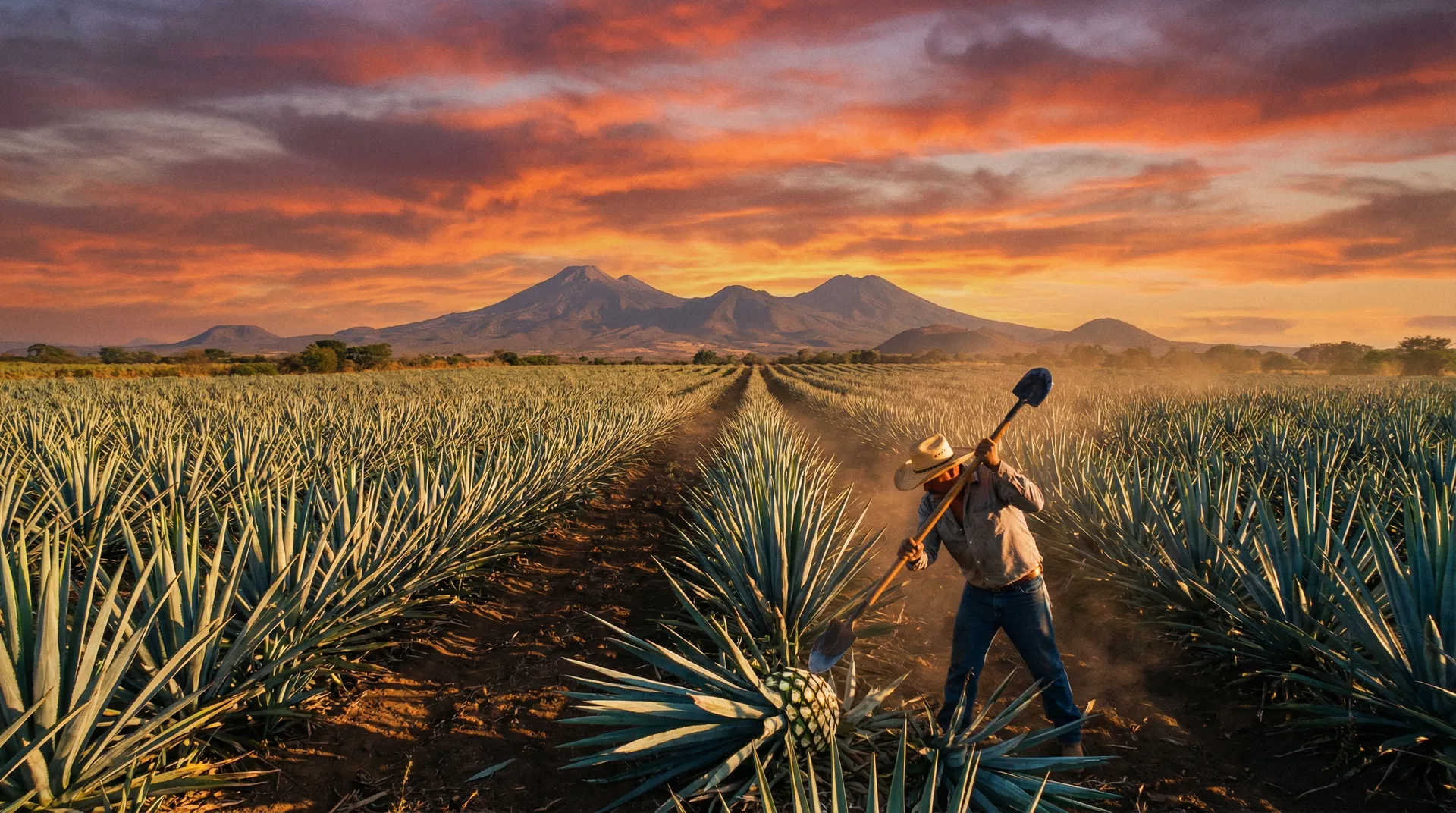
The Agave Landscape: Imagine a landscape of rolling, rust-colored hills under a piercingly blue sky. This is the terroir of tequila. Blanketing these hills are the agave fields, a sea of spiky, blue-green succulents, planted in neat, unwavering rows. A mature Blue Weber agave is a formidable sight, standing as tall as a person, with a dense core, or piña, that can weigh over 100 pounds. The air is thick with the sweet, earthy scent of the agave and the faint, smoky aroma of distant distilleries.
The Distillery: The distillery, or fabrica, is a hive of activity. Here, the harvested piñas, slow-roasted in traditional brick ovens or modern stainless-steel autoclaves, release their sugary juice. The air is heavy with the smell of cooked agave, a sweet and vegetal aroma that is the very essence of tequila. The sound is a symphony of industry: the rhythmic thud of the tahona, a massive stone wheel used to crush the cooked agave in the most traditional distilleries; the gurgle of fermentation in large wooden or stainless-steel vats; and the hiss of the copper pot stills, where the fermented liquid is twice-distilled into the clear, fiery spirit that is blanco tequila.
The Cask: Your investment is a 200-liter American Oak barrel, a sturdy, iron-banded vessel that has likely already had a previous life aging bourbon in Kentucky. The wood is saturated with the history of its former contents, and it is this history that will impart so much character to the tequila. The barrel is filled with the newly distilled blanco, and a bung is hammered into place, sealing the spirit inside. The cask is then stenciled with a unique identification number, the date of filling, and your ownership details. This is your asset, a tangible piece of property in a foreign land.
The Bodega: The barrel is then transported to a bodega, a bonded warehouse where it will spend the next several years of its life. The bodega is a cool, dark, and quiet place, a stark contrast to the heat and energy of the distillery. The air is thick with the scent of aging spirits, a complex and intoxicating aroma of oak, vanilla, caramel, and the ever-present “angel’s share.” Here, your cask will rest, undisturbed, alongside thousands of others, each one slowly and silently transforming its contents from a simple spirit into a complex and valuable aged tequila. This is the patient, quiet heart of the investment, a slow and steady process of maturation that is the very source of its value.
XIII. The Central Dilemma
The central dilemma for any investor in the tequila space is navigating the inherent tension between tradition and scale. The very qualities that make premium tequila so desirable—its artisanal production methods, its connection to a specific place, and its reliance on a slow-growing agricultural product—are the same qualities that make it difficult to scale up to meet the explosive global demand.
On one side of this dilemma are the traditionalists, the small, family-owned distilleries that have been making tequila for generations. They use time-honored methods: slow-roasting their agave in brick ovens, crushing it with a volcanic stone tahona, and fermenting it in small wooden vats. This is the tequila that connoisseurs and aficionados seek out, the spirit that tells a story of place and process. However, these methods are, by their very nature, inefficient and difficult to scale.
On the other side are the large, industrial producers, who have embraced modern technology to maximize efficiency and meet the demands of a global market. They use massive, stainless-steel autoclaves to cook their agave in a fraction of the time, and they have developed sophisticated diffusers that can extract the sugars from the agave with ruthless efficiency. These methods allow them to produce vast quantities of tequila at a lower cost, but they are often criticized for stripping the spirit of its character and complexity.
The investor is caught in the middle of this tug-of-war. The most authentic and highly regarded tequilas are often produced in such small quantities that they are not available for cask investment at scale. The distilleries that are large enough to offer cask investment programs are often the same ones that are using more industrialized production methods. The central dilemma, therefore, is finding a producer that can offer a scalable investment opportunity without sacrificing the quality and authenticity that underpins the entire premiumization trend.
This is not just a philosophical debate; it has real financial implications. As consumers become more educated and discerning, they are increasingly seeking out tequilas that are made using traditional methods. Brands that are perceived as being overly industrialized or inauthentic risk being left behind. The most successful investments will likely be those that can strike a delicate balance, partnering with distilleries that have managed to scale their production without losing their soul.
XIV. The Next Frontier
The tequila industry is not standing still. As the market matures, a new wave of innovation and experimentation is pushing the boundaries of what tequila can be. For the forward-thinking investor, these emerging trends offer a glimpse into the future of the category and potential new avenues for growth.
- •
Cristalino: The Best of Both Worlds? One of the most significant innovations in recent years has been the rise of Cristalino tequila. This is an aged tequila (typically an Añejo or Extra Añejo) that has been filtered through charcoal to remove the color and some of the heavier wood notes, while retaining the complex aromas and flavors of aging. The result is a spirit with the smoothness and complexity of an aged tequila, but with the crisp, clean profile of a blanco. Cristalino has been a massive commercial success, particularly in Mexico, and it represents a new and fast-growing segment of the premium market.
- •
Exotic Cask Finishes: Taking a cue from the Scotch whisky industry, tequila producers are increasingly experimenting with finishing their tequilas in a variety of exotic casks. While ex-bourbon barrels remain the standard, we are now seeing tequilas aged in sherry casks, port pipes, French oak wine barrels, and even rum casks. These unique finishes can impart a wide range of new and interesting flavors to the tequila, creating limited-edition expressions that can command a significant premium.
- •
Sustainable and Organic Production: As consumers become more environmentally conscious, there is a growing demand for tequilas that are produced in a sustainable and organic manner. This includes everything from using organic farming methods for the agave, to implementing water recycling programs at the distillery, to using lighter-weight glass bottles to reduce the carbon footprint of shipping. Brands that can authentically tell a story of environmental stewardship will have a powerful advantage in the market of the future.
- •
Terroir and Single Estate Tequilas: Just as in the world of wine, there is a growing appreciation for the concept of terroir in tequila. This is the idea that the specific location where the agave is grown—the soil, the climate, the altitude—can have a profound impact on the final flavor of the spirit. This is leading to the rise of single estate tequilas, where all of the agave is sourced from a single, specific ranch. This focus on provenance and traceability is a hallmark of the ultra-premium market.
For the cask investor, these trends represent both opportunities and challenges. The rise of Cristalino and exotic cask finishes creates new potential exit strategies for aged barrels. A cask of Extra Añejo could be sold to a brand to be used as the base for a high-end Cristalino, or it could be used for a special, limited-edition cask finish. The growing importance of sustainability and terroir means that the specific practices of the distillery where the cask is sourced will become an increasingly important factor in the investment decision.
XV. Lessons from History
The current tequila boom, with its explosive growth, celebrity involvement, and speculative fervor, is not without historical precedent. By examining past investment manias and commodity cycles, we can draw valuable lessons that illuminate the opportunities and risks in the current market.
1. The Dutch Tulip Mania (1636-1637)
The most famous speculative bubble in history, the Dutch Tulip Mania, offers a powerful cautionary tale. In the 1630s, the price of fashionable tulip bulbs in the Netherlands skyrocketed to absurd levels, with a single bulb of a rare variety reportedly trading for more than a house. The bubble was fueled by a combination of factors: the novelty of the product, a growing merchant class with disposable income, and the development of a futures market that allowed for purely speculative trading. When the bubble burst in 1637, prices collapsed, and many investors were ruined.
The Lesson for Tequila: The Tulip Mania is a stark reminder that the price of a desirable, scarce asset can become detached from its intrinsic value. While the underlying fundamentals of the tequila market are far more robust than those of the 17th-century tulip market, the speculative frenzy surrounding some celebrity brands and limited-edition bottles should be viewed with caution. The long-term value of a tequila cask is tied to the quality of the liquid inside, not to short-term market hype.
2. The Fine Wine Market of the 1980s and 1990s
A more recent and relevant parallel can be found in the development of the fine wine investment market. In the latter half of the 20th century, a growing global appreciation for the great wines of Bordeaux and Burgundy, coupled with rising wealth in new markets like Japan and the United States, led to a sustained bull market in fine wine. A new class of wine critics, most notably Robert Parker, introduced a 100-point scoring system that created a clear hierarchy of quality and investment potential. This created a more transparent and accessible market for investors.
The Lesson for Tequila: The evolution of the fine wine market provides a potential roadmap for the future of tequila investing. As the tequila market matures, we are likely to see the emergence of a more formalized system of quality assessment, with critics and publications playing a greater role in anointing the “investment grade” tequilas. The development of a robust secondary market for aged casks, similar to the one that exists for fine wine, will also be crucial for providing liquidity to investors.
3. The Agave Bust of the Early 2000s
We don’t even need to look outside of the tequila industry to find a relevant historical parallel. In the late 1990s, a shortage of agave led to a dramatic spike in prices, which in turn led to a massive increase in planting. By the early 2000s, this had resulted in a huge glut of agave, and prices collapsed. Many farmers were bankrupted, and the industry was thrown into a crisis.
The Lesson for Tequila: This recent history is a powerful reminder of the cyclical nature of the agave market. The current high prices for agave will not last forever. The next glut is not a matter of if, but when. For the cask investor, this underscores the importance of understanding where we are in the cycle. The most astute investors will be those who can time their entry into the market to coincide with periods of agave oversupply, allowing them to acquire their raw material at the lowest possible cost.
XVI. The Risks
No investment is without risk, and tequila cask investing is no exception. While the potential for high returns is attractive, investors must be clear-eyed about the potential pitfalls. A thorough understanding of the risks is essential to making an informed investment decision.
1. Agave Price Volatility: As discussed in the section on the core constraint, the price of the raw material, blue agave, is subject to a natural boom-and-bust cycle. If you invest in a cask at the peak of the market when agave prices are high, your potential for returns will be significantly diminished. Timing the market is difficult, but being aware of the cycle is crucial.
2. Counterparty Risk: When you invest in a tequila cask, you are relying on a number of third parties to act in your best interest. This includes the distillery that produces the tequila, the warehouse that stores it, and the investment platform that facilitates the transaction. It is essential to conduct thorough due diligence on all of these parties to ensure that they are reputable and financially sound.
3. Liquidity Risk: A tequila cask is not a liquid investment. It is a tangible asset that takes several years to mature. While some platforms are developing secondary markets for cask ownership (often using NFTs), these are still in their infancy. Investors should be prepared to hold their investment for the full 3-5 year aging period.
4. Regulatory and Political Risk: The tequila industry is heavily regulated by the Mexican government. Changes to the Denominación de Origen, export taxes, or other regulations could have a significant impact on the profitability of the investment. Furthermore, as with any investment in an emerging market, there is a degree of political risk.
5. Storage and Insurance Risk: While reputable investment platforms will insure their casks against theft and damage, there is always a risk of unforeseen events. A fire at the warehouse, a natural disaster, or a failure of the insurance policy could result in a total loss of the investment.
6. The “Angel’s Share”: The natural evaporation of the spirit from the cask, known as the “angel’s share,” is a known and accepted part of the aging process. However, if the rate of evaporation is higher than expected, it will reduce the final volume of tequila and therefore the overall return.
7. Market and Trend Risk: The current boom in premium tequila is a powerful tailwind for the investment. However, consumer tastes can be fickle. A shift in consumer preferences away from tequila, or a change in the perception of what constitutes a “premium” spirit, could negatively impact the demand for aged tequila and therefore the value of the cask.
| Risk Category | Specific Risk | Mitigation Strategy |
|---|---|---|
| Market | Agave price volatility, changing consumer trends. | Diversify across different entry points in the agave cycle; focus on quality over hype. |
| Counterparty | Platform insolvency, distillery fraud. | Conduct thorough due diligence on all partners; work with established, reputable platforms. |
| Liquidity | Inability to sell the cask quickly. | Be prepared to hold the investment for the full maturation period; explore platforms with secondary market options. |
| Operational | Storage issues, insurance gaps, excessive "angel's share". | Verify the storage conditions and insurance coverage; work with platforms that have a proven track record. |
| Regulatory | Changes in Mexican law, export taxes. | Stay informed about the regulatory environment; diversify across different asset classes to mitigate country-specific risk. |
XVII. The Alternative Fortune Verdict
Tequila cask investing presents a compelling and timely opportunity to capitalize on one of the most powerful trends in the global spirits market. The structural shift towards premiumization, combined with the inherent supply constraints of a slow-growing agricultural product, has created a classic supply-and-demand imbalance that is the hallmark of a sound alternative investment.
The investment thesis is clear and easy to understand: you are buying a tangible, appreciating asset that is directly tied to the rising global demand for a luxury good. The multi-year aging process creates a natural barrier to entry and a clear path to value creation. With target returns in the mid-teens and a shorter investment horizon than comparable investments like Scotch whisky, tequila casks offer an attractive risk-reward profile for investors seeking to diversify their portfolios away from traditional financial markets.
However, this is not a passive investment. The cyclical nature of the agave market, the importance of due diligence on investment platforms, and the illiquid nature of the asset all require a hands-on and well-informed approach. This is not a get-rich-quick scheme; it is a patient, long-term investment in a tangible and delicious asset.
For the right investor—one who is willing to do their homework, who has a 3-5 year time horizon, and who is comfortable with the unique risks of this asset class—tequila cask investing offers a rare opportunity to participate in the growth of a truly global cultural phenomenon. It is, in our view, one of the most exciting and potentially lucrative alternative investments available today.
Due Diligence Questions for the Aspiring Cask Investor:
Before you wire any money, here are the key questions you should be asking any tequila cask investment platform:
- •The Distillery: Which distillery is producing the tequila? What is their reputation? What is their NOM (Norma Oficial Mexicana) number, and what is their track record of quality?
- •The Production Method: How is the tequila made? Is the agave cooked in a traditional brick oven or a modern autoclave? Is it crushed with a tahona or a roller mill? Is the fermentation done in stainless steel or wood?
- •The Cask: What kind of cask is it? Is it new or used? If used, what did it previously hold? What is the char level?
- •The Paperwork: What legal documentation will I receive to prove my ownership of the cask? Is there a clear chain of title?
- •The Storage and Insurance: Where will the cask be stored? What are the security arrangements? What is the insurance policy, and what does it cover?
- •The Exit: What are the specific exit strategies offered by the platform? What are the fees associated with selling the cask? Is there a secondary market for my cask if I need to exit early?
- •The Platform: What is the track record of the investment platform? Who are the principals? What is their experience in the spirits industry?